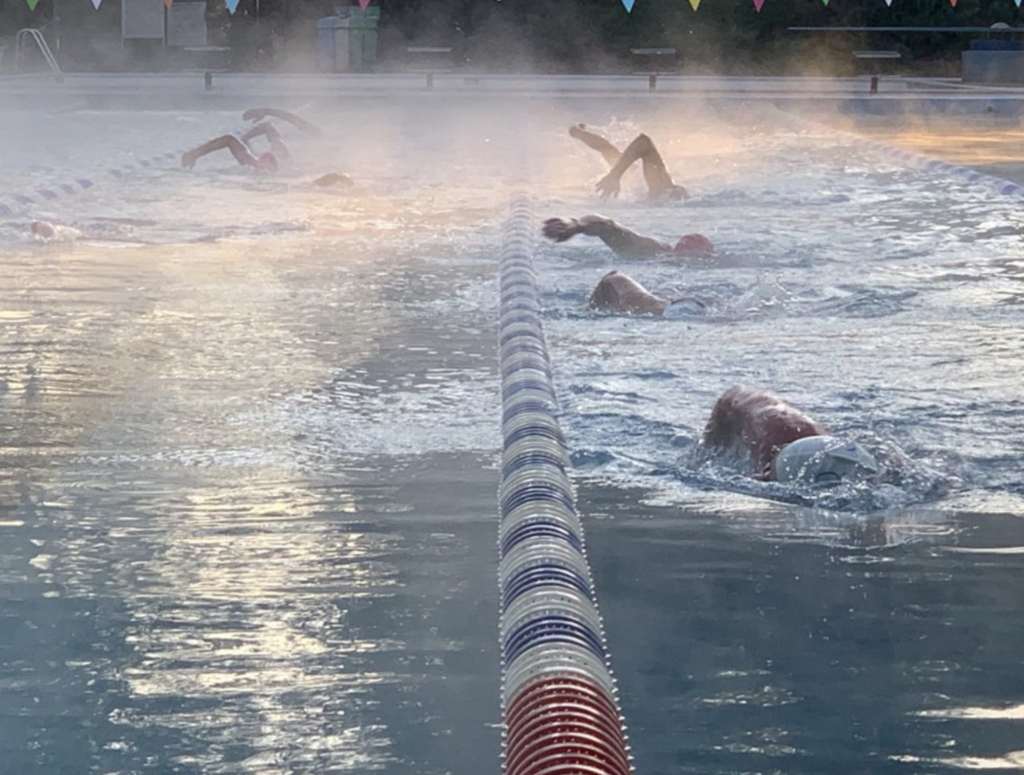
Hard, long pool workouts in December are a traditional among marathon swimmers. But the Siete Mares Nadadores in Mexico City took teamwork to another level.
Over the last few years, the team has done special 20,000-meter pool workouts at the 2,2400meter (7,349 feet) altitude of Mexico City.
International Marathon Swimming Hall of Fame Honor Swimmer Antonio Argüelles (67, Mexico, MSF bio here, @arguelles7mares) recalls, “As a long-distance swimmer in my youth, 100 x 100 meters was a standard set that we did several times during the season. Later in life, I felt that it was a challenge that needed to be done occasionally. As I started training with Rafa Álvarez, the 100×100 set disappeared from the map. Instead, we began the dreadful 10 x 1,000 meters every month.
After my return from Europe a few years ago, while we were discussing our plans for the upcoming season, I dared to throw in a new set, knowing that Rafa would probably send it straight into the trash can. ‘Rafa, how about 200 x 100 meters? That would be fun.’
He answered quickly, ‘Fun, sure, but do not see the purpose.’
As predicted, the set was slam dunk straight into the trash basket.
As the season progressed that year, I was always looking for an opening. Our training cycle is organized in sets of four weeks: in the first weekend we do 10 x 1,000 meters; in the second, we go to Las Estacas for a long swim; in the third week, we do an ocean swim; the fourth week is a weekend of recovery.
When the time came to discuss our plans for December, I saw an opening since my ocean swim would have to wait until the end of the month, and we had been working on our goals for Brazada Abrazada. ‘Rafa, we have an open weekend. Let’s do the 200 x 100 meters to jump start our work for Brazada Abrazada.’
To my surprise, he agreed, although he reminded me that he still did not see the point of the set.
With his approval I got to work.
Planning for the 200 x 100 Set
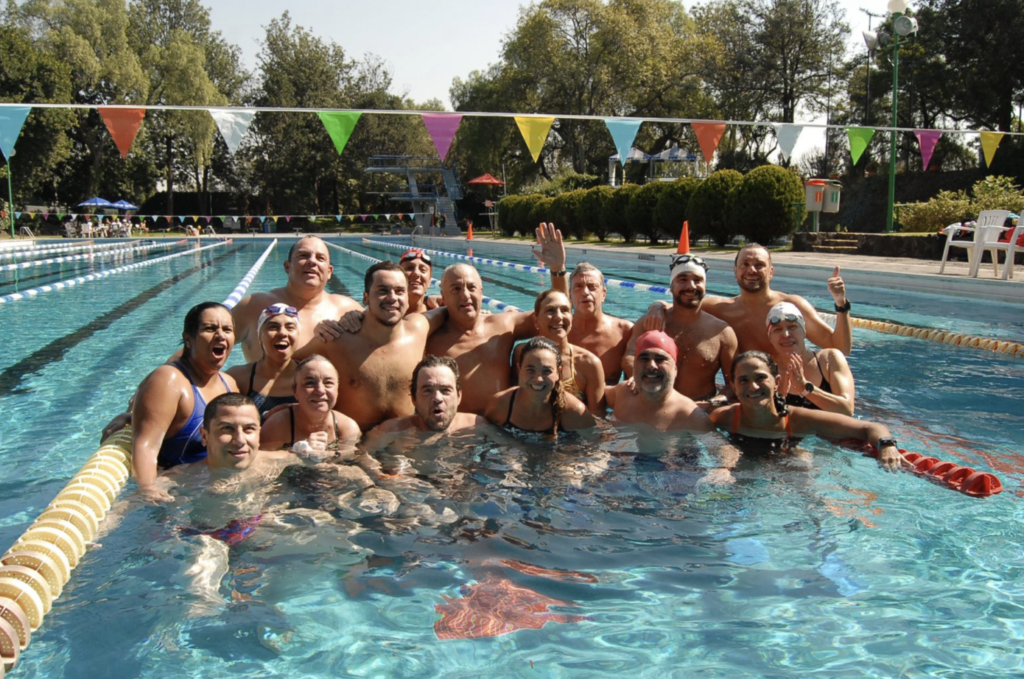
First, I decided it would be a small event. In any case, I did not know that many people who could swim 20,000 meters in a 50m long-course pool. My first calls were to Jaime Lomelín (63, Mexico, MSF bio here, @jaimelomelin), Mariel Hawley (57, Mexico, MSF bio here, @marielhawley), Nora Toledano (56, Mexico, MSF bio here, @noratoledanoswim), and Paty Kohlmann (@pattykohlmann). They are all four great swimmers. Jaime just became the fastest Mexican to cross the Catalina Channel; both Mariel and Nora are Oceans Seven swimmers, Jaime is another Honor Swimmer in the International Marathon Swimming Hall of Fame, Class of 2023, and Paty is a two-time Olympic swimmer and open water swimmer and coach. They all loved the idea and we decided to make a list that soon increased to 20 swimmers.
My second task was to find a pool where the event could take place. I approached the Board of Directors of the German Club in Mexico City. They gave the project their full-hearted support. Special thanks to Sergio Iracheta, who set the wheel spinning, and Adriana Plasencia, who made it happen.
Thirdly, but not the least important, was the matter of how much money to raise. Several numbers came to mind, and I finally settled for $50. We could raise $1,000, which would help to teach children during the school year.
The 200 x 100 Workout
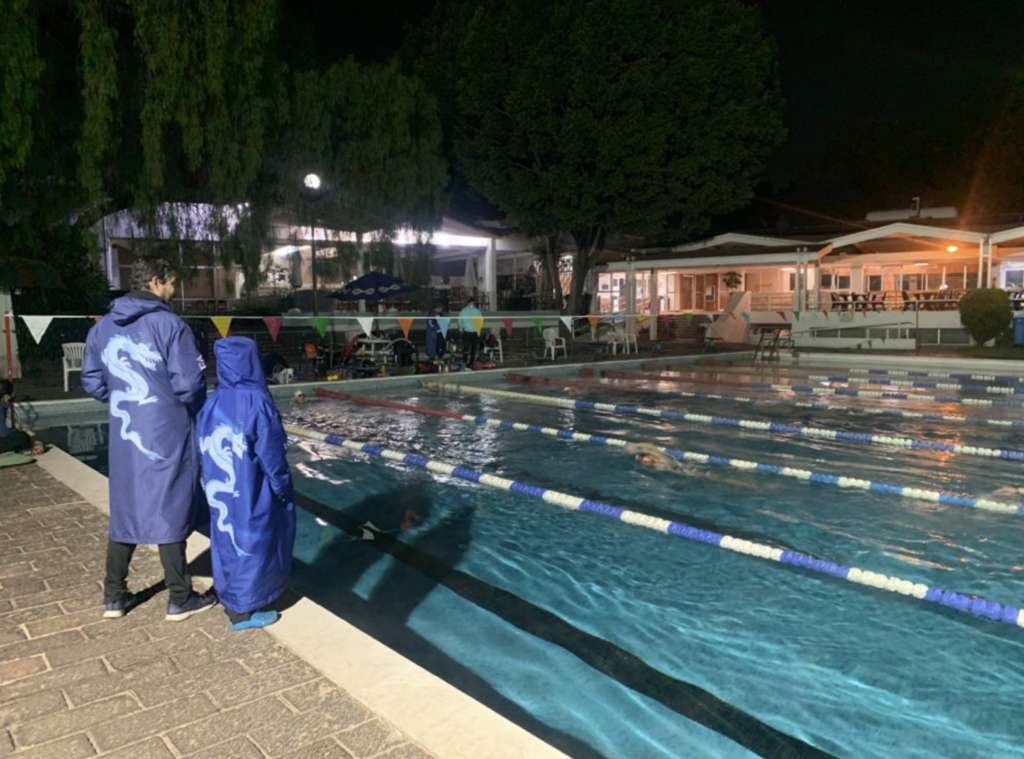
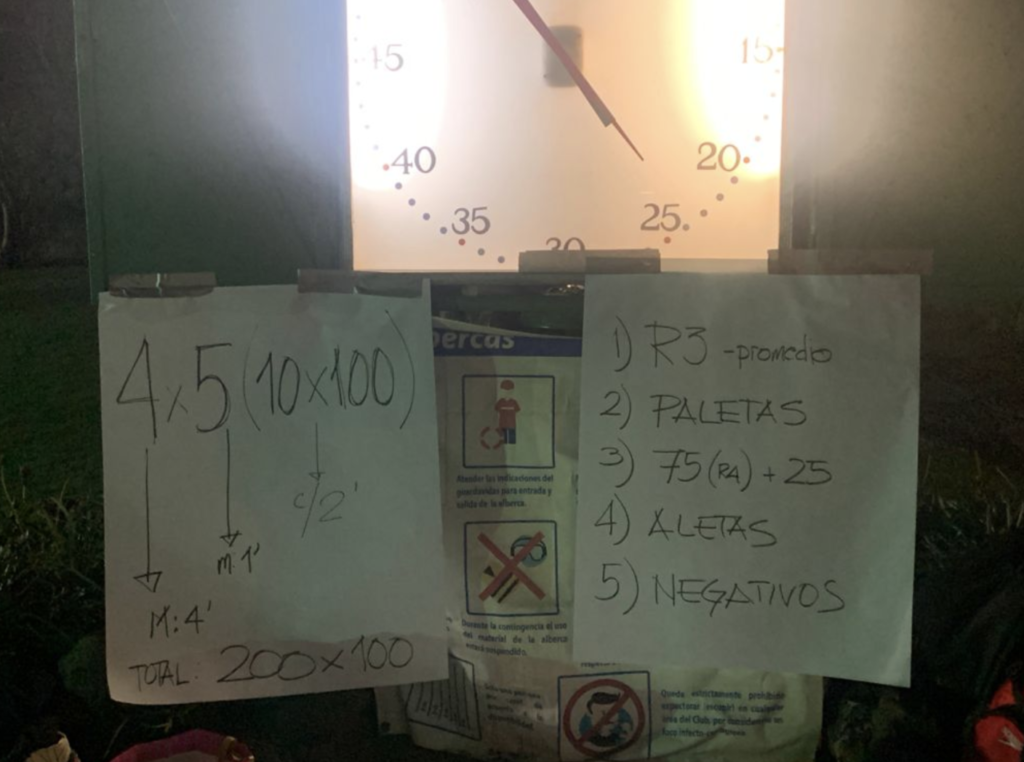
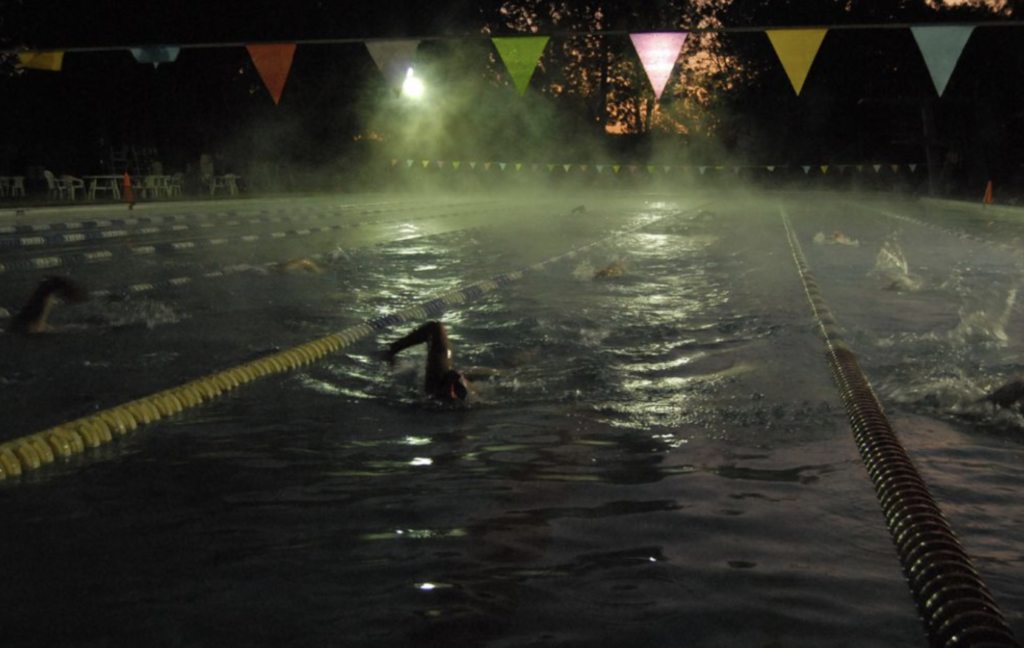
The day came and we all arrived at the club at 5:00 am. Slowly, the gear and feedings were placed in each of the three lanes that we had been assigned. Lane number 5 was for Paty and her team, Nora took lane 7, and I swam in lane 6. We were to swim four times the following sets:
- 10 x 100 meters at R3
- 10 x 100 pull buoy and paddles
- 10 x 100 75 meters at R4 and 25 meters recovery
- 10 x 100 fins at R3
- 10 x 100 negative split R3/R4
The interval was always on 2 minutes.
Each lane had between six and seven swimmers and before we started, we decided to set the roll from oldest to youngest. I was the leader of my lane.
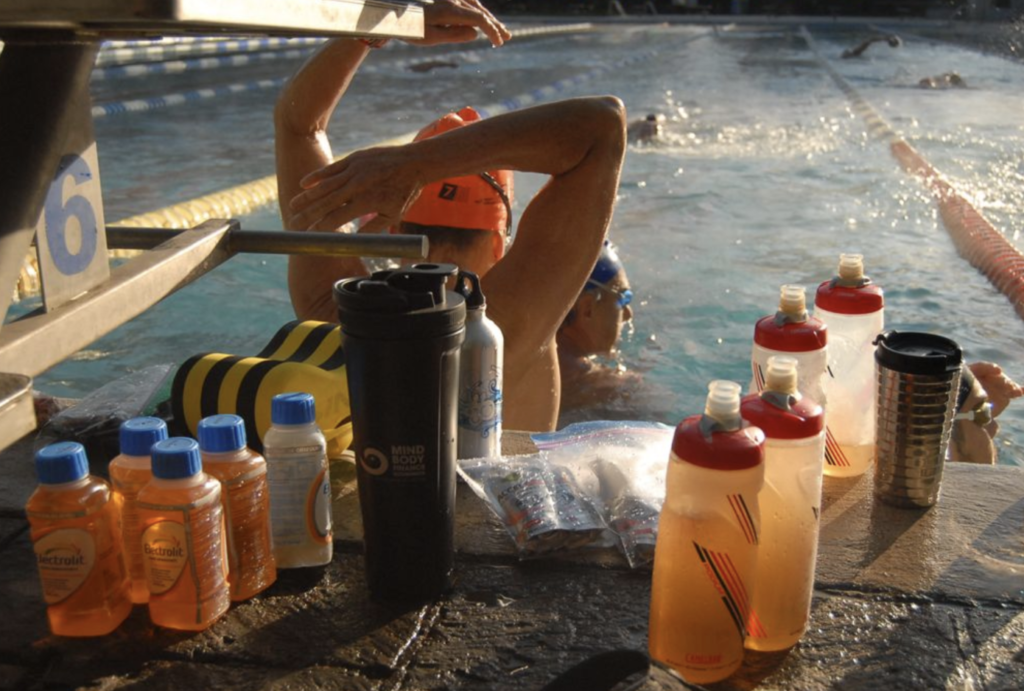
In the first 100, everyone went out fast. I had to remind myself that we still had 199 x 100s more to go. Slowly, we settled into pace, and everyone was finding their rhythm except for Olympian and Michigan alumnus Ricardo Vargas. Ricardo is a 1,500 freestyler with a personal best of 15:11, and currently training for the 2024 Paris Olympic Games. He lives in Cuernavaca and obviously, even with the challenge of high altitude at 2,240 meters (7,349 feet), an interval of 2 minutes was boring for him. I noticed that he was staying far behind us, so when we got to the 75 meters at R4 with 25 meters recovery at R2, I told him to lead, and this made him happy.
At about the 100th 100 meters, our friends and family started showing up. I was happy to see my daughter Ximena, who came to cheer and swim 1,000 meters for the cause.
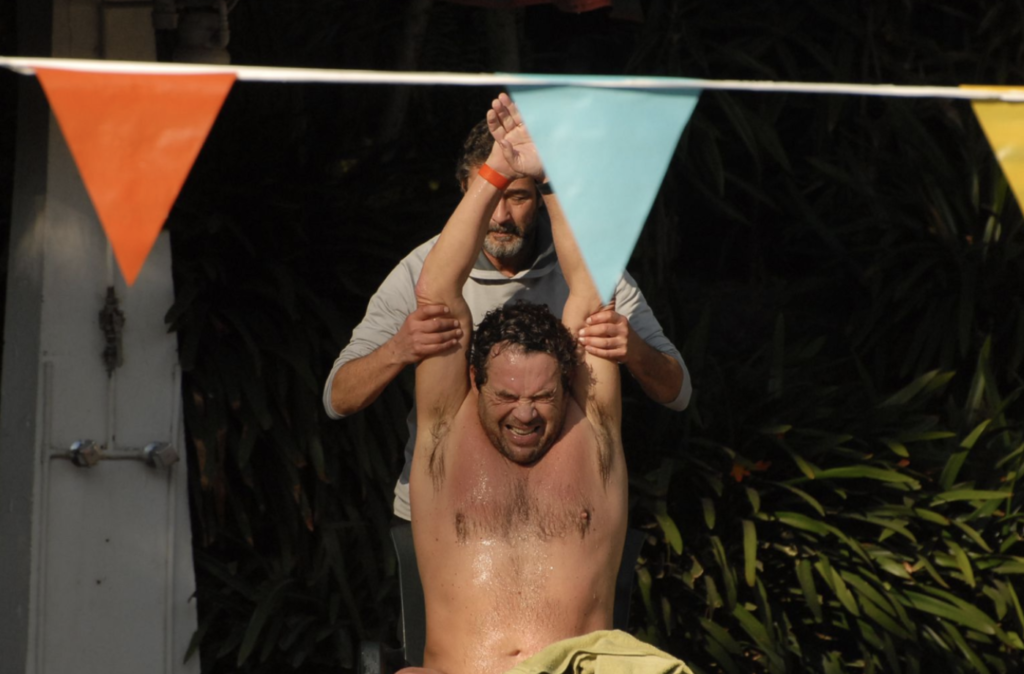
After we finished, we went into the showers and steam room. ‘What was your pace today?’ I asked Ricardo. ‘1:08, and without equipment.’ Later that afternoon, my daughter Ximena told me how different Ricardo swam. ‘Dad, you and your friends learned to swim in another era. Ricardo glides in the water, while you guys fight the water.’
As we progressed, around the 12,000 meters, I started to feel bad. My triceps were hurting, and I just could not find enough strength. I was in the middle of a crisis – with another 8,000 meters to go. The workout was not turning out as I had planned. So, I put myself in survival mode. First, I had to focus the pain away from my arms. I did that by relaxing my triceps every time I pulled. It worked and I felt better.
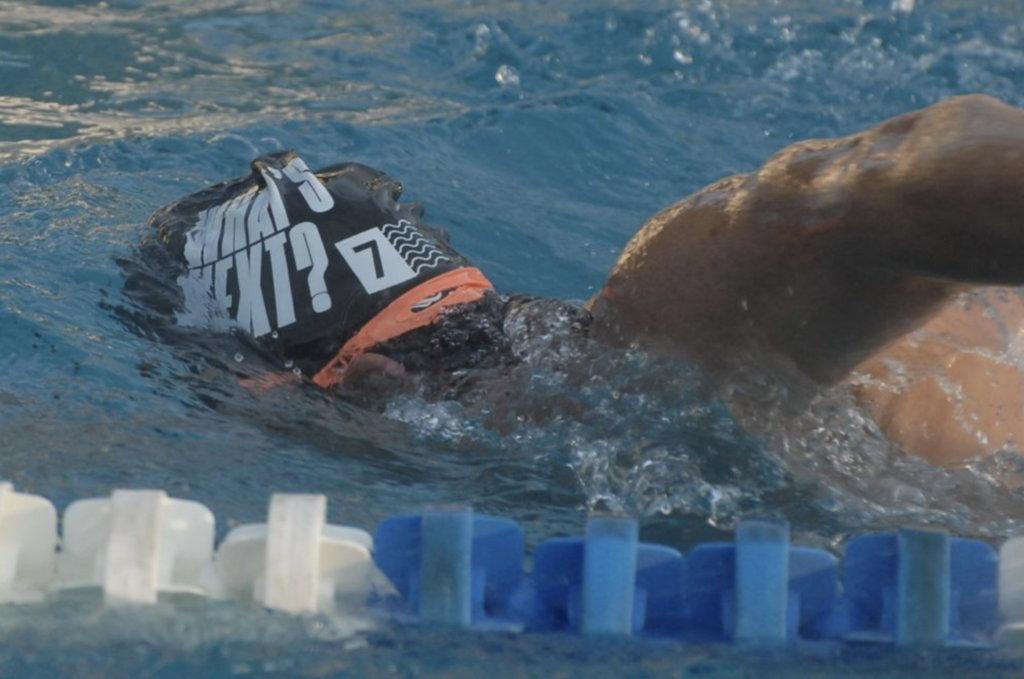
Finding strength was another issue. I knew had two components. On the one hand, it was obvious that I had hit the wall, a distinct moment when your energy system is not working properly. For some reason, my body was not assimilating correctly the Accel Gel that I was ingesting. Also, I had just finished three days earlier my high-volume strength program and probably had not recovered well. Luckily, Rafa found an extra shot of carbohydrates, and that helped.
On the other hand, I had to keep my mind focused. My friends realized that I was struggling and began to ask the question you never ask when someone is in trouble, ‘Do you feel OK?’ Obviously, I was not feeling OK. If I answered or engaged in a conversation, I would have been done. Several times, I ignored their questions or advice about what I should do.
The crisis went on for a long period, almost 5,000 meters. Rafa was concerned and I guess he saw other swimmers’ bodies also faltering. For the last 50 x 100 meters, he decided to change the sets. He based the drills on active recovery at R2 and added short distances of acceleration to activate the body. This helped me and the rest of the group.
After the last 100, I looked around. I was feeling miserable, but around me I could only see my friends laughing. Congratulations were flying all over the place.
For many, it was a swim they had only dreamt of. For others, it was a reassurance that they could accomplish tasks that seem difficult. For me it was a day to remember. Although I had not swam the way I’d expected, I had encouraged many others to take on the challenge. Along the way, we raised money for a great cause, and the experience made me remember George Sheehan’s quote: ‘In each training session or event, one must become the hero of one’s own story.’”
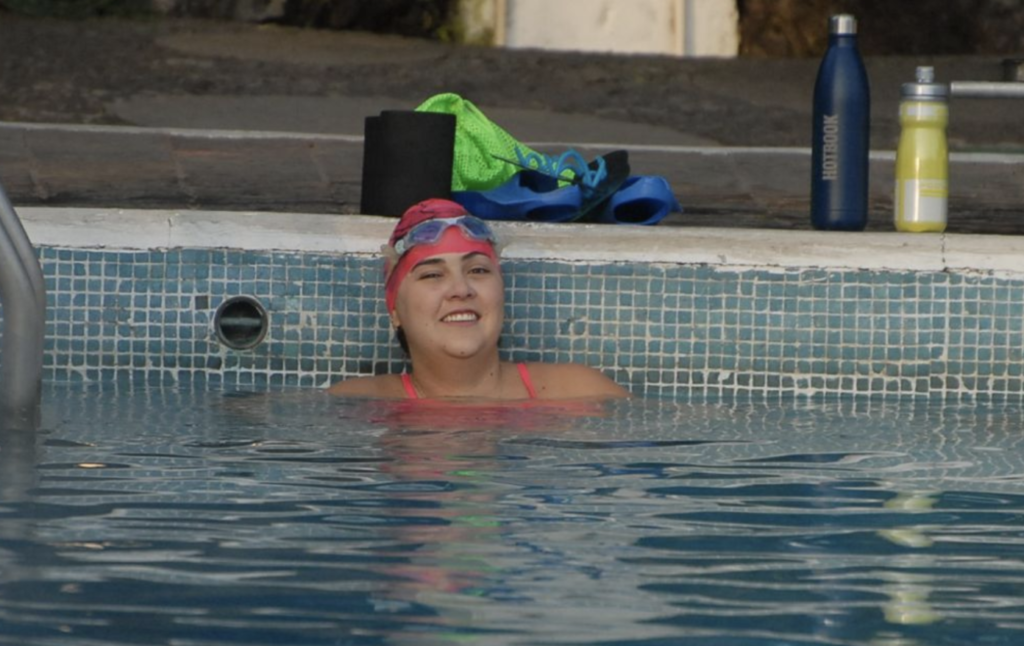
The Background of Siete Mares Nadadores
As Argüelles was preparing for distribution of Maurten products in Mexico, he came up with the idea of developing an app.
“For several years now, people have asked Rafa Álvarez and me to coach them. I know I would be a terrible coach: I lack patience and have zero tolerance for weakness. As for Rafa, he is happy to work with only one athlete.
One day after practice I shared my idea for an app with Rafa. He said, “Yes, an app is a great idea, but we also need a community. How about accepting up to 20 swimmers with a semi-personalized program to complement the app?” We agreed and got to work.
The launch of every product needs an event, so we decided to launch www.sietemaresnadadores.mx with a training session designed according to our program. It had to be a tough and fun session, but also one in which participants realized how much our methods could contribute to their goals.
We set the date — December 10th 2022 — and chose the Club Alemán de México’s Olympic-size swimming pool in Mexico City as the venue. I summoned my friends in Mexico and invited some from abroad to join us from their local pools. My invitation reverberated with Kim Almeida in San Francisco and Xesc Teres in Barcelona.
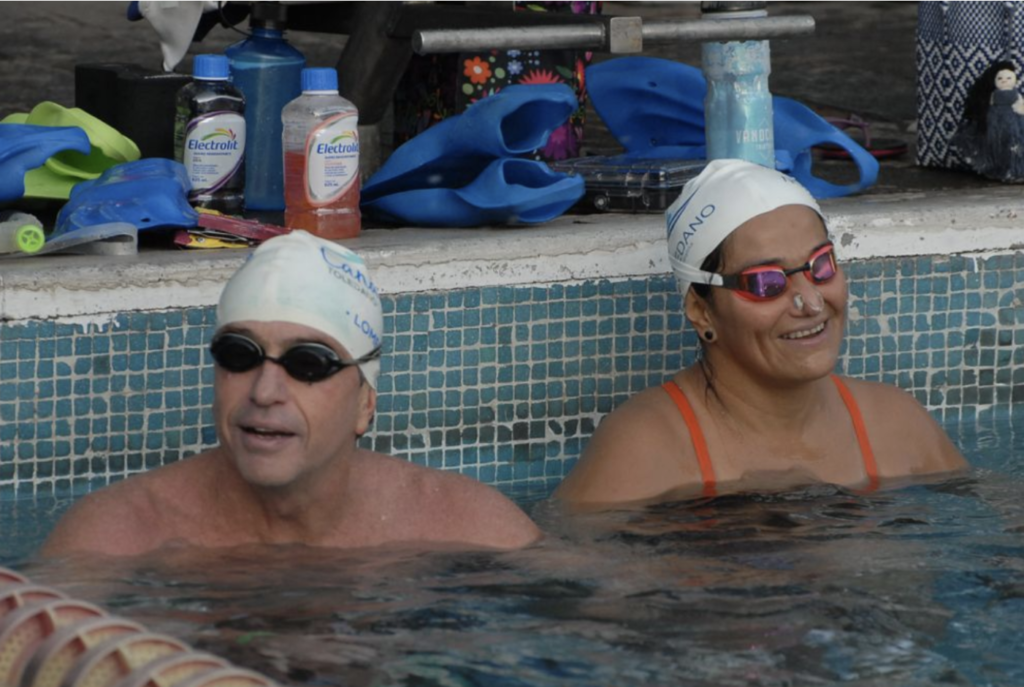
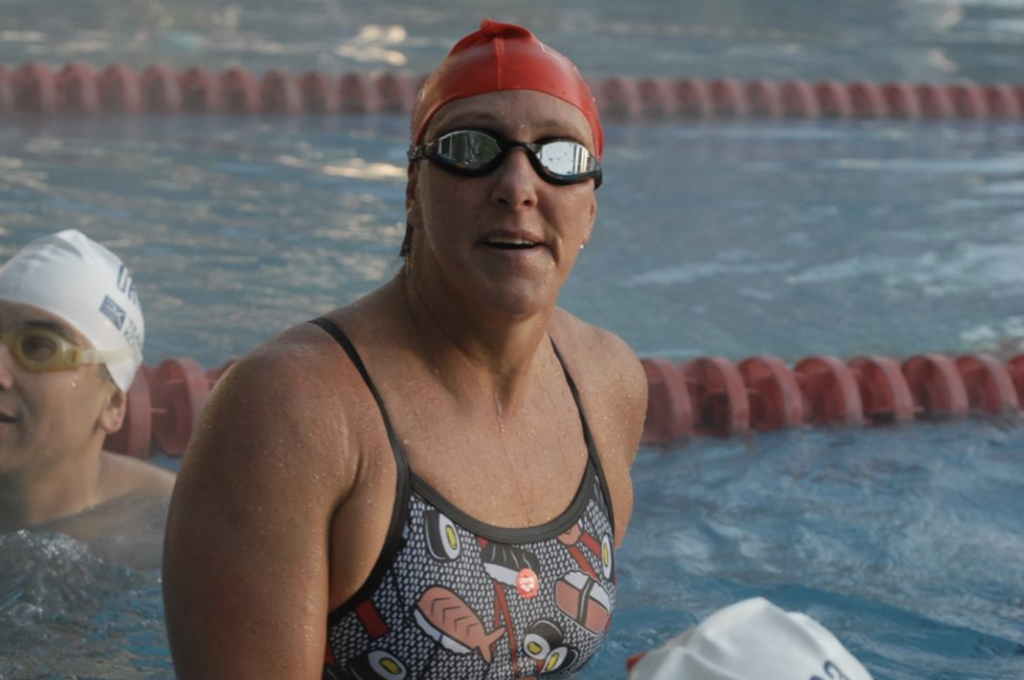
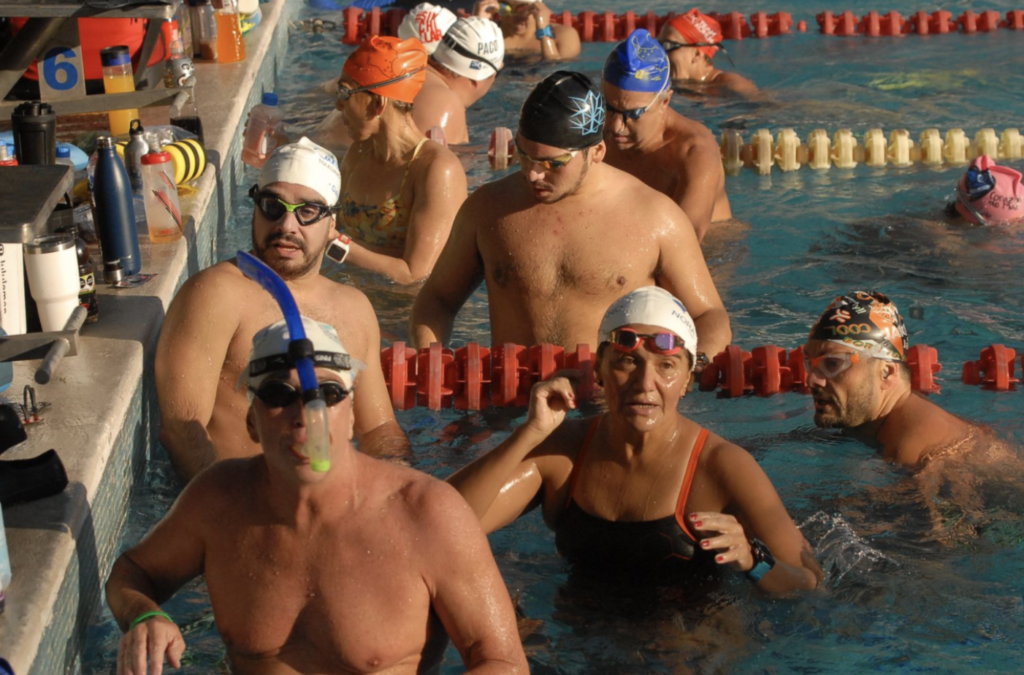
Swimmers began to arrive. They looked for their assigned lanes, met their partners for the day, and organized their equipment and feedings on the deck. We had been assigned four lanes, each one with swimmers of similar capacities to make rotation easier. As not everyone was doing the 200 x 100 meters — some decided to complete the 100 x 100 meter-challenge instead — we had several changes during the seven-hour workout. In my lane, five of us started and finished the full session, but at one point we were nine swimmers.
Rafa prepared a workout of five series of 10×100 meters to be repeated four times (see below). In our lane, we decided I would lead the first 10×100 to start slow and get everyone in rhythm. Then, we would start a rotation of 2×100 per person, an unusual setup that, nevertheless, made the workout more pleasant and, most importantly, allowed those in trouble to recover more easily.
This was the case of my swim-lane partners Sandra Dominguez and Melissa Monteón who were both coached by Paty Kohlmann. Sandra arrived with the idea of stopping at 100 x 100 meters, but as the workout progressed, we pushed her first to reach 150 x 100 meters and finally, 200 x 100 meters.
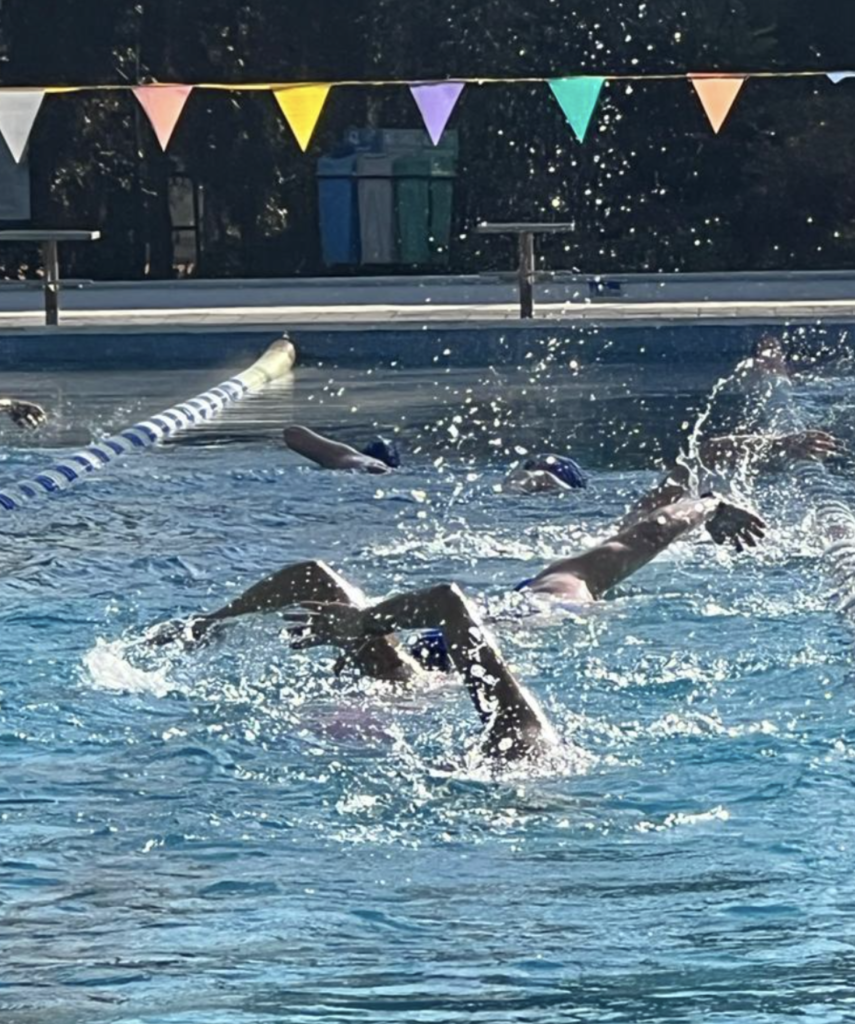
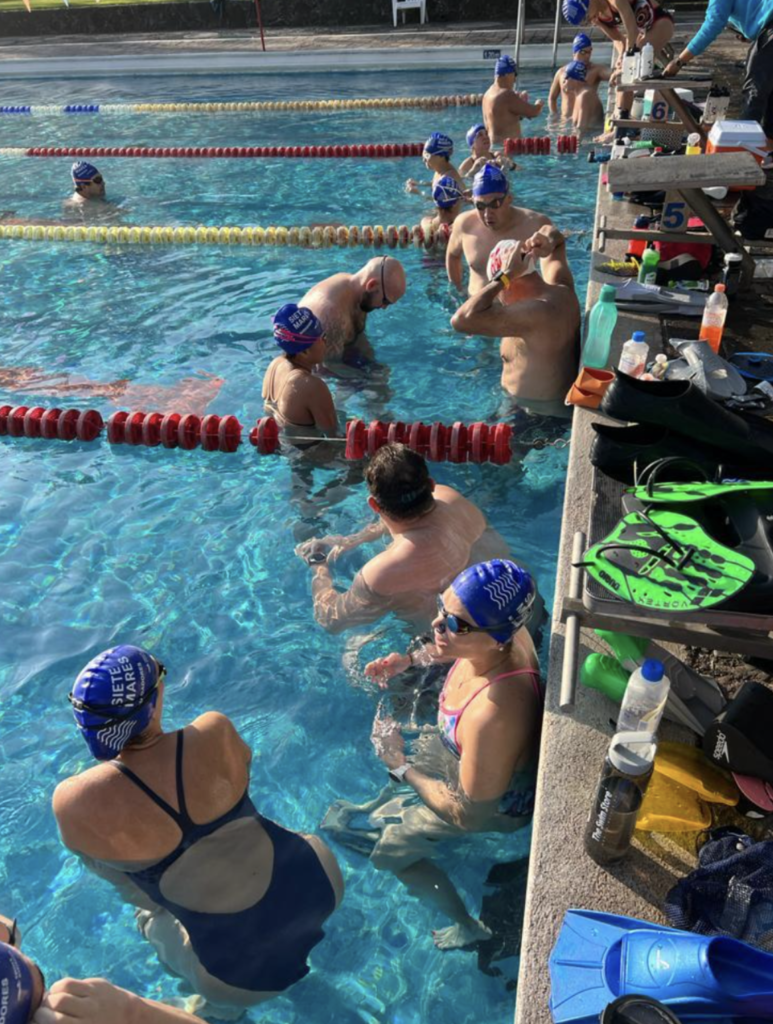
Like in a channel swim, I focused only on my immediate surroundings — in this case, my lane. But when we stopped for one minute after every 10 x 100 meters or for three minutes after every 100 x 100 meters, I glanced at the other lanes and noticed that everyone was happy, struggling at times, but happy.
Workout (4 times each block)
- 10 x 100 at 65-75% @2´
- 10 x 100 at 75-80% @2´
- 10 x 100 50 meter at 85% 50 meter at 70% @2´
- 10 x 100 with paddles and pull buoy at 75-80% @2´
- 10 x 100 with fins 75 meter at 90% 25 meter at 65% @2´
For more information on Siete Mares Nadadores on Instagram, visit here. To visit the Siete Mares Nadadores website, visit here.
Where The Goal Was Set – Others To Follow
Since 2022, masters swimming groups in Barcelona, Spain, San Francisco, and Long Beach, California have followed in the wake of their Mexico City counterparts. The different groups are planning their own 200 x 100 meter workouts, albeit not at high altitude.
Not to be outdone, Ned Denison (68, Ireland, MSF bio here) of Cork, Ireland recalls previous years when he and his group of hard-core Irish swimmers would do 200 x 100 sets and even 250 x 100m workouts. Another International Marathon Swimming Hall of Famer and former English Channel record holder Penny Dean (71, USA, MSF bio here) did two separate workouts of 36,000 meters on a 1:20 base per 100 meters.
Argüelles recalls his experience, “For many, it was a swim they had only dreamt of. For others, it was a reassurance that they could accomplish tasks that seem difficult. For me it was a day to remember. Although I had not swam the way I’d expected, I had encouraged many others to take on the challenge. Along the way, we raised money for a great cause, and the experience made me remember George Sheehan’s quote: ‘In each training session or event, one must become the hero of one’s own story.’”
© 2026 Daily News of Open Water Swimming
“to educate, enthuse, and entertain all those who venture beyond the shoreline“
World Open Water Swimming Federation, an exclusively human-powered project