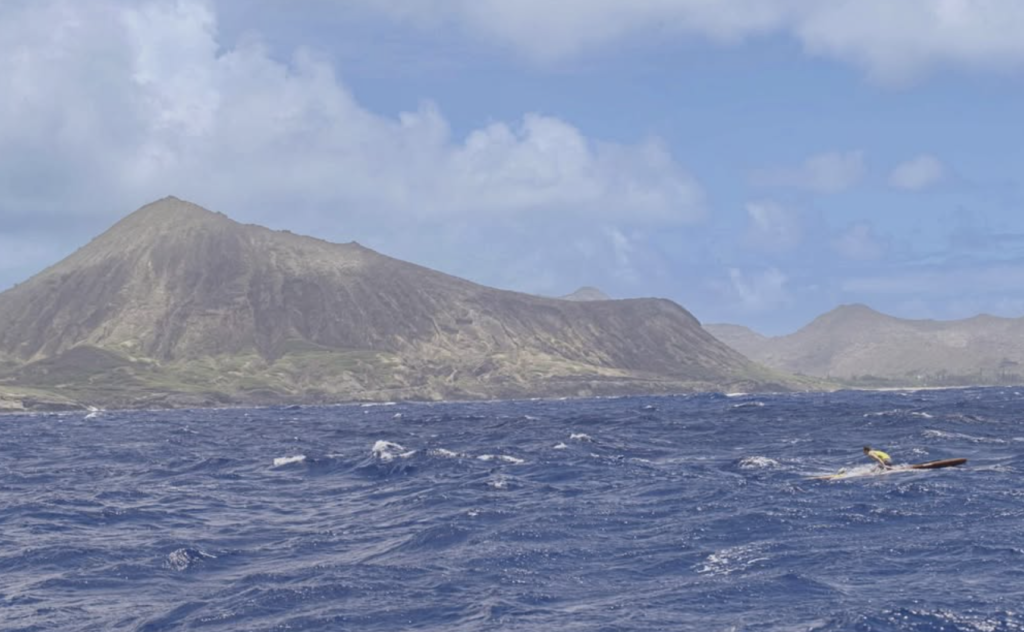
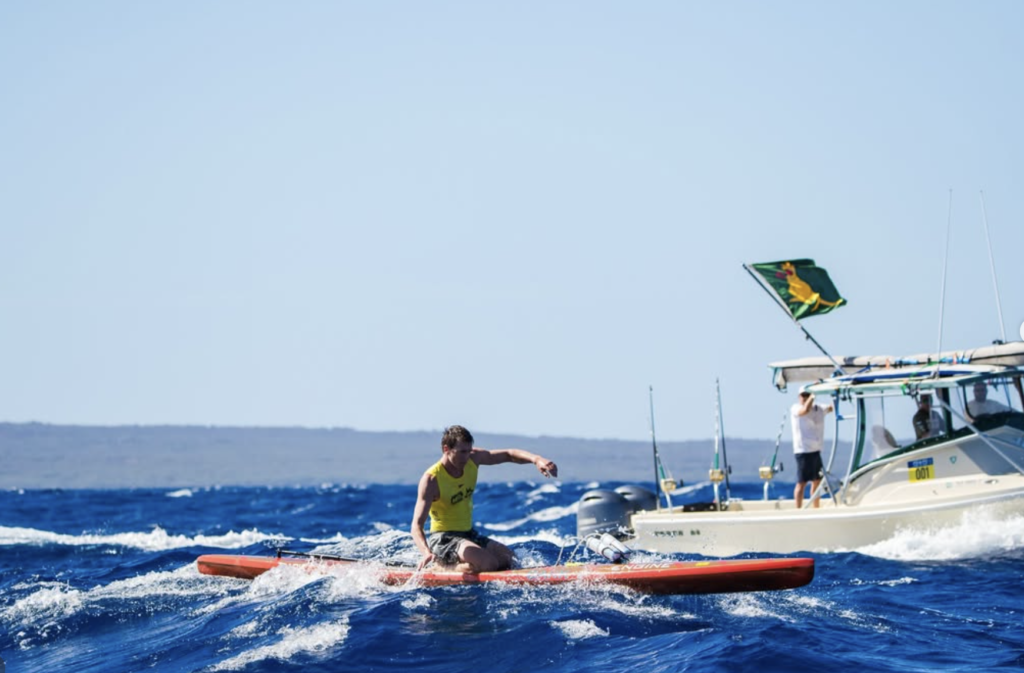
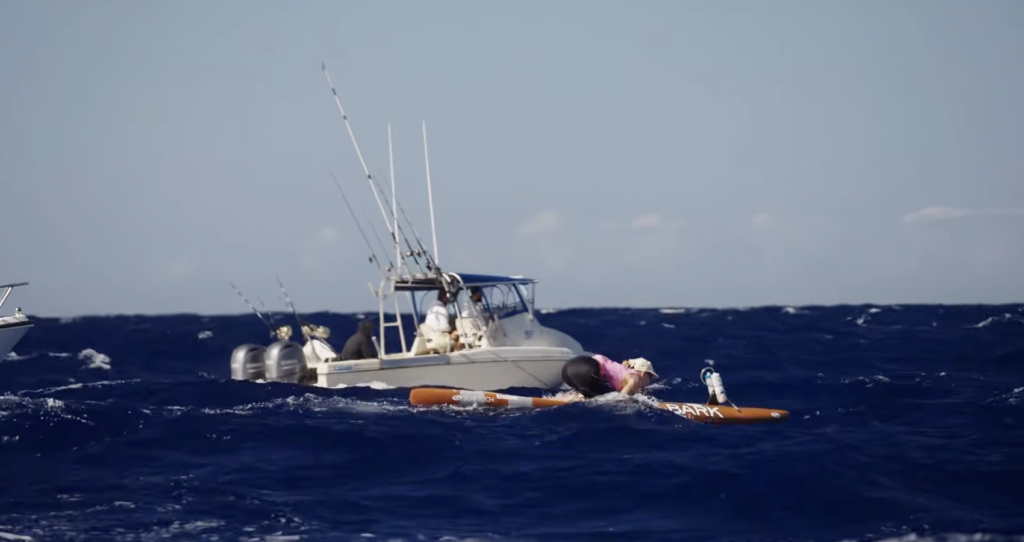
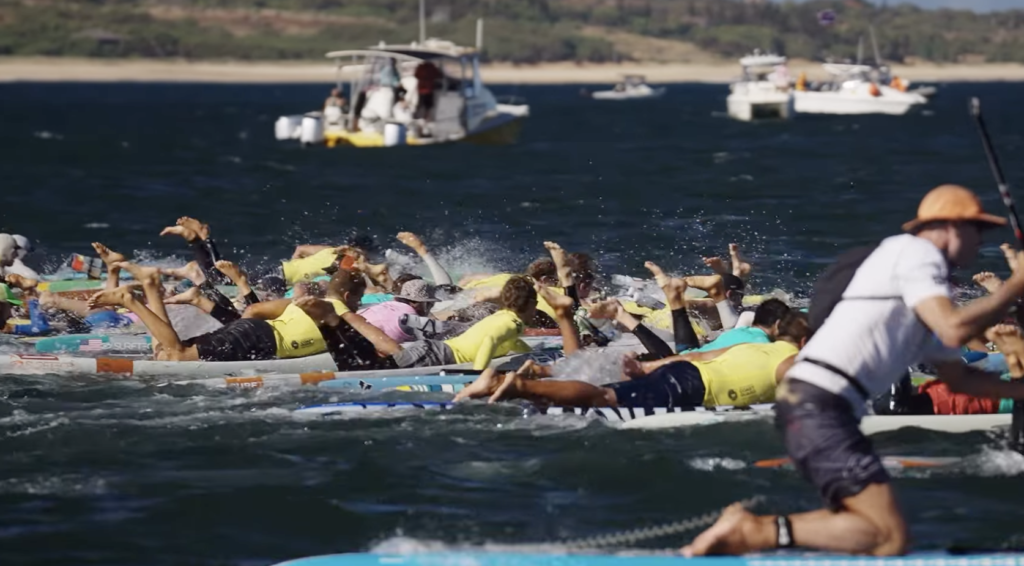
Paddling has been a part of Hawaiian heritage since early Polynesians navigated thousands of miles of open ocean guided by nothing more than currents, wind and stars. The Molokai 2 Oahu Paddleboard World Championship (see here, @molokai2oah) annually honors the spirit of these Polynesian voyagers with the most challenging prone/stand-up paddle/foil race in the world.
It is tough and unpredictable.
Starting from offshore of ‘Īlio Point on the southwest part of Molokai Island to Kaimana Beach, below the Diamond Head Volcano on the eastern side of Waikiki Beach on Oahu, hundrends of prone paddleboarders, stand-up paddleboarders (SUP), and foilers face.
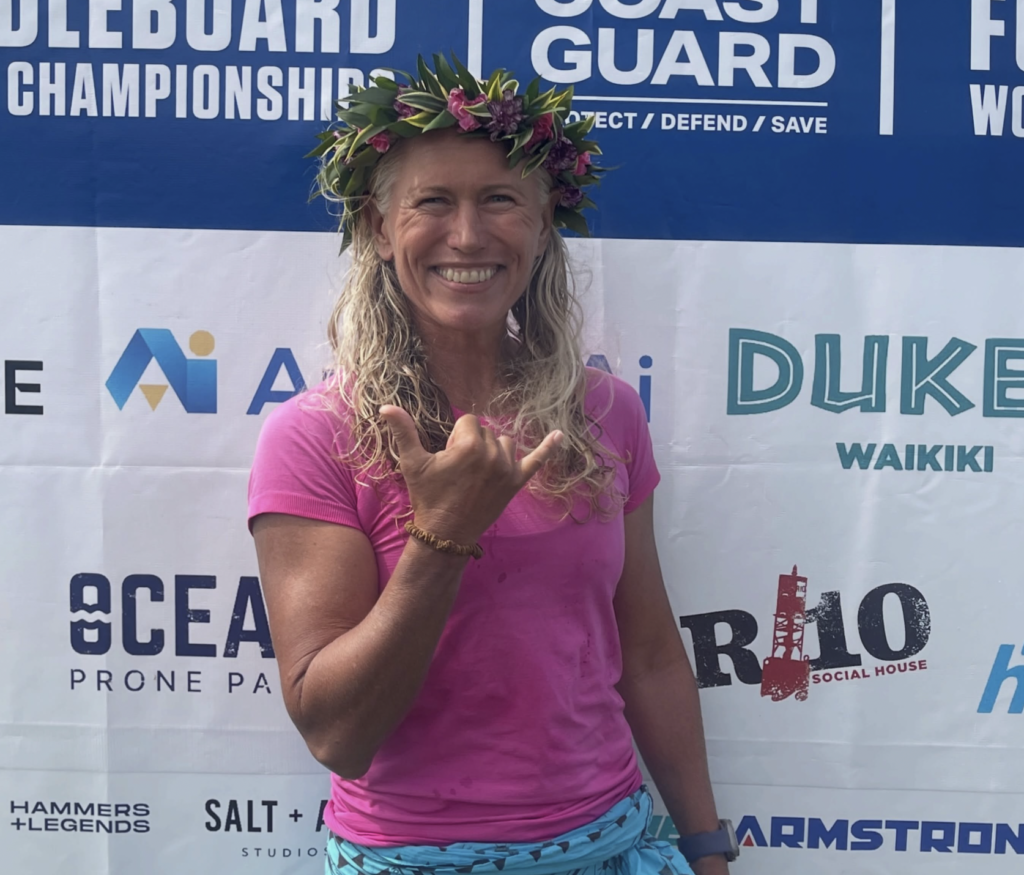
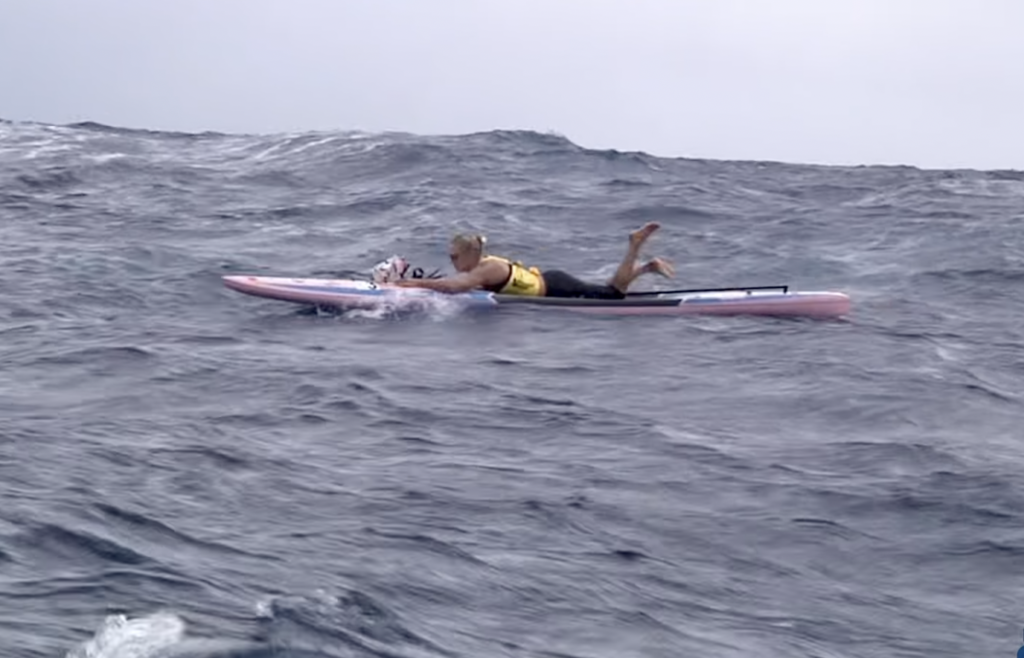
This July, Australian Charlie Verco, the dominant prone paddler of his era, won his fourth consecutive Molokai 2 Oahu Paddleboard World Championship in record time. The women’s unlimited division was won for a ninth time by Kanesa Duncan Seraphin (@hikanesa), another legend in the sport. Seraphin also serves as a professor and director at the University of Hawai‘i Sea Grant Center for Marine Science Education and host of the award-winning series Voice of the Sea. She won her ninth title in 2026, cementing her as an icon.
2026 Prone and SUP M2O Winners
- Charlie Verco (Prone Unlimited Male): 4:18:03.6 (1st Overall & 4th consecutive M2O title)
- Stewart McLachlan (Prone 14′ Male): 4:42:06.5
- Harrison Stone (Prone Stock Male): 5:03:11.5
- Hayato Yamamoto (SUP Unlimited Male): 5:18:30.8
- Kanesa Duncan Seraphin (Prone Unlimited Female): 5:40:13.7
- Allison Schillinger (Prone Stock Female): 6:00:56.8
Discussion with Mike DiBetta and Mark Schulein
To learn more about the history and icons in the sport, listen to Mark Schulein’s podcast with Mike DiBetta here (@mark_schulein_passion_project).
Conditions Across Molokai
The paddle boarders and foilers understand how challenging crossing between Molokai and Oahu is. Conditions can change from no winds to moderate trade winds, from glassy to brutally turbulent water conditions with strong rains and a bunch of confusing backwash and unpredictable side currents as they near Oʻahu.
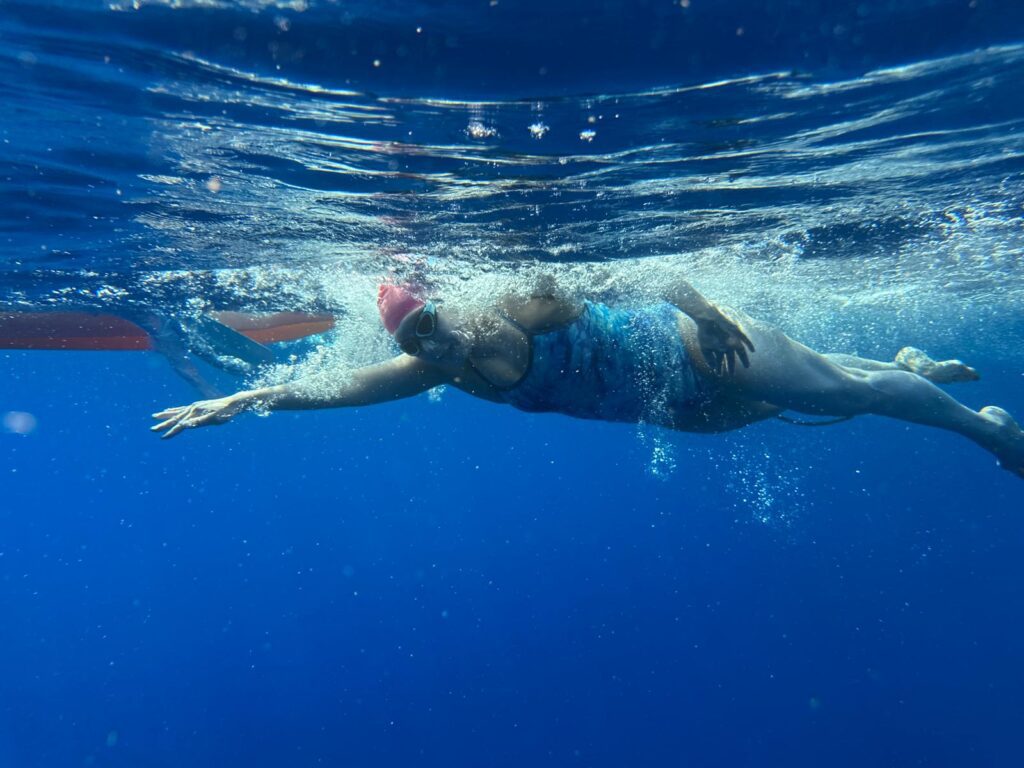
So while the paddle boarders and foilers on skimming across the surface waters of the Molokai Channel, swimmers are literally in the thick of the ocean, almost entirely submerged and dealing with the same conditions.
Both types of crossings are different. Both are extremely challenging. But add the pain of jellyfish stings and the possibility of shark attacks, then the comparison between the swimmers and paddle boarders and foilers becomes a bit more dramatic.
Throughout history, tere are 140 individuals who have successfully swum across the 45 km Molokai Channel [see below]…and many more have tried.
Those who have not succeeded have faced sharks (where either shark encounters or shark attacks have lead to crossings being abandoned), jellyfish and Portuguese man o war, rough conditions, and currents that were too strong.
Paul Leonard, Adherbal de Oliveira, Eric Schall, Isaiah Mojica, Andy Walberer, and Joanne Norman are among the swimmers who have been attacked by cookiecutter sharks.
Most swimmers start from South Pāpōhaku Beach on Molokai Island, but a handful (e.g., Andreas Waschburger and Penny Palfrey) have also started at ‘Īlio Point similar to the paddleboarders.

Swimmers have also crossed from Oahu to Molokai, including Harry Huffaker in 1972 in 16 hours 15 minutes, Forrest Nelson in 2006 in 16 hours 36 minutes, Graco Morlan in 2024 in 15 hours 33 minutes, and Paul Leonard in 2026 in 11 hours 45 minutes.
Whether an athlete crosses in a swimsuit and goggles or a paddleboard, SUP, or foil, they all hope for the best with no trauma and no drama.

Successful Molokai Channel Swimmers
- Keo Nakama (age 40), finishing in Hanauma Bay on Oahu in 15 hours 40 minutes in 1961
- Harry Huffaker (26) in 14 hours 45 minutes in 1966
- Harry Huffaker (42) from Oahu to Molokai in 16 hours 15 minutes in 1972
- Jonathan Ezer (18) in 14 hours 4 minutes in 1974
- Michael Miller (25) in 16 hours 50 minutes in 1979
- Ian Emberson (28, Venezuela) in 16 hours 50 minutes in 1979
- Robin Isayama (26) first female in 15 hours 21 minutes in 1994
- Forrest Nelson (40) from Oahu to Molokai in 16 hours 46 minutes in 2006
- Forrest Nelson (41) in 15 hours 55 minutes in 2006
- Bill Goding (54) in 15 hours 55 minutes in 2006
- Mike Spalding (60) in 15 hours 15 minutes in 2007
- Kelly Gleason (42) in 15 hours 15 minutes in 2007
- Linda Kaiser (56) in 15 hours 0 minutes in 2007
- Mackenzie Miller (18) in 14 hours 52 minutes in 2009
- Chris Palfrey (52, Australia) in 12 hours 54 minutes in 2010
- Tina Neill (45) in 16 hours 16 minutes in 2011
- Forrest Nelson (46) in 16 hours 16 minutes in 2011
- Darren Miller (28) in 12 hours 12 minutes in 2011
- Michelle Macy (44) in 14 hours 12 minutes in 2011
- Anna-Carin Nordin (40, Sweden) in 18 hours 22 minutes in 2011
- Samantha Simon (21) in 14 hours 41 minutes in 2011
- Penny Palfrey (49, Australia) in 12 hours 6 minutes in 2011
- Stephen Redmond (46, Ireland) in 22 hours 40 minutes in 2012
- Adam Walker (44, Great Britain) in 16 hours 1 minutes in 2012
- Michael Ventre (45, Botswana) in 22 hours 40 minutes in 2012
- Kathleen Wilson (49) in 20 hours 49 minutes in 2012
- Oliver Wilkinson (46, Australia) in 14 hours 5 minutes in 2012
- Kim Chambers (45, New Zealand) in 19 hours 26 minutes in 2012
- Beth French (45, Great Britain) in 24 hours 10 minutes in 2012
- Leahi Camacho (16) in 14 hours 44 minutes in 2014
- Katie Benoit (44, Germany) in 18 hours 0 minutes in 2014
- Yesenia Cabrera Fuegos (41, Guatemala) in 16 hours 50 minutes in 2014
- Cameron Keith (15, Australia) in 14 hours 55 minutes in 2014
- Victoria Rian (46) in 14 hours 42 minutes in 2014
- Jim Barber (54) in 14 hours 42 minutes in 2014
- Rohans More (29, India) in 16 hours 28 minutes in 2014
- Attila Mányoki (42, Hungary) in 12 hours 2 minutes in 2015
- Andre Wiersig (Germany) in 18 hours 26 minutes in 2015
- Antonio Argüelles Díaz-González (56, Mexico) in 24 hours 18 minutes in 2016
- Elizabeth Fry in 16 hours 40 minutes in 2016
- Marcy MacDonald, in 16 hours 40 minutes in 2016
- Thomas Pembroke (Australia) in 15+ hours in 2016
- Adrian Sarchet (Guernsey) in 16 hours 24 minutes in 2016
- Dr. Tom Hackett in 14 hours 54 minutes in 2016
- Stephen Junk (Australia) in 14 hours 50 minutes in 2016
- Ion Lazarenco (Moldavia) in 18 hours 11 minutes in 2016
- Beth French (Great Britain) in 16 hours 59 minutes in 2016
- Cameron Bellamy (South Africa) in 16 hours 1 minute in 2016
- Steve Walker in 18 hours 8 minutes in 2016
- Abhejali Bernardova (Czech Republic) in 21 hours 52 minutes in 2016
- Pat Gallant-Charette (66) in 24 hours 54 minutes in 2016
- Prabhat Raju Koli (16, India) in 16 hours 22 minutes in 2016
- Nora Toledano (Mexico) in 14 hours 28 minutes in 2016
- Mariel Hawley (Mexico) in 14 hours 28 minutes in 2016
- Sarah Ferguson (South Africa) in 16 hours 56 minutes in 2016
- Toni Enderli (South Africa) in 20 hours 45 minutes in 2016
- Jorge Crivilles Villanueva (Spain) in 2016
- Stefan Reinke in 19 hours 42 minutes in 2016
- Ryan Leong in 19 hours 42 minutes in 2016
- Dean Summers (Australia) in 20 hours 12 minutes in 2018
- Mark Tan in 15 hours 19 minutes on 2018
- Lynton Mortensen (Australia) in 14 hours 49 minutes in 2018
- John Zemaitis in 2019
- Joe Zemaitis in 2018
- Dina Levacic (Croatia) in 2018
- Jonathan Ratcliffe (Great Britain) in 2018
- Anna Strachan (Australia) in 2018
- Paul Georgescu (Romania) in 14 hours 9 minutes in 2019
- Christian Jongeneel (Spain) in 2019
- Florin Tomos (Romania) in 2019
- Paul Feltoe (New Zealand) in 2019
- Steve Minaglia in 2020
- Debbie Merwick in 2020
- John Batchelder in 2021
- Dmitry Petrov (Russia) in 2021
- Barbara Hernandez (Chile) in 2021
- Andrey Bozhko (Russia) in 2021
- Edie Markovich, 15 years old in 2021
- Sarah Thomas in 2021
- Marcia Cleveland in 17 hours 45 minutes in 2022
- Mark Sowerby (Australia) in 14 hours 23 minutes in 2022
- Suwei Chen (Taiwan) in 2022
- Guy Moar (Australia) in 2022
- Daniel Vivero (Costa Rica) in 2022
- Jaime Lomelín Gavaldón (Mexico) in 2022
- Rene Martinez (Mexico) in 2022
- Herman van der Westhuizen (South Africa) in 2022
- Nathalie Pohl (Germany) in 2022
- Zach Margolis in 2022
- Terri Dietz in 2022
- Lori King in 2022
- Sayani Das (India) in 2022
- Karen Ennis (Great Britain) in 2023
- Kieron Palframan (South Africa) in 2023
- Rob Woodhouse (Australia) in 2023
- Lauren Lesyna in 2023
- Alessandra Cima (Brazil) in 2023
- Chris Allshouse in 2023
- Edward Lomicka in 2023
- Jorge Ivan Agudelo Vargas (Colombia) in 2023
- Eziquiel Becerril (Mexico) in 2023
- Eduardo Collazos (Peru) in 2023
- Grainne Moss (New Zealand) in 2023
- Andy Donaldson (Scotland) in 2023
- Steve Leitch in 2023
- Maya Merhige in 2023
- Andy Walberer in 2023
- Tsanko Tsankov (Bulgaria) in 2024
- Caitlin O’Reilly (New Zealand) in 2024
- Patrick Autissier in 2024
- Bengisu Avci (Turkey) in 2024
- Andreas Waschburger (Germany) in 2024
- Michael Moreau in 2024
- Anshuman Jhingran (India) in 2024
- Izebel Sierra (Mexico) in 2024
- Graco Morlan (Mexico) Oʻahu to Molokaʻi in 2024
- Christopher Chuck in 2024
- Rachel Randall in 2024
- Halani Christina Moss-Vete in 2024
- Ryan Utsumi in 2024
- Petar Stoychev in 2024
- Colby Dimsdale in 2024
- Rob Lea in 2025
- Edie Hu in 2025
- Paul Leonard in 2025
- Boguslaw Ogrodnik in 2025
- Simon Olliver in 2025
- Jennie Conway in 2025
- Thomas Rathbun in 2025
- Haley Chasin in 2025
- Aysu Türkoğlu in 2025
- Tim Lorge (16) in 2025
- Lorelei Schmidt in 2025
- Aby Ortega in 2026
- Sebastian Gonzalez in 2026
- Iskander Sagarminaga Ateaga in 2026
- Norihito Yoshioka in 2026
- Loren King in 2026
- Nick Jessen in 2026
- Joanne Norman in 2026
© 2026 Daily News of Open Water Swimming
“to educate, enthuse, and entertain all those who venture beyond the shoreline“
World Open Water Swimming Federation, an exclusively human-powered project