
The Asian leg of the Oceans Seven is the Tsugaru Channel in Japan, a very technically challenging stretch of dynamic water between the main Japanese island of Honshu and Hokkaido in northern Japan.
This year, there are a number of swimmers who will attempt a crossing as part of their Oceans Seven journey. Their channel crosses are noted below including five who will achieve the Oceans Seven the moment they touch the shoreline in Hokkaido.
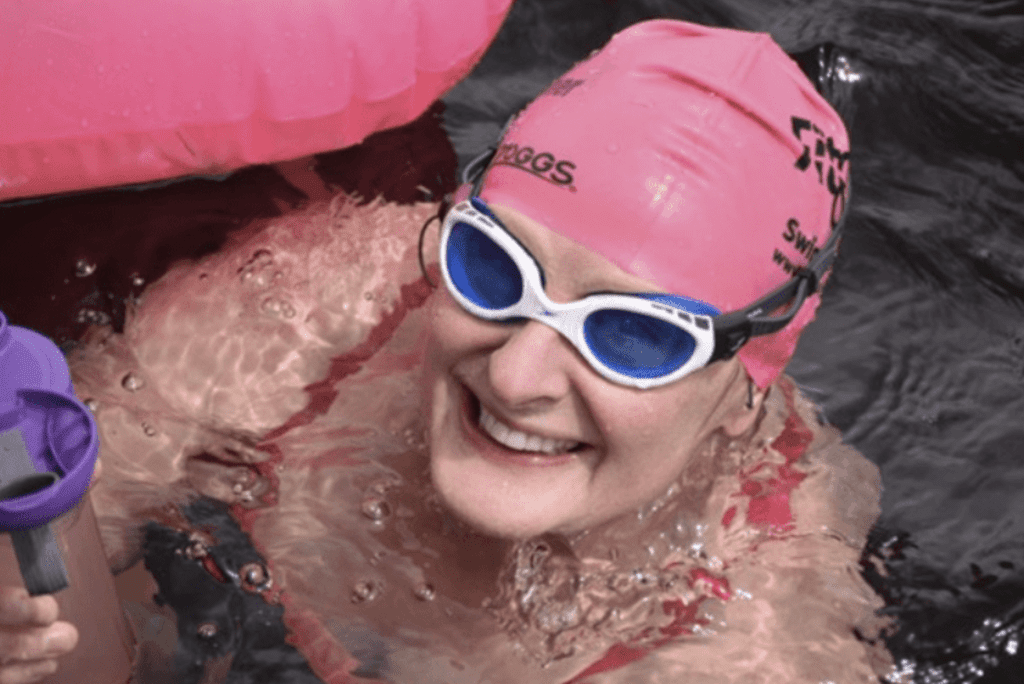
Gráinne Moss née Gunn (55, Ireland, MSF bio here – 6 down, 1 to go)
- English Channel in 11 hours 52 minutes in August 1987
- Cook Strait in 12 hours 25 minutes in March 2001
- North Channel in 13 hours 33 minutes in July 2022
- Molokai Channel in 15 hours 7 minutes in May 2023
- Catalina Channel in 11 hours 22 minutes in July 2023
- Strait of Gibraltar in 4 hours 23 minutes in May 2024
- Tsugaru Channel attempt stopped after 11 hours 52 minutes in 15° water in July 2025
- Tsugaru Channel 2nd attempt in July 2026
Anshuman Jhingran (21, India, MSF bio here – 6 down, 1 to go)
- North Channel in 11 hours 28 minutes in July 2023
- Catalina Channel in 8 hours 38 minutes in August 2023
- Cook Strait in 6 hours 58 minutes in January 2024
- Molokai Channel in 14 hours 21 minutes in October 2024
- Strait of Gibraltar in 3 hours 51 minutes in May 2025
- English Channel in 15 hours 49 minutes in August 2025
- Tsugaru Channel attempt in July 2026
Graco Morlan (50, Mexico, MSF bio here – 6 down, 1 to go)
- English Channel in 12 hours 26 minutes in June 2016
- Strait of Gibraltar in 3 hours 43 minutes in May 2017
- Catalina Channel in 25 hours 37 minutes (in a two-way crossing)
- English Channel in 11 hours 33 minutes in September 2020
- Strait of Gibraltar in 9 hours 45 minutes in August 2023 (in a two-way crossing)
- Molokai Channel in 15 hours 33 minutes (on the first leg of a two-way crossing attempt) in September 2024
- Cook Strait in 7 hours 39 minutes in March 2025
- Tsugaru Channel attempt in July 2026
Karen Ennis (53, UK, MSF bio here – 6 down, 1 to go)
- English Channel in 16 hours 45 minutes in August 2017
- Catalina Channel in 15 hours 20 minutes in July 2019
- Strait of Gibraltar in 5 hours 57 minutes in April 2023
- North Channel in 13 hours 1 minute in August 2023
- Molokai Channel in 21 hours 0 minutes in October 2023
- Cook Strait in 8 hours 33 minutes in March 2025
- Tsugaru Channel attempt in July 2026
Lauren Lesyna (31, USA, MSF bio here – 6 down, 1 to go)
- North Channel in 16 hours 14 minutes in July 2022
- Catalina Channel in 11 hours 40 minutes in September 2021
- English Channel in 15 hours 0 minutes in Jun3 2022
- Molokai Channel in 16 hours 55 minutes in September 2023
- Cook Strait in 10 hours 42 minutes in April 2024
- Strait of Gibraltar in 4 hours 44 minutes in May 2024
- Tsugaru Channel attempt in July 2026
Sayani Das (27, India, MSF bio here – 6 down, 1 to go)
- English Channel in 14 hours 8 minutes in July 2017
- Catalina Channel in 12 hours 46 minutes in June 2019
- Molokai Channel in 18 hours 50 minutes in April 2022
- Cook Strait in 11 hours 47 minutes in April 2024
- Strait of Gibraltar in 3 hours 51 minutes in April 2025
- North Channel in 13 hours 22 minutes in August 2024
- Tsugaru Channel attempt in July 2026
Paul Leonard (54, UK, MSF bio here – 6 down, 1 to go)
- English Channel in 12 hours 39 minutes in September 2022
- Strait of Gibraltar in 3 hours 24 minutes in April 2023
- Catalina Channel in 11 hours 24 minutes in October 2023
- Cook Strait in 8 hours 45 minutes in January 2024
- North Channel in 12 hours 30 minutes in August 2024
- Molokai Channel attempted stopped after 7 hours due to a shark bite in March 2025
- Tsugaru Channel attempted stopped after 10 hours in August 2025
- Molokai Channel in 13 hours 50 minutes in October 2025
- Tsugaru Channel attempt in July 2026
Rob Lea (45, USA, MSF bio here – 6 down, 1 to go)
- English Channel in 11 hours 47 minutes in July 2019
- Catalina Channel in 11 hours 14 minutes in August 2021
- Cook Strait in 8 hours 7 minutes in March 2024
- North Channel 10 hours 36 minutes in August 2024
- Strait of Gibraltar in 4 hours 20 minutes in October 2025
- Molokai Channel in 14 hours 36 minutes in November 2025
- Tsugaru Channel attempt in July 2026
Aysu Türkoğlu (24, Turkey, MSF bio here – 5 down, 2 to go)
- English Channel in 16 hours 28 minutes in July 2022
- North Channel in 11 hours 48 minutes in August 2023
- Cook Strait in 7 hours 21 minutes in March 2024
- Catalina Channel in 11 hours 36 minutes in September 2024
- Molokai Channel in 21 hours 22 minutes in April 2025
- Tsugaru Channel attempt in July 2026
Andrey Bozhko (39, Russia, MSF bio here – 5 down, 2 to go)
- Strait of Gibraltar in 4 hours 4 minutes in May 2019
- Catalina Channel in 12 hours 58 minutes in August 2019
- Molokai Channel in 21 hours 37 minutes in April 2021
- English Channel in 13 hours 48 minutes in September 2021
- Cook Strait in 9 hours 17 minutes in March 2024
- Tsugaru Channel attempt in July 2026
Jaime Lomelín Gavaldón (63, Mexico, MSF bio here – 5 down, 2 to go)
- English Channel in 9 hours 50 minutes in August 1990
- Catalina Channel in 11 hours 53 minutes in September 2017
- Strait of Gibraltar in 3 hours 27 minutes in May 2019
- Catalina Channel in 9 hours 56 minutes in September 2021
- Molokai Channel in 13 hours 8 minutes in June 2022
- Cook Strait in 7 hours 30 minutes in March 2025
- Tsugaru Channel attempt in July 2026
Toni Enderli (49, South Africa, MSF bio here – 5 down, 2 to go)
- Strait of Gibraltar in 5 hours 19 minutes in September 2010
- English Channel in 14 hours 47 minutes in September 2015
- Catalina Channel in 11 hours 33 minutes in June 2022
- Cook Strait in 10 hours 48 minutes in February 2024
- North Channel in 14 hours 26 minutes in July 2025
- Tsugaru Channel attempt in July 2026
Ezequiel Becerril Zuñiga (46, Mexico, MSF bio here – 4 down, 3 to go)
- Strait of Gibraltar in 5 hours 45 minutes in September 2019
- English Channel in 15 hours 6 minutes in September 2021
- Catalina Channel in 13 hours 52 minutes in July 2022
- Molokai Channel in 15 hours 31 minutes in June 2023
- Tsugaru Channel window between July 23th and 27th 2026
Michael Payne (23, Australia – 4 down, 3 to go)
- English Channel in 12 hours 57 minutes in July 2022
- Strait of Gibraltar in 3 hours 35 minutes in August 2024
- Cook Strait in 8 hours 4 minutes in December 2024
- Catalina Channel in 9 hours 20 minutes in November 2025
- Tsugaru Channel attempt in July 2026
Sarah Poplar (50, New Zealand, MSF bio here – 3 down, 4 to go)
- English Channel in 14 hours 0 minutes in July 2015
- Catalina Channel in 12 hours 30 minutes in August 2018
- Cook Strait in 9 hours 45 minutes in March 2021
- Tsugaru Channel window betwee August 6th and 10th 2026
Jeffrey Orenstein (54, Mexico, MSF bio here, 3 down, 4 to go)
- English Channel in 11 hours 22 minutes in July 2024
- Cook Strait in 7 hours 40 minutes in February 2026
- Catalina Channel in 10 hours 49 minutes in October 2025
- Tsugaru Channel window between July 11th and 15th 2026
Diego Aragón (38, Mexico, MSF bio here – 2 down, 5 to go)
- English Channel in 14 hours 34 minutes in June 2022
- Catalina Channel in 12 hours 50 minutes in July 2015
- Tsugaru Channel window between July 29th and August 2nd 2026
Sandra Ramírez Vinay (54, Mexico, MSF bio here, 1 down, 6 to go)
- Catalina Channel in 11 hours 29 minutes in August 2025
- Tsugaru Channel window between July 17th and 21st 2026
Observations
I have been visiting the Tsugaru Channel since 1989. This international stretch of water – from dryland – looks so close. It has always fascinated me because on one side of the channel is the Sea of Japan and the other side is the Pacific Ocean where the Tsugaru Current passes through – always moving from west to east, except when large eddies are formed.
Most swimmers say that Tsugaru is either too cold or too warm. The channel can be the both warm and cold – on the same day, sometimes within the same hour. In general, swims in July, start off warm and end up in cold(er) water temperatures. The crossings generally start off in calm waters, and can end up in very rough waters, swirling challenges when the speed, strength, and stamina of even the best channel swimmers are severely challenged.
The swims generally start with little or no winds, and end up kicking up either strong or extremely strong winds. Swimmers always say the North Channel or Molokai Channel are difficult, but the difference in Tsugaru is that the changes in water conditions and water temperature on the same day, occasionally within the same hour, are quite dramatic. Mark Sowerby – as others have faced over the years – faced an immediate change of water temperature from 22°C to 14°C, a startling transition that can occasionally result in aborting a crossing.
For many, the opposite would be preferred; that is, to start in colder water and finish in warmer waters. For most, it would be easier – both mentally and physically – to start off in rough(er) seas and end in calm(er) seas. For most, it would be easier to swim the first half facing winds and surface chop and then gradually swim until that turbulence decreases over time. As most have experienced in both success and failure, Tsugaru is the opposite.
Swimmers must prepare themselves for a very tough, much colder, significantly rougher second half of a swim. Some swimmers get very lucky and their crossings are smooth sailing the entire way. But they are, most definitely, the exceptions to the general rule. Everyone acknowledges the North Channel and Molokai Channel are the most difficult Oceans Seven crossings, but Tsugaru can be the trickiest and most technically challenging among the Oceans Seven channels. Everything swimmers are capable of and everything swimmers know must be brought to the table – mentally, physically, emotionally, and operationally (i.e., your support crew) – to peak during the second half of the crossing.
Cape Tappi (竜飛崎/龍飛崎 or Tappi-misaki)
This refers to a headland on the most northwestern point of Honshu, Japan, known for strong winds. The name “Tappi” here is literally translated as “as dragon flies”, reflecting the powerful gusts that are common in the area.
Requisite Preparations
In the first half, the swimmers can expect to enjoy generally warm waters while facing minimal winds and encountering very mild currents. Their confidence soars as the swimmers enjoy a gorgeously majestic sunrise and the swim goes to plan.
Then the swimmers cross into the mid-channel when the ocean depths increase to 140 meters. After decades of observing and reporting on over 155 solo and relay attempts, crossing into deeper waters seems to awaken the feared dragon.
Winds get stronger, much stronger.
Water gets colder, much colder.
Currents get faster, much faster.
Eddies appear, frequently.
To make an increasing tough situation even worse, all of these changes always seem simultaneously hit the swimmers in a random fashion. This is primarily because of the particularly topography and shape of the Hokkaido coastline.
Travel to Japan
Travel to Japan will require international flights into one of the major airports in Japan. Sapporo (New Chitose Airport (新千歳空港, CTS) is the closest international airport in Hokkaido, but swimmers can also fly into Narita International Airport (成田国際空港, NRT) or Haneda Airport (羽田空港, HND). Narita requires a comfortable hour-long train ride to Tokyo Station (東京駅) while Haneda only requires a short taxi ride or monorail into the center of Tokyo.

After arriving in Japan, you can take a flight to Aomori Airport (青森空港, AOJ) or a bullet train ride to Shin-Aomori Station (新青森駅). From there, you can catch a taxi or rent a car to get to the Tappi Misaki (竜飛崎 or 龍飛崎) area that lies on the shores of the Tsugaru Channel. English and other languages are available in the airports and train stations so language barriers are not insurmountable.


Travel to the Tsugaru Channel
Travel to the Tsugaru Channel can take up to 90 minutes from the Aomori Airport or Aomori train stations. Along the way, you will see Japanese convenience stores (7-Eleven, Family Mart, Lawson’s) that sell all kinds of uniquely packaged foods and drinks – as well as occasionally encounter monkeys on the road and a stunning countryside.


Tappi Misaki Accommodations
Hotel Tappi Misaki (see here) is a very conveniently located accommodation that serves food directly sourced from the Tsugaru Channel. From its location, the hotel offers spectacular views of the Channel and surrounding countryside. Tappi Misaki is a peninsula that faces the Sea of Japan and the Tsugaru Channel with Hokkaido only 19.5 km away.
If you do not prefer seafood (e.g., raw fish, boiled fish, shellfish, and seaweed), then meals can be procured at the convenience stores that are less than a 30-minute drive from Hotel Tappi Misaki.


And you can always purchase cold and hot drinks out of the ubiquitous vending machines:


Warm-up and Preparations
All along the Tappi Misaki peninsula, there are beautiful locations to swim along the shores. The water is clear with plentiful marine flora and marine life in absolutely crystal clear, protected waters.


You can always walk down to the shore or drive – either way, the scenery is a joy to behold.


While the waters have a tropical vibe near the shore with a variety of blues and greens, the water can be cool in the June and July (14-17°C) and much warmer later in August (22°C+).


Meeting the Escort Pilots and Crew
It is always best to meet the escort pilots and crew ahead of time – and clear up any misunderstandings that often run rampant among English-speakers when it comes to swimming across the Tsugaru Channel.


The Crossing
Swims start as early as 4 am – which means gathering at the port to load the escort boat in done during the dark.


The boats will have signs in Japanese that mean swimmer in the water. The boats have low drafts that are convenient for feedings.


The escort pilots are fishermen who fish every day out in the Tsugaru Channel – they know the waters well and the conditions and situations that you should avoid and exploit (e.g., Tsugaru Current). Once the sun rises above the horizon, the swim is a go. You can jump in from the shore and swim to shore. The start is from the water after touching the shore.


The Crossing
The crossing is highly technical as the elements can push you all over the channel – and not necessarily to your goal. Swimming from Point A to Point B in the Tsugaru Current can be tricky. Starts in Kodomari on the Aomori Prefecture side do not seem logical, but trust your boat captains and ask them questions.
While the Tsugaru Channel is measured at 19.5 km at its closest two points, the actual distance traveled (and pushed by the currents) is usually significantly longer.
The Celebration
Enjoy your crossing.


© 2026 Daily News of Open Water Swimming
“to educate, enthuse, and entertain all those who venture beyond the shoreline“
World Open Water Swimming Federation, a human-powered project
New Open Water Swimming Educational and Motivational Course – register here