
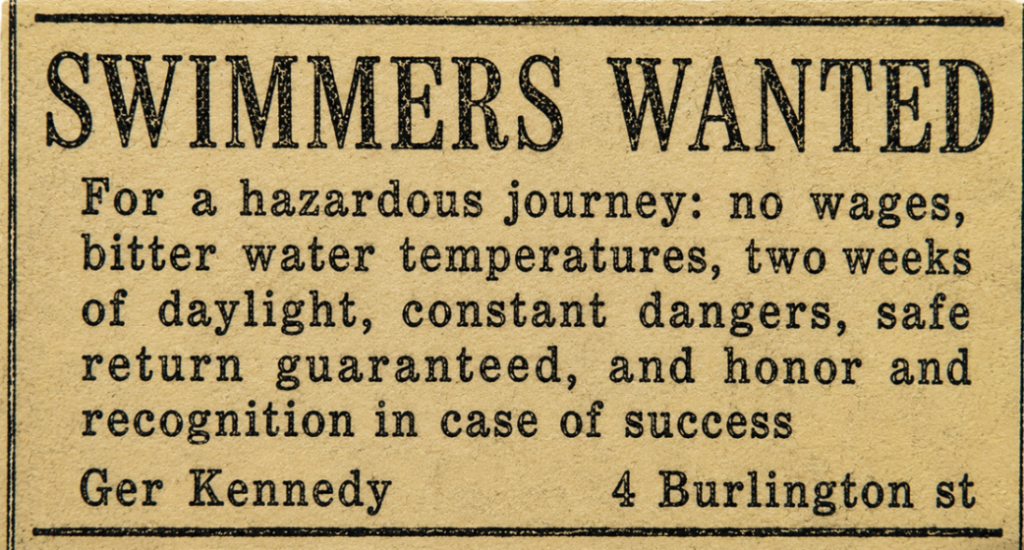
This is my perspective: if you want some adventure, venture beyond the shoreline.
On dryland, contemporary humans live pretty safe, comfortable, predictable lives…at least in terms of basic survival.
Ger Kennedy (56, Ireland, IISA bio here, @gerkennedy_swimmer) had the privilege of attending a weekend of Ernest Shackleton events in Dún Laoghaire including the launch of the Spirit of Shackleton vessel, also attended by the President of Ireland and Sir Robin Knox-Johnston. Kennedy listened to accounts of the Shackleton, Amundsen, & Scott expeditions, as well as their decision-making when facing life-or-death situations.
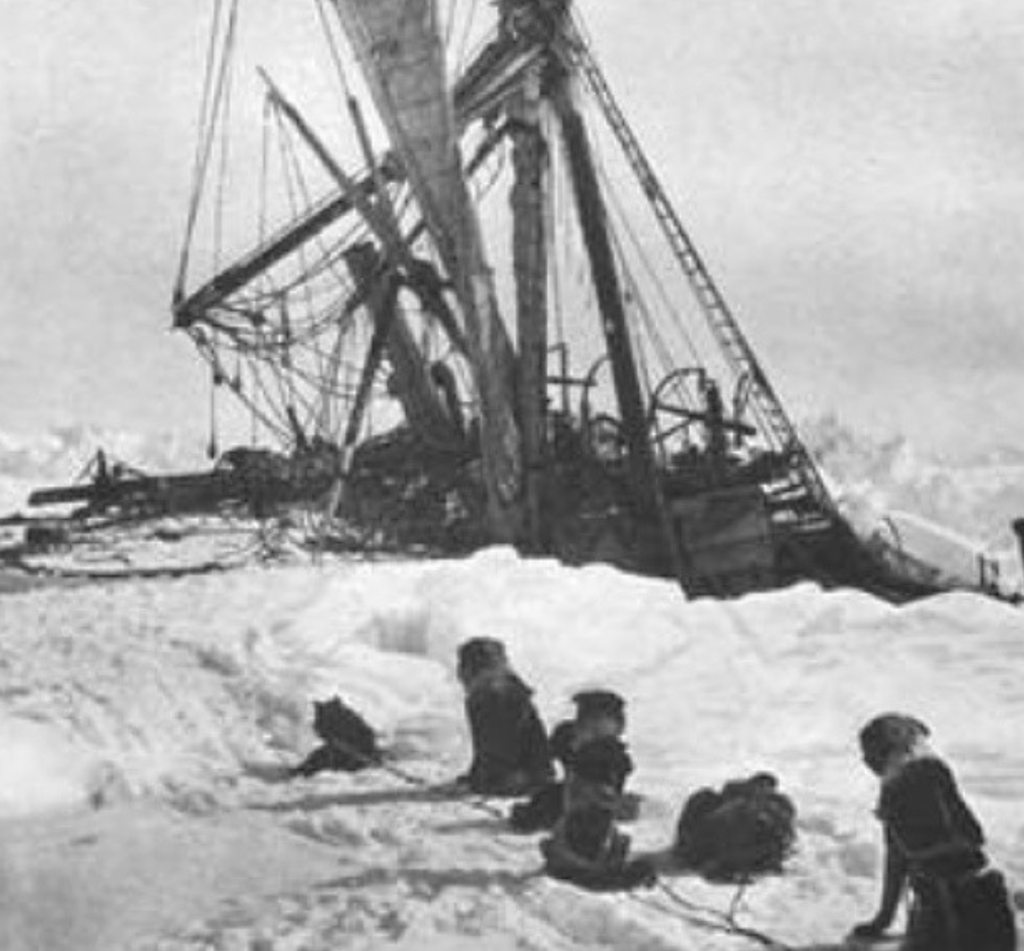
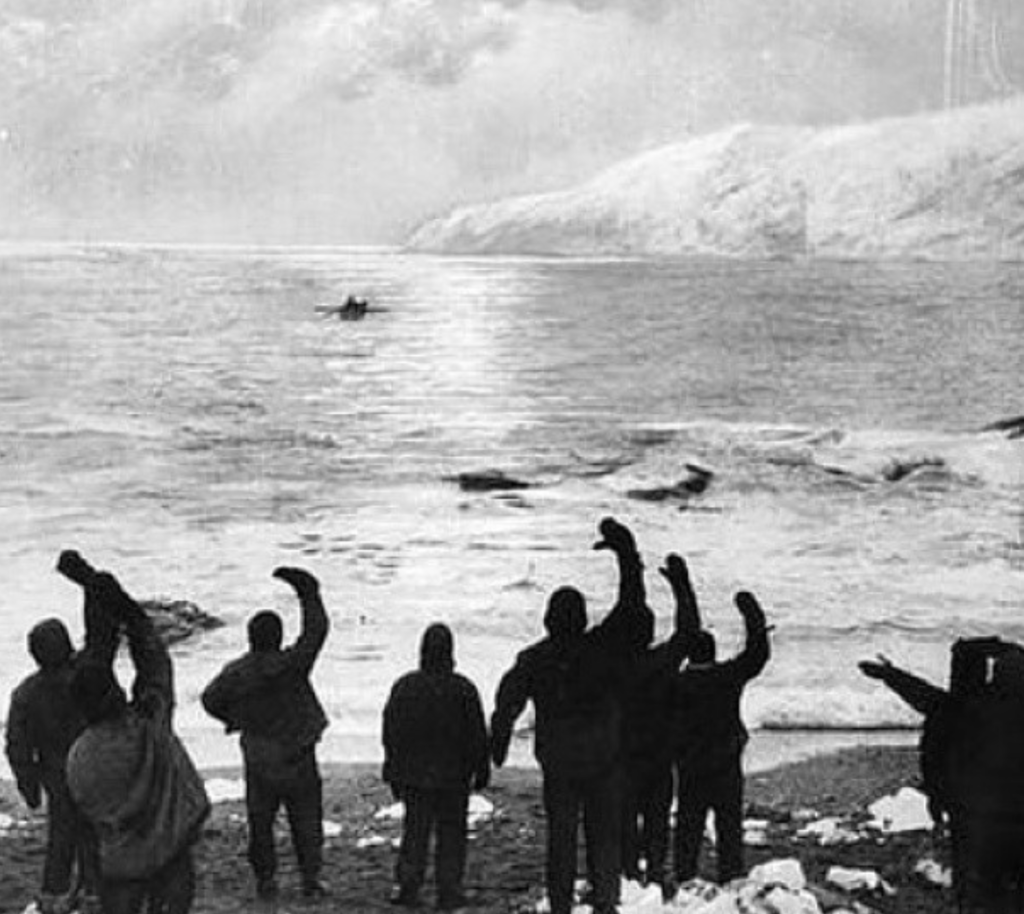
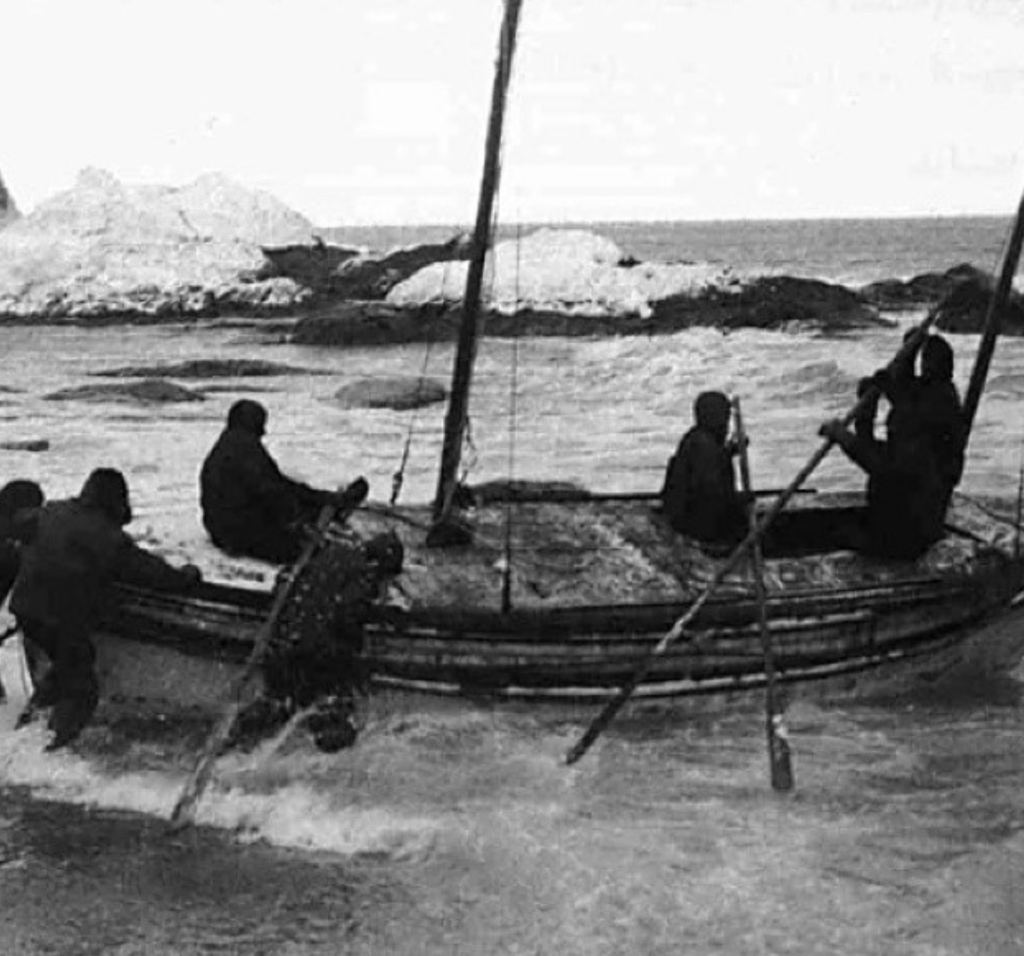
I love that history and the incredible resilience of explorers of times long gone by. With all our modern conveniences – from refrigerators to escalators, from GPS to airplanes – we have lost much of that resilience of previous generations from the past.
Think about it.
Air-conditioned cars and WiFi-enabled trains take us places in comfort.
Call Uber for a short ride, make an airplane reservation on your mobile device, catch a high-speed train to another country; fly to another continent on the spur of the moment; enjoy the sumptuous meals on a mega cruise ship. The modern-day transportation industry has devices so many ways to make our travel easy, temperate-controlled, and comfortable.
We can walk upstairs – or, a vast majority of humans simply take an escalator or elevator to the second floor. We can even move through an airport via a moving walkway or . Luggage has rollers and single-passenger electronic carts are available in large retail locations. Self-driving cars will soon populate the streets. Even ambulatory means to travel short distances have been made easy by mankind.
Go to the supermarket and purchase ready-made food. Heat up water in a microwave or get quick energy with a gel pack or with a heavy-caffein drink bought at a convenience store. Order online for a pizza to be delivered within minutes. The modern-day food industry has made consumption easier and more convenient than any time in history.
But where is modern life unpredictable, risky, and volatile? Where do many ever-changing adventures begin?
On the shoreline.
We can communicate with friends and family around the world at any time via messages, videos, links, photos or emotcons with email, text, line, Whatsapp or SMS by touching buttons.
But on adventures in the ocean and remote open bodies of water, depending on where you are, many times those communication links fail. The umbilical cord to others on dryland is cut.
The adventurous lifestyle of bygone years is renewed.

Wristwatches can now accomplish the functions of phones and computers and storage devices. The contemporary communications industry has eliminated the need to ever again handwrite a letter, dial a phone, go to the post office or purchase stamps.
But reading blog posts of adventurous swims is always exciting and inspirational to me. The eloquence of marathon swimmers and ice swimmers reliving their swims in first-person prose is wonderful to read.
Watch a movie, see a drama or documentary on television, experience virtual reality with glasses, or play games – by yourself or with others – on all kinds of electronic devices while traveling, in school, at work, or in bed. Enjoy films, videos, concerts, apps, games or music produced by professionals or by yourself at the push of a button. The modern-day entertainment industry has completely transformed the ability of mankind to laugh, smile, cry, dream or learn.
But watching open water swim documentaries and short films is always so motivational and educational. We can learn and see what drives adventurers like Sarah Thomas (43, USA, MSF bio here, @sarahswims04), Mark Sowerby (52, Australia, MSF bio here), Ross Edgley (40, Great Britain, @rossedgley), Lewis Pugh (56, Great Britain/South Africa, MSF bio here, @lewis.pugh), Bárbara Hernández Huerta (40, Chile, MSF bio here, @barbarehlla_h), Stève Stievenart (48, France, IISA bio here), Catherine Breed (31, USA, MSF bio here).
Translate foreign words, articles or books online in any language to your mother tongue. Look up quotes, references, background information, people, events, and any kind of data online within milliseconds. Crunch numbers of impossible size, make calculations without even knowing formulas, research historical data through the convenience of your computer, iPad, mobile device, phone or watch. The software industry has put mankind’s collective knowledge and history in the hands of anyone with access to the Internet.
However, learning what makes these open water swimmers – of any age – is best by listening to them first-hand or reading their own recollections of their swims and their preparations and their personal motivations.
Hot and humid? Turn on the air conditioner. Snowing and cold? Turn on the heat. Hungry? Go to the refrigerator or use the microwave. Lost? Check online. Frustrated or bored? Grab your phone or mobile device. Stumped, confused or curious? Turn on your computer. Modern technology has innumerable means to resolve myriad human conditions, situations and issues.
But these swimmers endure mind-boggling cold and rough conditions that would defeat nearly every other human on the planet – now and in the past.
Simply put, these swimmers – modern-day adventurers – inspire me.
I think it is inherently good to test yourself, push yourself, or question yourself. It is fundamentally human to fail at something or fear something. The innate self-satisfaction to improve and achieve something is a great internal drive.
That sense of self-satisfaction can come by running far, cycling farther or climbing higher on land. It can come by studying and learning concepts at school or making discoveries or inventions in the lab or workplace. It can come by trying and ultimately accomplishing things that no one else ever done. Humankind’s history is shaped by those with the vision, courage and curiosity to push boundaries and conventions.
Open water swimming is one brilliantly simple option to seek adventure in our modern world. By leaving the shoreline and swimming out to the open water, we can face inherent risk with a reasonable amount of safety. We can face all kinds of marine life and conditions that can change dynamically – for the better or worse.
Forget conveniences and comforts of the terra firma. Face your fears. Challenge yourself. Live adventurously in the open water.
© 2026 Daily News of Open Water Swimming
“to educate, enthuse, and entertain all those who venture beyond the shoreline“
World Open Water Swimming Federation, a human-powered project
Postscript – Many of these swimmers have achieved an Aquatic Bannister, a feat or an open water swimmer who achieves an open water swimming feat previously thought to be impossible by swimmers, coaches, pilots and fans of the open water swimming world. It is based on the pioneering achievement of Sir Roger Gilbert Bannister CH CBE FRCP who was a British middle-distance athlete (and future neurologist) who ran the first sub-4-minute mile in history. Running a mile in under four minutes was thought to be impossible, a widely propagated myth created by sportswriters, but it was debunked by Bannister when he ran a 3 minute 59.4 second mile in 1954 during a track meet at Oxford University.