The Global Open Water Swimming Conference was a groundbreaking symposium and networking event for open water swimming event directors held in 2011 in San Francisco. Of the many representatives in attendance, several were from over a dozen countries. The event came about due to the death of American Fran Crippen in October 2010.
“Due to the circumstances and lack of information surrounding Fran’s death during a FINA 10 km Marathon Swimming World Cup race in the United Arab Emirates, we thought the sport deserved a public discussion and discourse of what was necessary to improve the level of safety in open water swimming,” explained Steven Munatones. “While USA Swimming did not want to address these issues, US Masters Swimming and Pacific Masters Swimming both stepped up to the table and helped organize the event.”
One of the presentations was made by Ralph Goto, the Administrator of the Ocean Safety and Lifeguard Services Division of the City & County of Honolulu and winner of the 2012 Paragon Award by the International Swimming Hall of Fame. He talked about the emergency situation that he oversaw at the 2003 Waikiki Roughwater Swim where 361 swimmers were pulled from the ocean due to shifting currents off Waikiki Beach.
It was not an isolated event for the 3.8 km swim across Waikiki Bay.
In September 2019 at the 50th annual race, 350 swimmers were rescued by Ocean Safety lifeguards, Honolulu Fire Department, personnel and good samaritans on Waikiki Beach with no reported injuries. Using jet skis, boats, canoes, surfboards, and kayaks, augmented with an aerial view with a helicopter, every one of the participants were rescued and accounted for. starting around 9:45 a.m. Crews on jet skis and boats, as well as good samaritans with canoes and kayaks, pulled swimmers from the water as HFD’s Air One scanned the race course from the sky. Only 34% of the swimmers ultimately finished the race won by Grant Cleland and Trudee Hutchinson, both professional marathon swimmers from Australia.
In September 2016, nearly 300 swimmers could not finish due to strong currents after the first turn buoy with surf up to 1 meter and winds up to 40 kph. Only 57% of the swimmers ultimately finished the race won by Ollie Signorini from Australia and Cherelle Oestringer from Switzerland.
2026 Victoria Harbour Race
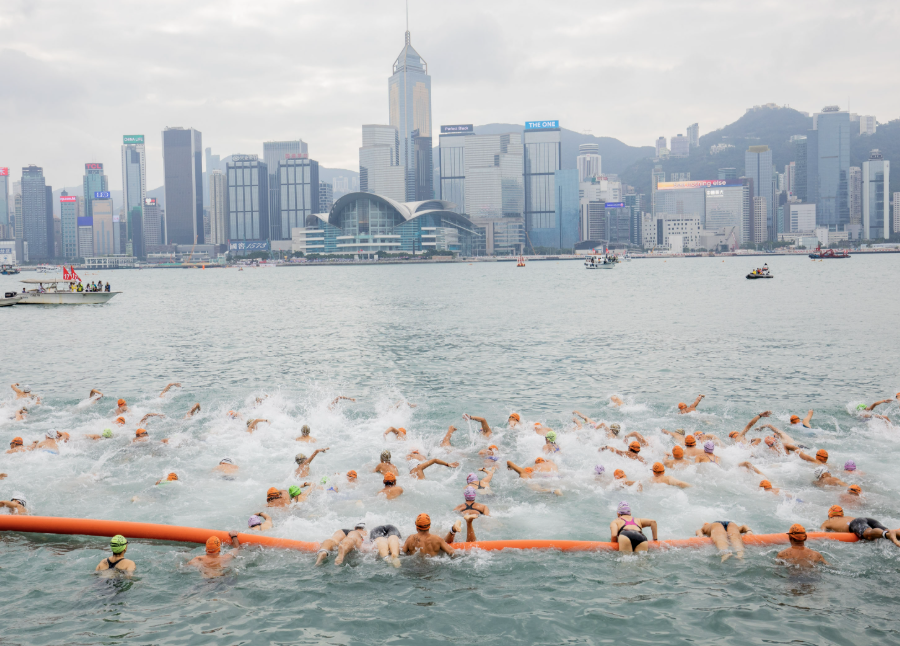
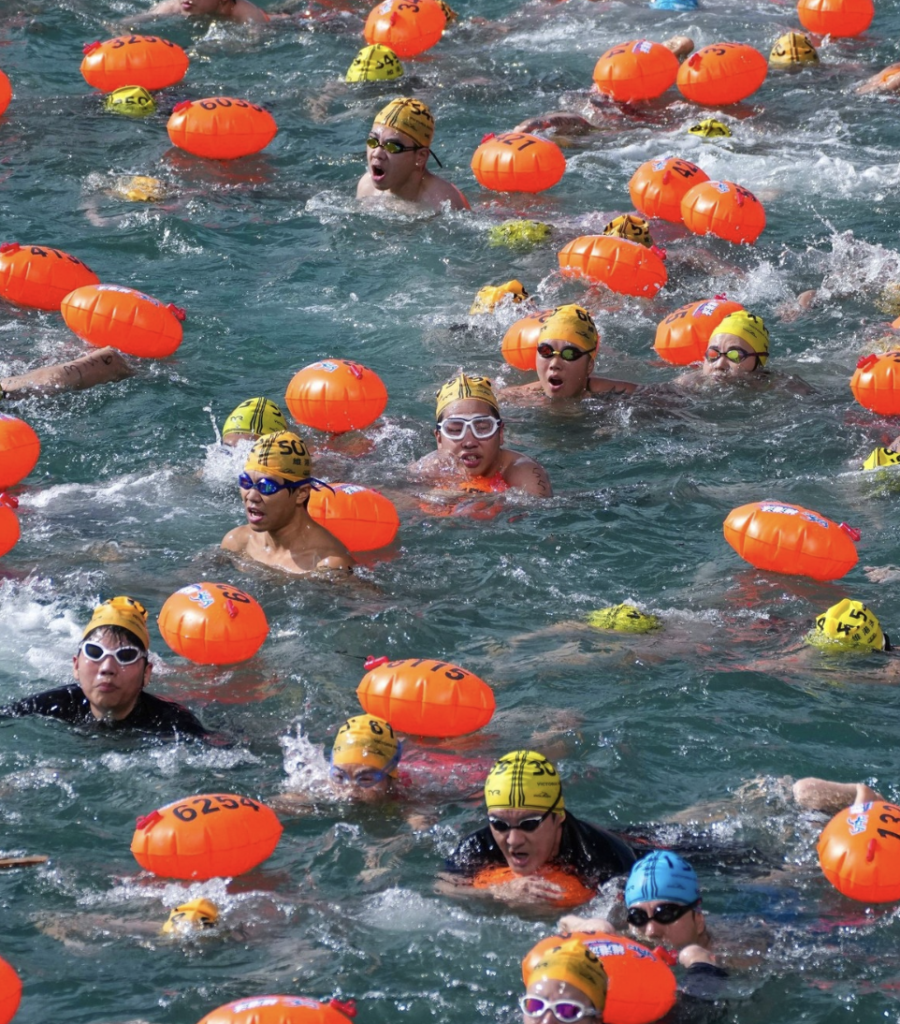
Most recently, 700 swimmers were not able to finish the 1 km Victoria Harbour Race from Wan Chai to Tsim Sha Tsui in Hong Kong, separated into the Racing Group (limited to 300 swimmers) and the Leisure Group (limited to 3,700 swimmers).
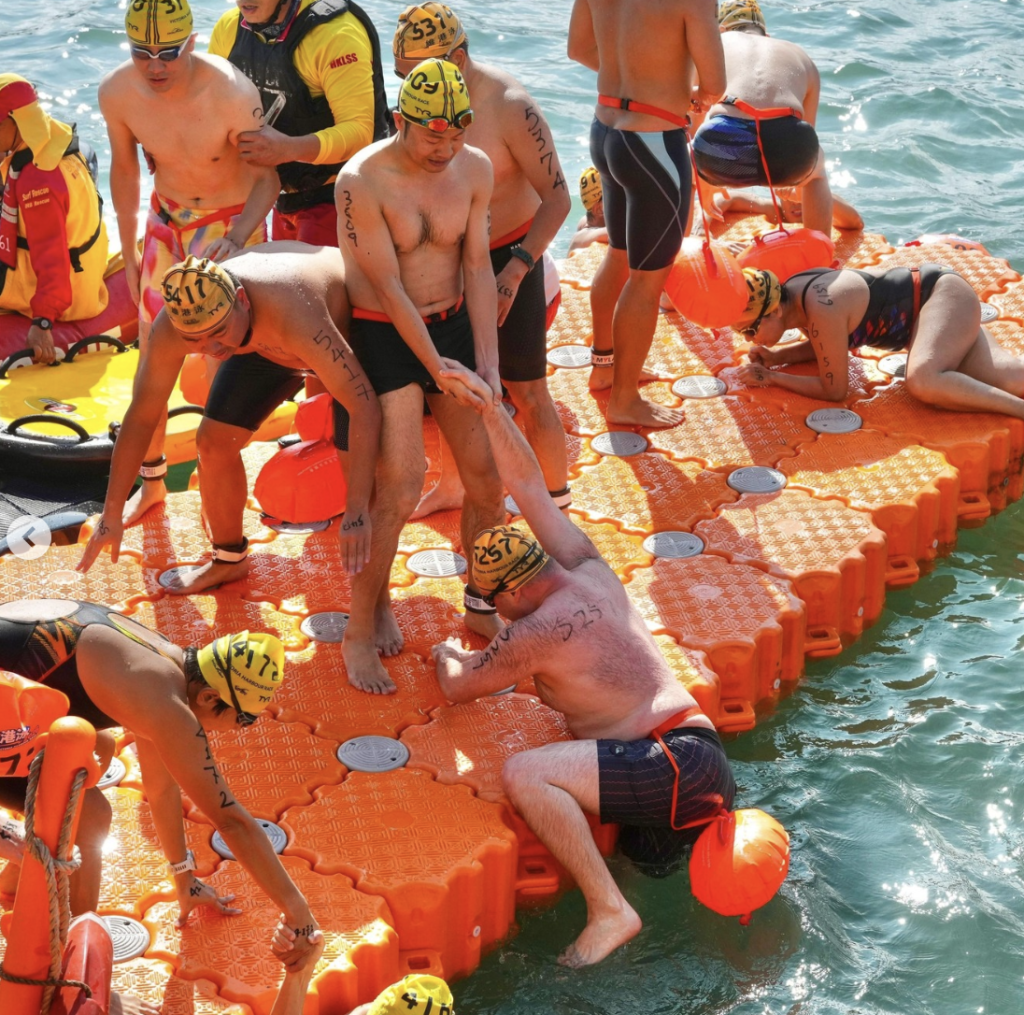
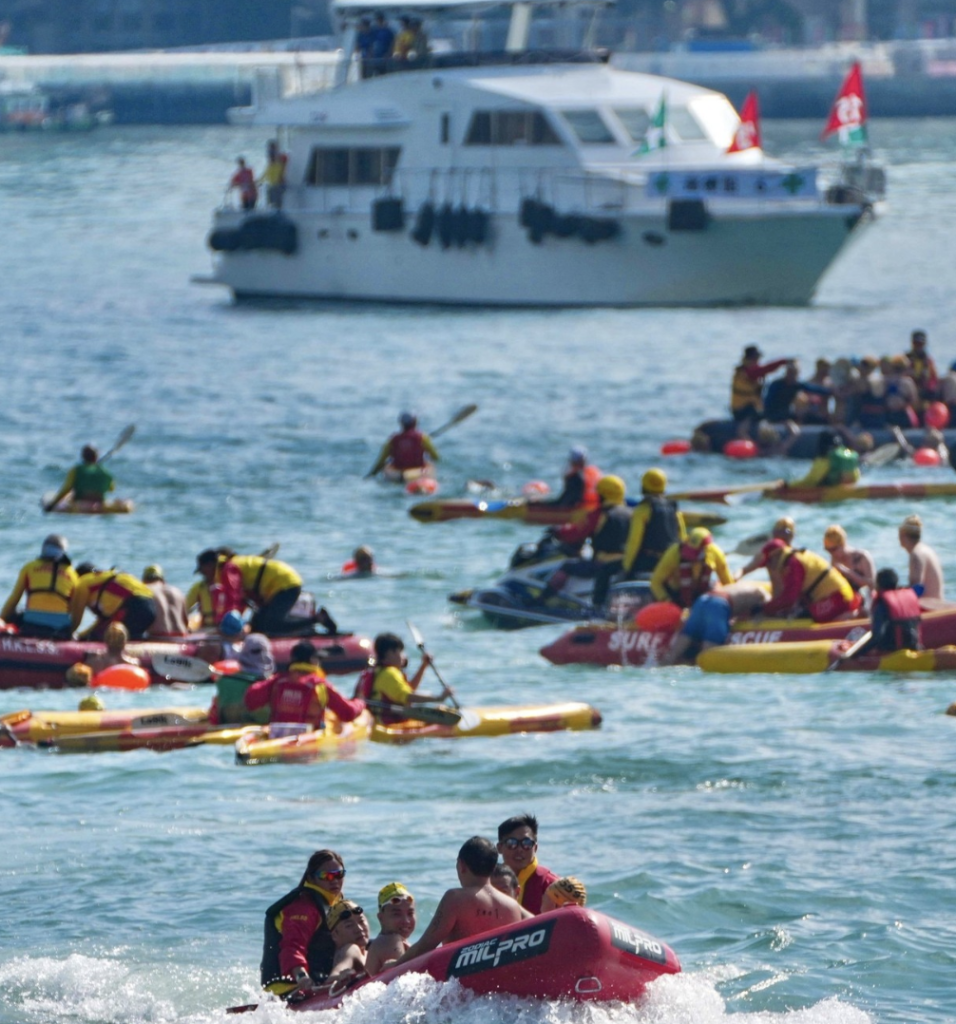
Similar to the Waikiki Roughwater Swim in Hawaii, there was a level of fear at the individual level and overall disappointment for hundreds of swimmers who were not able to finish or even start the race. While some number of undisclosed swimmers were pulled from the water, the last wave of 700 swimmers were cancelled. Ronnie Wong Man-chiu, president of the Hong Kong China Swimming Association and former chairman of the FINA Technical Open Water Swimming Committee, noted changes in the speed and direction of the currents led to cancellation of the final waves – even though 3,145 swimmers were able to start and finish earlier in the morning.
One problem swimmers pointed out was that the faster groups of swimmers in the Racing Group started earlier during slack tide when there was no current, but then the slower groups of swimmers in the Leisure Group started over an increasingly fast tide – up to 1 knot (almost 2 km per hour). These situations have occurred many times before including swims around Atlantic City in New Jersey and the Swim around Charleston when tides and currents either changed or are dismissed.
But it is times and conditions like this where the experience and expertise of lifeguards becomes highly valued and appreciated. And, when chaos and currents reigns, everyone can be a lifeguard and look out for their fellow swimmers.
© 2026 Daily News of Open Water Swimming
“to educate, enthuse, and entertain all those who venture beyond the shoreline“
World Open Water Swimming Federation, an exclusively human-powered project