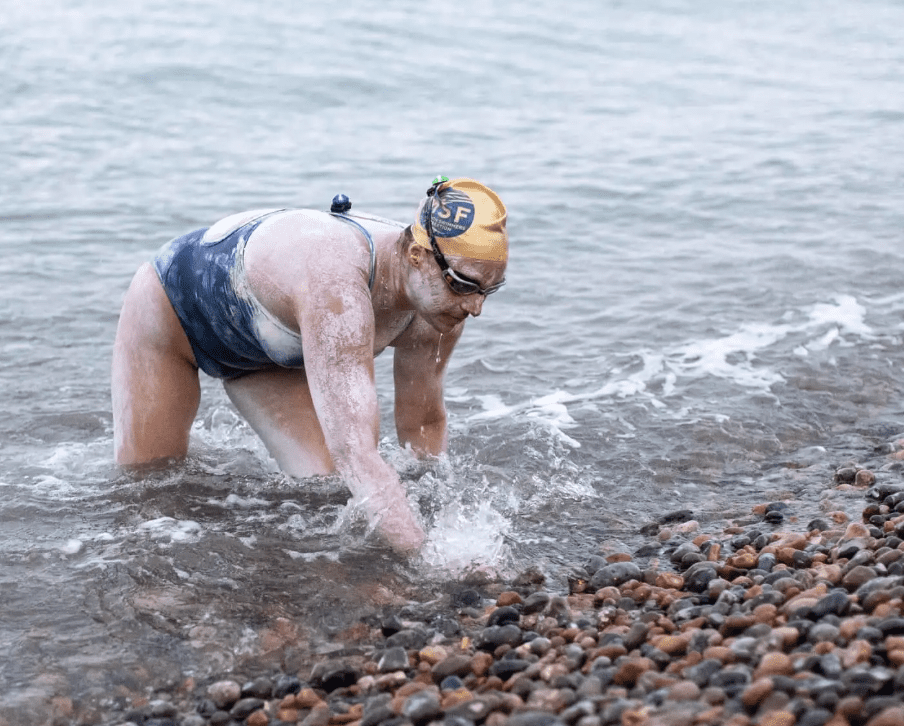
In the marathon swimming world and channel crossing community as well as for stage swims, circumnavigation swims, and ice swims, swimmers discuss and seek ratification, verification, certification, sanction, authentication, confirmation, documentation, and observation. After reviewing the myriad differences by many governing bodies, what do all these terms mean?
After thinking about what is being required of swimmers, the answer seems to be: it all depends.
Is the swimmer’s goal to be listed on the Marathon Swimmers Federation LongSwims Database or confirmed by the Irish Long Distance Swimming Association, or to obtain a Guinness World Record – for example?
A cursory view of Facebook or Instagram brings up many smiling swimmers holding their GWR certificates confirming their swims. So how did they obtain the Guinness World Record certificates?
There are so many questions on ratifications:
- Are these certificates based on a ratification document, verification letter, governing body certification, authentication by an association?
- What does these confirm or document? What is the information required? If you swim for 12 hours and the water temperature for one of those hours is not logged, what happens?
- Does a ratification representative actually have to be present on the escort boat to personally witness a swim in order to ratify the swim? Or can the ratification be based on information that is passed from someone on the boat to other people who then submit it electronically to the ratification body? In other words, is the ratification based on first-hand observing or can the information be presented second-hand or third-hand?
- Who qualifies as an observer or witness or official?
- Who certifies the observers?
- Can you also be an observer and a support crew member on the same swim?
- How long can you observe a swim in one duration: 2 hours, 4 hours, 6 hours?
- What if one observer gets seasick and cannot observe during their designated shift? What happens?
- Can you be a relative or a friend (close or distant) of the swimmer and still be considered an objective official or observer or witness?
- Can – or should – an observer or ratification body be paid? If so, how much is reasonable?
- Is there a time limit when information must be provided to the ratification body? One week, one month, one year?
- Must the information be presented in hand-written form or should it be submitted online based on a strict format?
- What does the Guinness World Records require for a GWR certificate?
- How many independent ratification bodies actually interact with Guinness World Records?
- Can a swimmer go directly to the Guinness World Records?
- If you plan a swim and the swim deviates from the submitted plan, what is ratified: the old plan or the revised swim?
- Is there a clause in ratification procedures so swimmers can change their plan in mid-swim and the swim is still ratified?
- Does experience count? Should it?
- Are swimmers with disabilities treated differently or are given special exemptions or exceptions?
There are so many questions…and so many different answers depending on who is being paid as the ratification body and who is actually writing and approving the verification (or ratification or certification or sanctioning).
Each channel crossing, each lake, and each river has its own organizations, traditions, procedures, and requirements. These organizations include the Channel Swimming Association (established 1927), British Long Distance Swimming Association (established 1956), Irish Long Distance Swimming Association (established 1966), Catalina Channel Swimming Federation (established 1981), Channel Swimming and Piloting Federation (established 1999), and Strait of Gibraltar Swimming Association (ACNEG, established 1999). But a number of new organizations have proliferated most recently.
For swims that fall outside these established governing bodies, the gold standard of ratification is the Marathon Swimmers Federation (established 2012). MSF’s first sanctioned swim was performed by Anthony McCarley who completed the first documented one-way, two-way, and three-way crossing between St. Thomas and St. John in the Caribbean Sea called the Pillsbury Sound Triple (see here and below).
Over 400 swims have been documented and ratified by the Marathon Swimmers Federation since, far outpacing other services.
Information on the MSF Documented Swim platform is available here: https://ultraswimming.org/swims.
As founder Evan Morrison writes, “MSF Documented Swims is a platform to document and ratify independent open-water marathon swims. It is a widely recognized gold standard, ratifying over 400 swims since 2013, including dozens of “firsts” and the world distance records for Longest Open Water Swim and Longest Ocean Swim. Each Documented Swim undergoes rigorous review to ensure the highest standards of integrity, thoroughness, and adherence to standard marathon swimming rules and conduct.”
Ice Swimming
And for ice swimming, the International Ice Swimming Association (see here) separates responsibilities between an observer and a witness by their qualifications, responsibilities, and level of involvement in monitoring the swim:
- Observer:
- Qualified by experience and integrity to monitor an IISA Swim.
- Has the specific responsibility of ensuring adherence to the IISA Rules and Regulations, monitoring the safety conditions, and verifying the integrity of the information provided.
- Acts as an official adjudicator of the rules during the event and documents the swim via a formal observer report.
- In the future, all observers will be IISA Officials.
- Witness:
- A person who is present at the swim and testifies to its adherence to the IISA Rules in the swim application.
- Must be familiar with the basic requirements of the swim but does not necessarily need the same level of specific qualification or experience as an observer.
- Their role is essentially to provide additional confirmation of the event, working alongside the observer.
The observer is the primary official with a direct and active role in monitoring and documenting the ice swim’s compliance and safety, while the witness is a secondary individual who confirms that they saw the swim take place according to the rules. Both are required for a swim to be officially ratified.
© 2025 Daily News of Open Water Swimming
“to educate, enthuse, and entertain all those who venture beyond the shoreline“
World Open Water Swimming Federation, a human-powered project