
Prior to his sixth swimming expedition to Antarctica, Ram Barkai (68, South Africa, IISA bio here, @rambarkai_iceswimmer) explains how he prepares for another audacious adventure from a physiological, psychological, logistical, and operational perspectives:
Physiologically
Barkai explains, “I’ve swum a lot in the ice, and I swim in cold water regularly. For me, Antarctica is just mental. I do not really prepare physiologically. I just need to make sure that I am fit.
Barkai’s ice swimming experience is unparalleled, as one can imagine, as he is the founder of the International Ice Swimming Association. In addition to his 19 documented Ice Kilometers, Barkai has completed 11 Ice Miles including
- A 1.43 Ice Mile in 4°C water and 0°C air in Lake Zurich, Switzerland in January 2009 in 43 minutes 0 seconds
- An Ice Mile in 4.5°C water and 5°C air in Fraserburg, South Africa in July 2010 in 33 minutes 0 seconds
- An Ice Mile in 5°C water and 10°C air in Fraserburg, South Africa in July 2011 in 28 minutes 59 seconds
- An Ice Mile in 2°C water and 0°C air in Loch Fiskaley, Scotland in January 2012 in 28 minutes 3 seconds
- An Ice Mile in 1.7°C water and -5°C air in Fraserburg, South Africa in July 2012 in 31 minutes 33 seconds
- An Ice Mile in 3.5°C water and 0°C air in Lake Holborough, Kent, UK in January 2013 in 31 minutes 14 seconds
- An Ice Mile in 0°C water and 0°C air in Murmansk, Russia in March 2013 in 32 minutes 43 seconds
- A 1.03 Ice Mile in 4.6°C water and -2°C air in Vitava River, Branik, Prague in December 2014 in 30 minutes 0 seconds
- An Ice Mile in 4.63°C water and -15.1°C air in Aukreyri, Iceland in December 2015 in 32 minutes 18 seconds
- An Ice Mile in 4.7°C water and 17°C air in Lake Baikal, Russia in June 2017 in 31 minutes 45 seconds
- A 1.03 Ice Mile in 4.61°C water and 0.3°C air in Svalbard, Arctic Sea in June 2017 in 28 minutes 16 seconds
Psychologically
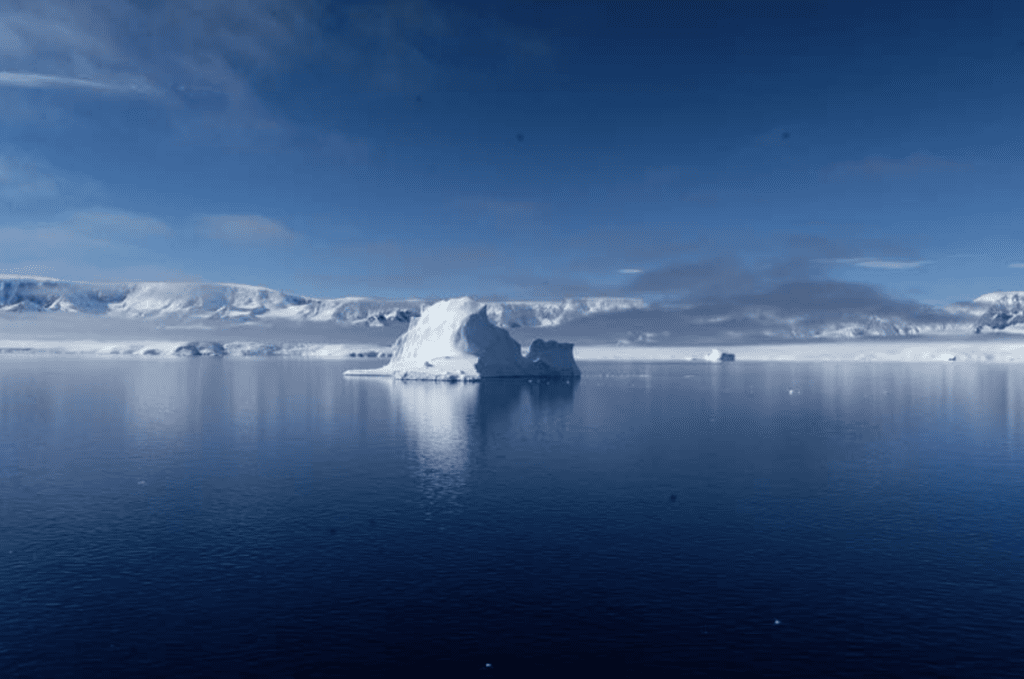
Barkai continued, “However, for someone fresh in the ICE or first time in Antarctica, I would suggest the same training you do for any ice swim. T ry to do some mental training. Go swim in tough conditions, safely, but in places that scare you and coldish. Antarctica is very intimidating, and conditions shift in seconds. If that rattles you, you need to prepare. Water temperature will be around -1°C. There is nothing you can do about it – only decide if you get in or not. But you can get your mental strength and focus in gear.
Anxiety is normal and healthy, just don’t let it take over. The cold will be brutal at -1°C water temperature. It is what it is, so focus on things you can control. Make a plan – what do I do when it overwhelms me? I run a checklist on myself, and count strokes to focus my mind on the next stroke…not think about the place that I’m in.”
Logistically and Operationally
He explains, “I have experienced such adventures many times. I n someways, I switch to military operation mode, but try not to be too hard on the swimmers. In Antarctica, there is no time for hesitating or mistakes. It’s not all deadly, but the swimming windows come and go very quickly, and we don’t know where we swim until we’re close to the swim time. I pair people up and prepare a recovery plan on the ship.
Everyone knows who their support is when they swim, who is their support and second, and who they are taken to once on the ship. I have spreadsheets, and I share them with everyone. The more they know what is happening, the less anxious they are. There are no secrets, just a robust plan.
Regardless, things can go wrong, and someone can respond to the extreme swim acutely. We are in Antarctica, and we have to sort out any emergencies on the ship.
For me, the responsibility is the heaviest task. I think about it 24/.7 in Antarctica. Everyone knows they swim at their own risk. I don’t push anyone to do something they don’t want to.
But I am ruthless with safety. I don’t care how much you paid to come here; the doctor or I will take you out if we are concerned about your well-being. Most people are sensible and know when to stop. If you are experienced in open water cold, you know. It’s not about swimming through pain or mental fatigue; it is simply when you stop covering distance. You can’t rest and regain power at this temperature.
However, nothing great is easy; it is a life-changing experience. Like travelling to another frozen planet, swim, and come back. It is so surreal, it stays with you for life.”
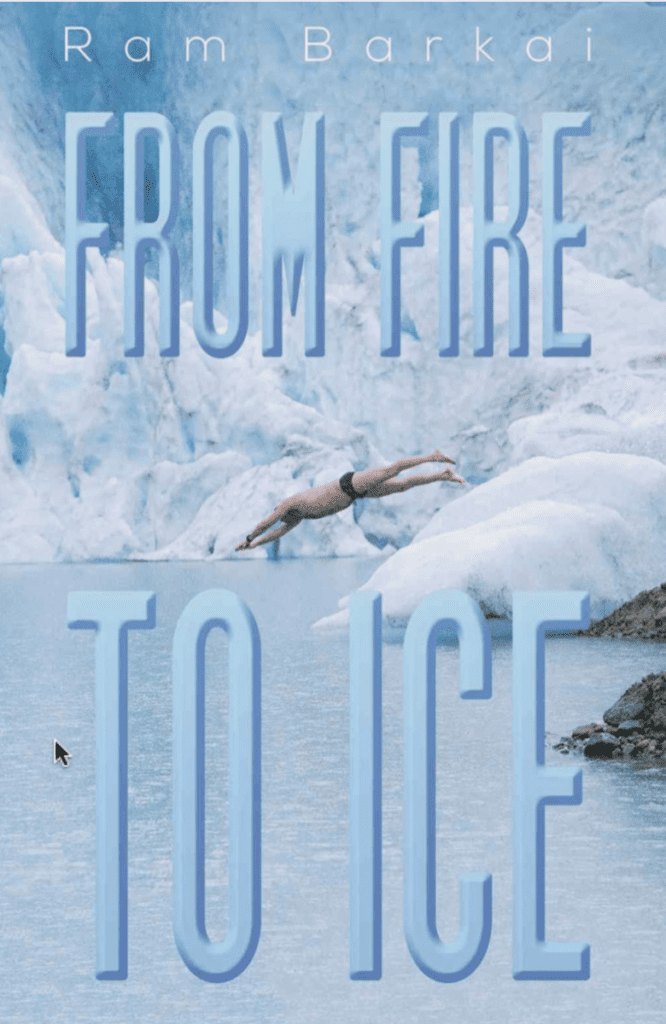
Author of an autobiography, From Fire to Ice, Barkai is intense and passionate, knowledgeable and experienced, in, around, and near the Ice.
For more information about the 2026 Ice Swimming Antarctica event between February 28th and March 11th, visit www.iceswimmingadventures.com. For the brochure, visit here with distances ranging Distances from a 50-meter dip to a 250m test swim to a Polar Ice Swim of 1000m.

© 2026 Daily News of Open Water Swimming
“to educate, enthuse, and entertain all those who venture beyond the shoreline“
World Open Water Swimming Federation, a human-powered project
New Open Water Swimming Educational and Motivational Course – register here