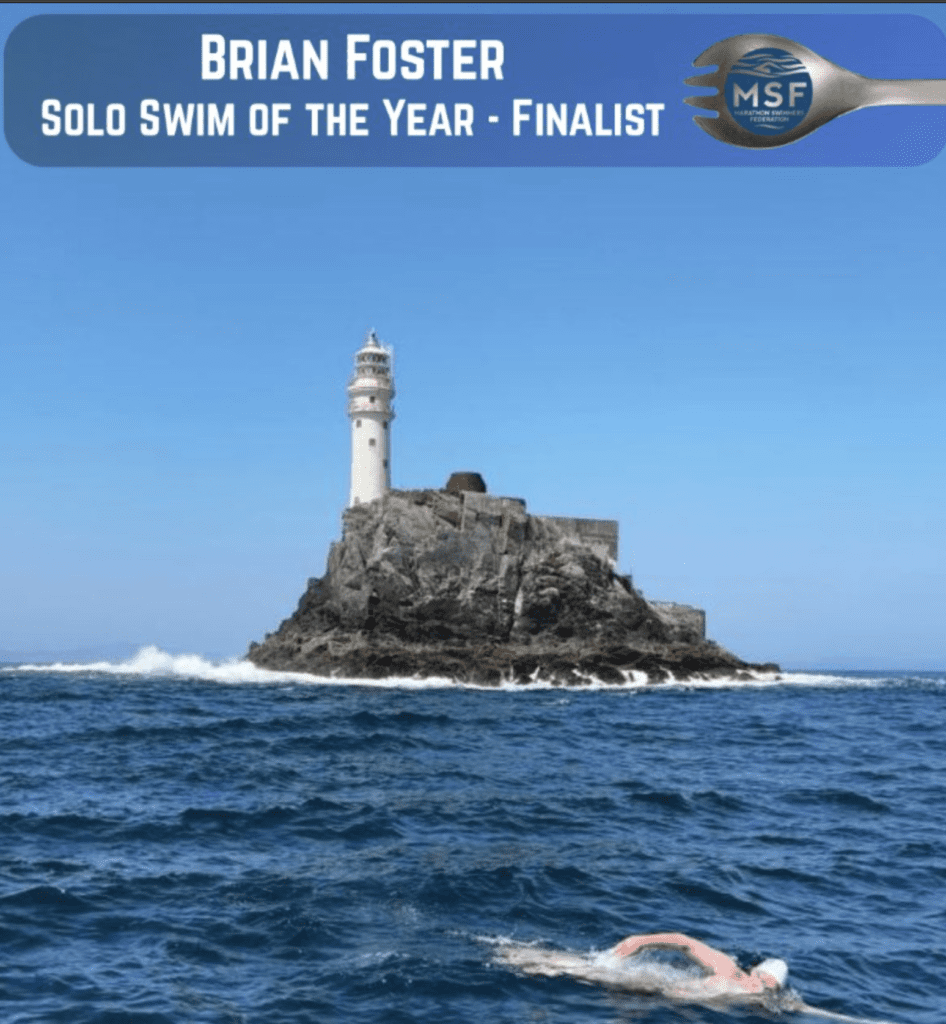
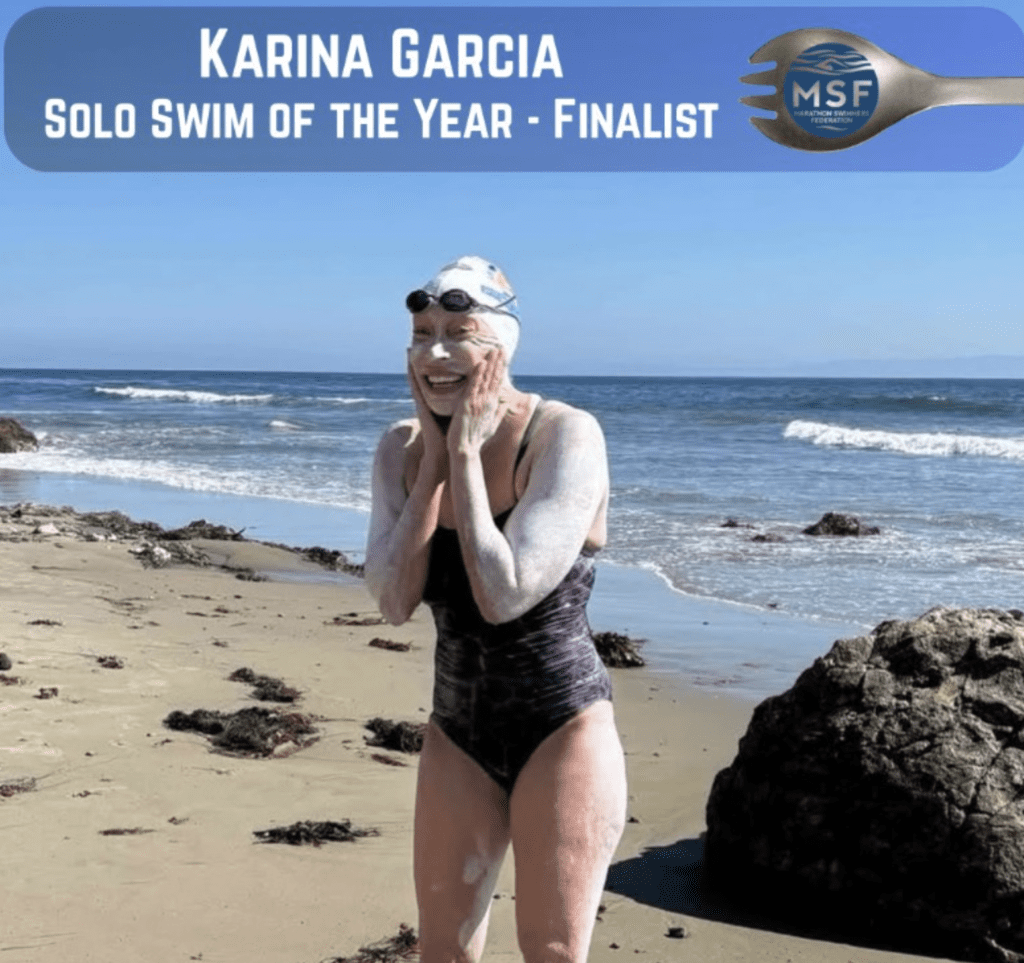
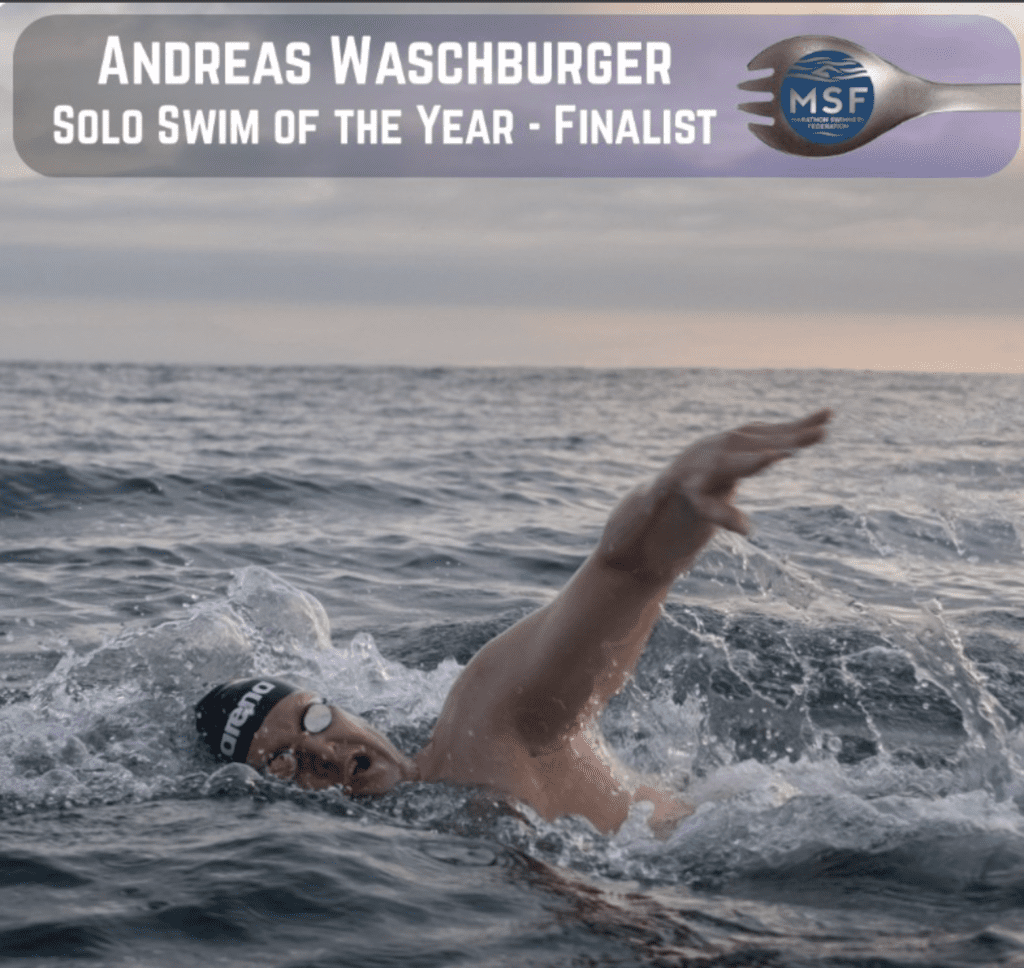
Quinn Fitzgerald and his Silicon Valley-based team at WOWSA announced that they are working towards achieving their vision to make open water swimming safer, smarter, and stronger for the next generation of swimmers.
But the future as they announced it is already here.
It is not one company and one person who will make the community bigger and better, it is the collective whole. The momentum has begun and will continue.
Making the Sport Safer
Quinn is working on improving the safety of the sport through technology. He points out, “How can tech remove friction and improve safety, while letting the water do what it does best: humble and inspire us. Technology has huge potential to make open water swimming safer and more inclusive without losing its adventurous spirit. From GPS-enabled safety buoys to better event-management platforms, there are ways to use tech to reduce risk and bring more swimmers into the sport.”
From our perspective, that future is already here – and will be continually refined by the people who organize events and oversee channel swims year after year after year.
For example, Ram Barkai and his team at the International Ice Swimming Association (IISA) has been creating systems, rules, protocols, and procedures that help make the extreme sport of ice swimming safe…since 2009. Each year, physicians, experts in Extreme Medicine, Emergency Medical Technicians, and many IISA members continue to monitor, protect, and lead the growing community of ice swimmers.
Similarly, the Catalina Channel Swimming Federation and the Santa Barbara Channel Swimming Association, and their fellow channel swimming bodies from New Zealand and Australia to Japan and across the European and African continents have also been fine-tuning their safety standards over the years as the demand for channel crossings and marathon swimming continues to grow across the world.
The same has long been true at the world’s largest mass-participation swims including the aQuellé Midmar Mile in South Africa [shown below on right], the Bosphorus Cross-Continental Swim in Turkey, the Rei e Rainha do Mar Desafio in Brazil, and the Sun Moon Lake International Swimming Carnival in Taiwan [shown below on left] as well at national open water championship events across the globe.
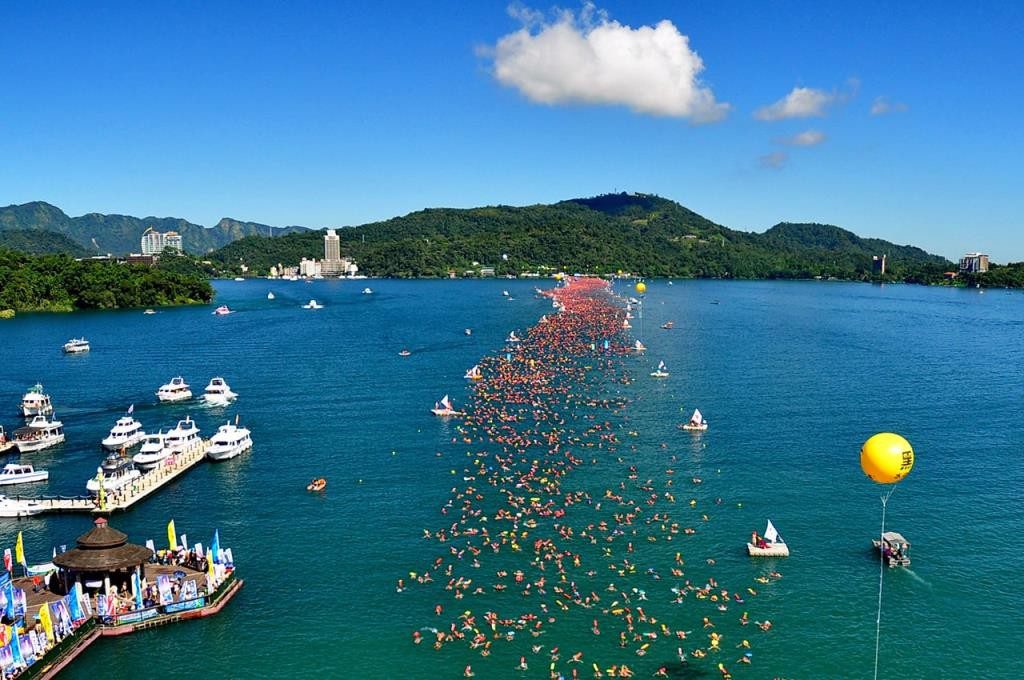
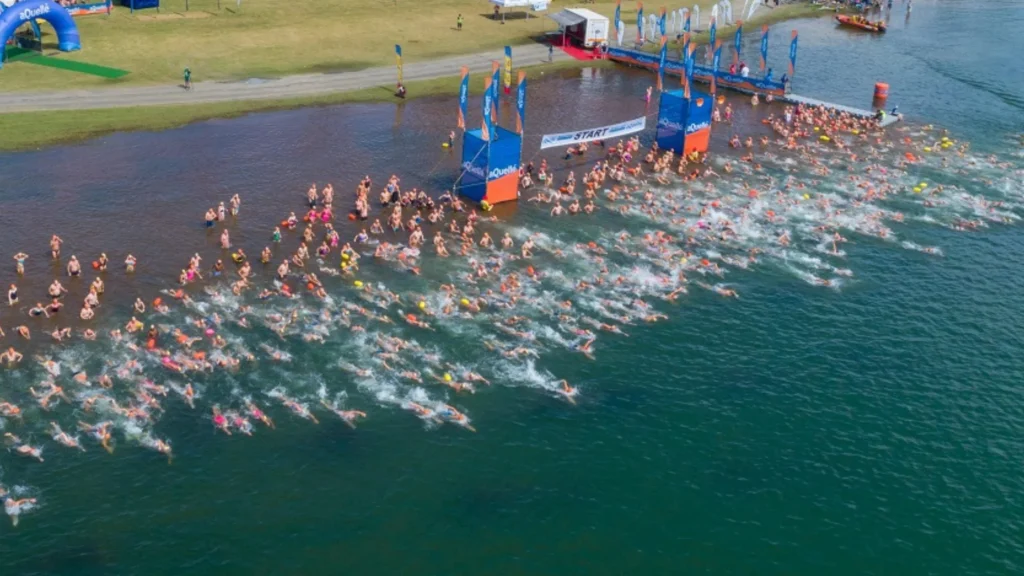
Organizers, administrators, escort boat pilots, support crew, observers, seconds, coaches, paddlers, and escort kayakers have always provided constant ‘eyes on the swimmer‘ while monitoring their conditions and documenting their progress and conditions via written reports, videos, and photography. It remains to be see if Quinn’s GPS-enabled safety buoys and event-management platforms will further elevate the sport.
Making the Sport Smarter
As Quinn explains, “Our mission is about creating those unlock moments for more people, whether through education, safety, or just encouragement to keep showing up when it’s hard.“
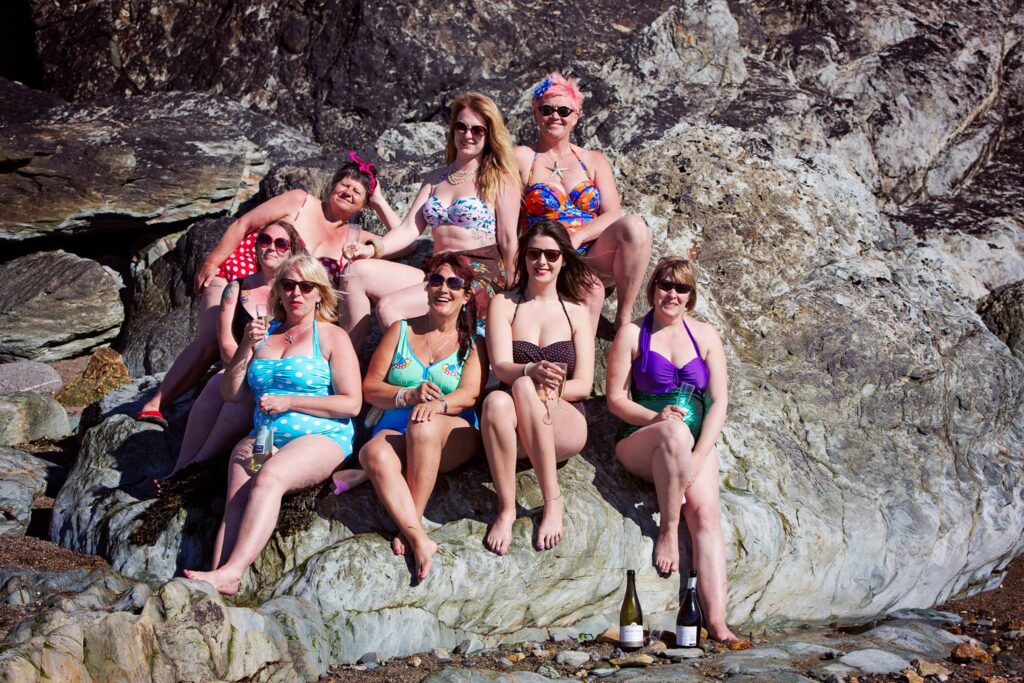
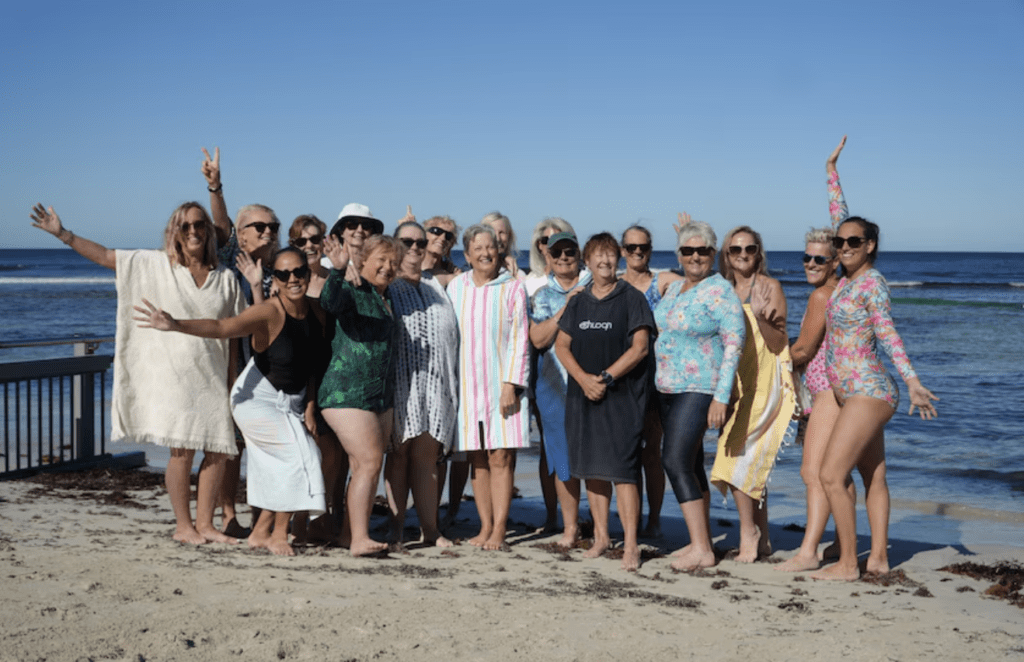
This is precisely what the Sea Shells Teabaggers do in Western Australia [shown below on right] and the Bluetits Chill Swimmers do in Wales [shown below on left] as well as innumerable other open water pods around the world, including those aimed at disabled swimmers like the Ocean City Swim Club by Bruckner Chase and Praia Para Todos in Rio de Janeiro, Brazil.
The number of physicians, engineers, and professionals with PhDs and advanced degrees in the open water swimming community is always surprising to find out. But the scope and depth of intellectual firepower among swimmers is often hidden. Why? Most open water swimmers are inherently humble and are more inclined to discuss their swimming goals rather than their academic and professional accomplishments.
But their passion? It is off the charts.
Their willingness to support and encourage others? It is over and beyond all expectations.
Their joy in seeing the success of others? It exists in abundance, without a doubt.
Making the Sport Stronger
Quinn established the WOWSA Integrity Fund as a community-led ratification system that aims to strengthen the credibility and growth of the sport.
While Quinn has often and loudly announced a lack of credibility in the sport of open water swimming, we believe credibility has long been a hallmark in the sport.
Credibility has long been established since 1927 when the Channel Swimming Association was first established, nearly a century ago. Credibility is rarely an issue in the sport where it is becoming commonplace for people over the age of 50 to swim for more than 15 hours across channels or lakes. Swimmers in their 70s have crossed the English Channel (including 73-year-old South African doctor Otto Thaning, 71-year-old British women Linda Ashmore, 70-year-old Australian Cyril Baldock, 70-year-old British doctor Roger Allsopp, and 70-year-old American George Brunstad).
Growth is not only coming from swimmers on the second half of their life, but also from swimmers in their youth. There has been a merging of the world’s fastest 1500m pool swimmers with the world’s fastest 10 km marathon swimmers. They are often the same. This merger is forcing athletes to train and race at previously unfathomable speeds. Swimmers like Germany’s Florian Wellbrock [shown below], Italy’s Gregorio Paltrinieri, and Tunisia’s Oussama Mellouli are literally the boundaries how fast people can swim 10 km.
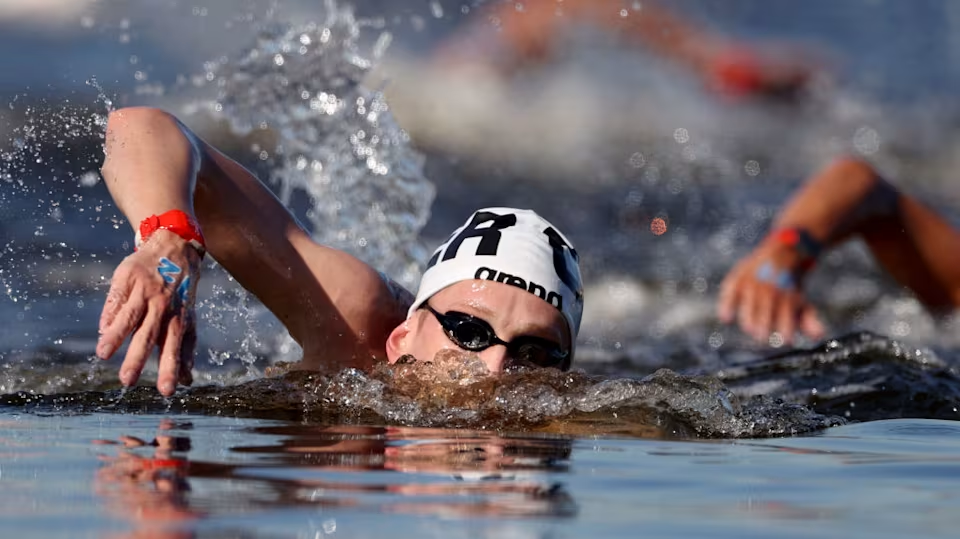
On the women’s side, swimmers like American Sarah Thomas have transformed the definition of the extreme with her multi-day non-stop marathon swims – while Jersey’s Sally Minty-Gravett, MBE has redefined the expected longevity of marathon swimming careers with her soon-to-be six-decade run at crossing the English Channel.
Social media and automatic online translations have enabled and strengthened the bonds of knowledge, awareness, and friendship among open water swimmers of nearly every culture and country. These bonds hold swimmers across borders and culture accountable to each other.
In the previous century, these bonds among swimmers were forged by an initial face-to-face meeting, then augmented by snail mail, telephone calls, and fax. Now, friendships emerge on Facebook and Instagram even without any face-to-face meetings or telephone calls made. Email is the currency of communications that is augmented visually by posts on various social media platforms – which further enables the global growth in the sport.
The Future
Quinn is calling upon his Silicon Valley colleagues to help his organization become financially self-sustaining as a non-profit entity while building his organization to serve as the sport’s global epicenter. His vision is to create “sustainable revenue streams with training programs and safety certifications where athletes, coaches, and newcomers can find resources, education, and a sense of belonging.”
But that same vision is currently offered by a wide variety of entities from SwimTrek and other open water swimming entities, including the first, the biggest, and the most prolific marathon swimming entity: the Marathon Swimmers Federation. Steven Munatones explains, “Evan Morrison, as I have long seen, is setting the standard and influencing the sport, primarily through three major initiatives begun over a decade ago.”
- Since launching in 2014, the MSF Swim Ratification Process shifted documentation of marathon swims from paper, Polaroids, and pen to laptops, smartphones, and the cloud. Morrison created the digital means to comprehensively compile digital Observer Reports. His invention was a tectonic informational shift in the sport of marathon swimming and channel crossing. Morrison’s reports enabled swimmers around the world to include, upload, and view myriad pertinent data of each documented swim while utilizing handheld devices, the cloud, mapping services, and online information. This dramatically changed the landscape of reporting and learning about open water swims around the world. It was an extraordinarily creative use of low-cost and easy-to-use technology that enables the presentation of digital documentation while incorporating videos, photos and GPS tracking into a historical archiving of information. Simply put, the MSF Swim Ratification established and continues to set the standard for documentation.
- A parallel technology pioneered by Morrison and initially offered in 2015 is called the MSF SwimTrack, a powerful, easy-to-use, and simple-to-understand app that enables people all over the world to follow marathon swimmers through a web browser in near real-time. This app literally elevated the sport and brought the global open water swimming community literally and figuratively closer together. The tracking system creates excitement and support across borders and languages. SwimTrack provides significantly better mapping, comprehensive track analytics, and a much more visually dynamic user experience under one interface, compared to other GPS trackers. Without a doubt, SwimTrack remains the standard to which the community has become dependent upon.
- Over the last 9 years, Morrison has also been building the LongSwimsDB, an authoritative, informational, searchable, constantly updated database of marathon and channel swims around the world. To date, Morrison has compiled information on nearly 105,000 swims 10 km and longer, completed by 37,775 swimmers, along nearly 1,600 swim routes and 503 solo swim events and races – from 1875 to the present. It is a remarkable achievement and an invaluable resource for the open water swimming community – and it becomes increasingly so day-by-day.
These three assets and tools – the MSF Swim Ratification, the MSF SwimTrack, and the LongSwimsDB – raised the bar in open water swimming and remain the gold standards in the sport. The tools are simple to use, easy to search, and authoritative. Collectively, the MSF assets help foster the global open water swimming community and celebrate its history. In a world increasingly dependent upon digital and virtual information, MSF is the epitome of enabling a sense of belonging among marathon swimmers and their fans and supporters.

Exciting things continue to happen in the sport – based on the vision, creativity, and support of swimmers the world over.
© 2026 Daily News of Open Water Swimming
“to educate, enthuse, and entertain all those who venture beyond the shoreline“
World Open Water Swimming Federation, a human-powered project
New Open Water Swimming Educational and Motivational Course – register here