


Wow.
After landing in Dublin via a nearly 11-hour flight from LAX, I traveled to Belfast, then Bangor, and then Donaghadee in Northern Ireland. My plan is to watch Andreas Waschburger (38, Germany, MSF bio here, IISA bio here, World Aquatics bio here, @andreaswaschburger) attempt a 35 km crossing of the North Channel from Donaghadee to Portpatrick, Scotland.
But over the last 72 hours in Ireland, I have been impressed and awed by everything that I have seen.
After walking from the train station to the local AirBnB, I observed many fathers and mothers taking their young, uniformed children to school, walking hand in hand. The young faces talk in an animated fashion with mom and dad in hand. The abundance of these smiling parent-and-child pairs is heartwarming to see.
Fortunately for me an American, the US dollar goes far here – it certainly has much more purchasing power in Ireland compared to the much higher priced Southern California where I came from.
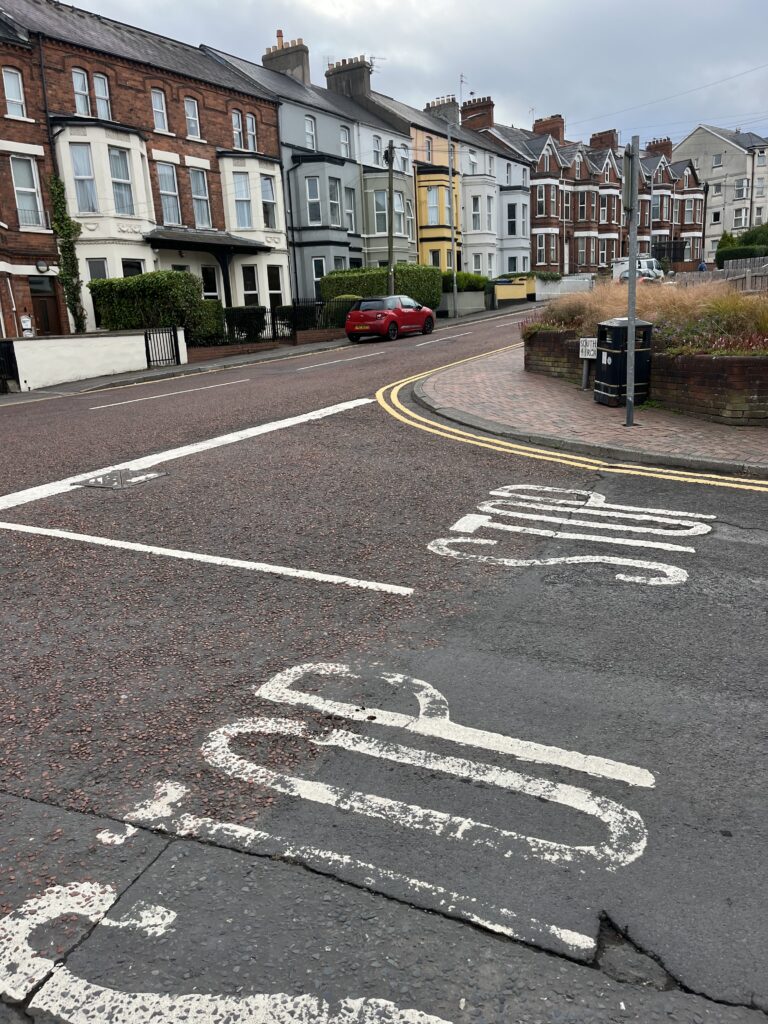
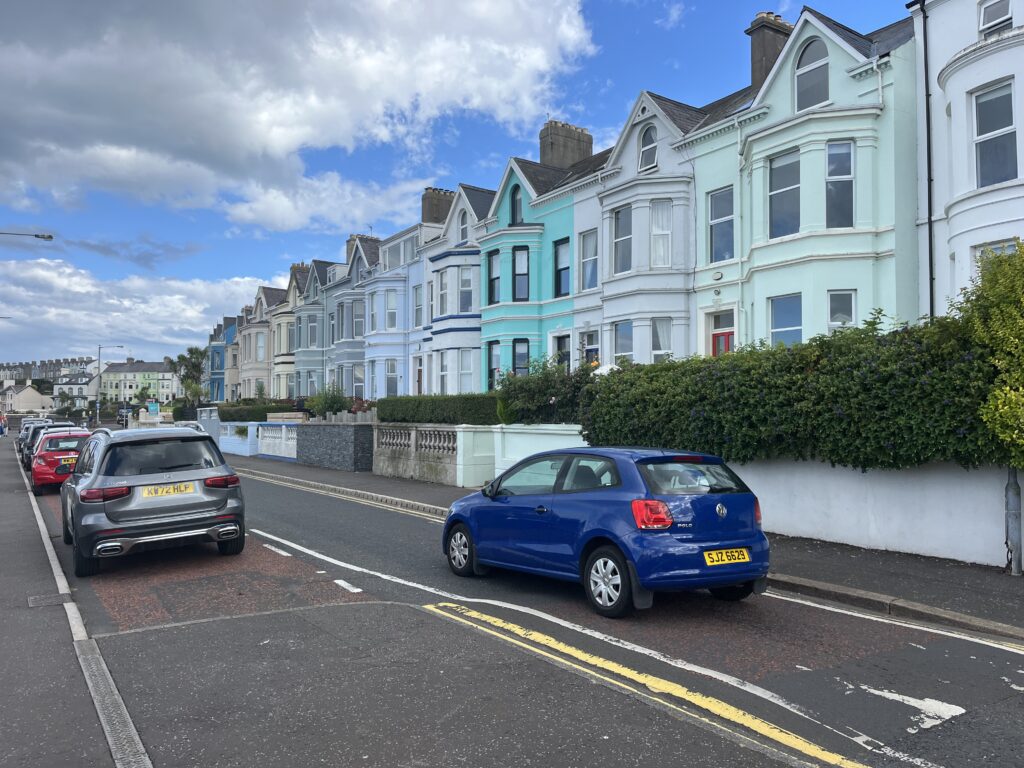
Not unexpectedly, the North Channel itself looks quite ominous and absolutely foreboding from the Donaghadee shoreline – especially with the strong winds, numerous windcaps as far as the eye can see, cloudy, gray skies, and a steady rain pouring down on the green countryside.
And that is from the shoreline.
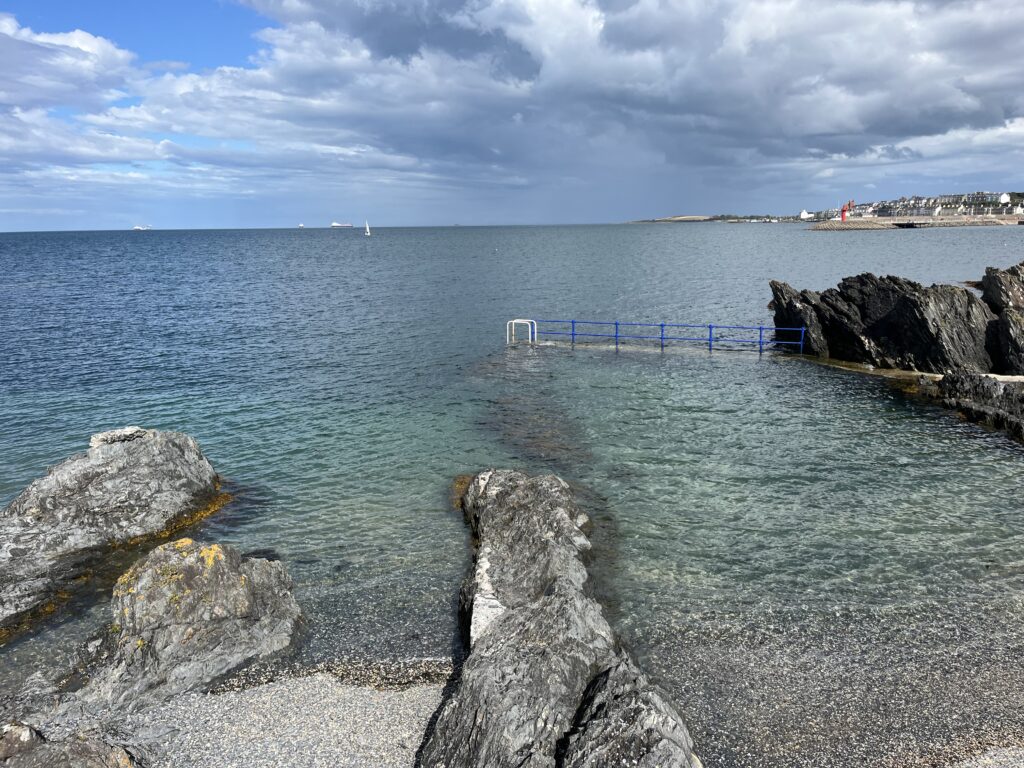
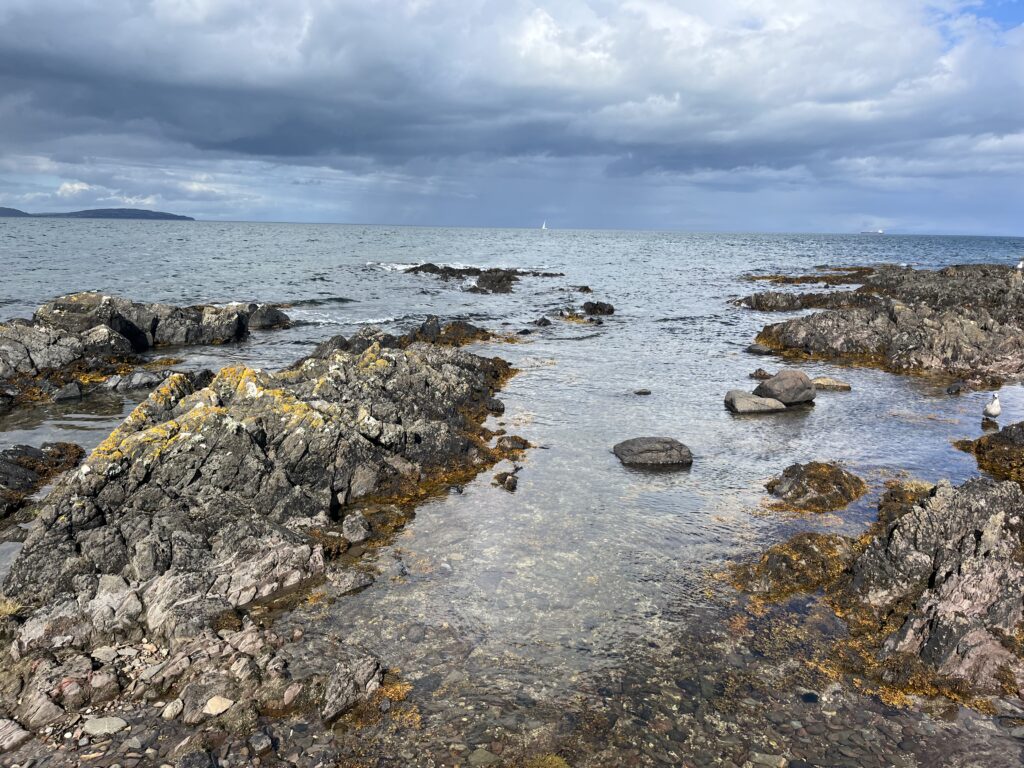
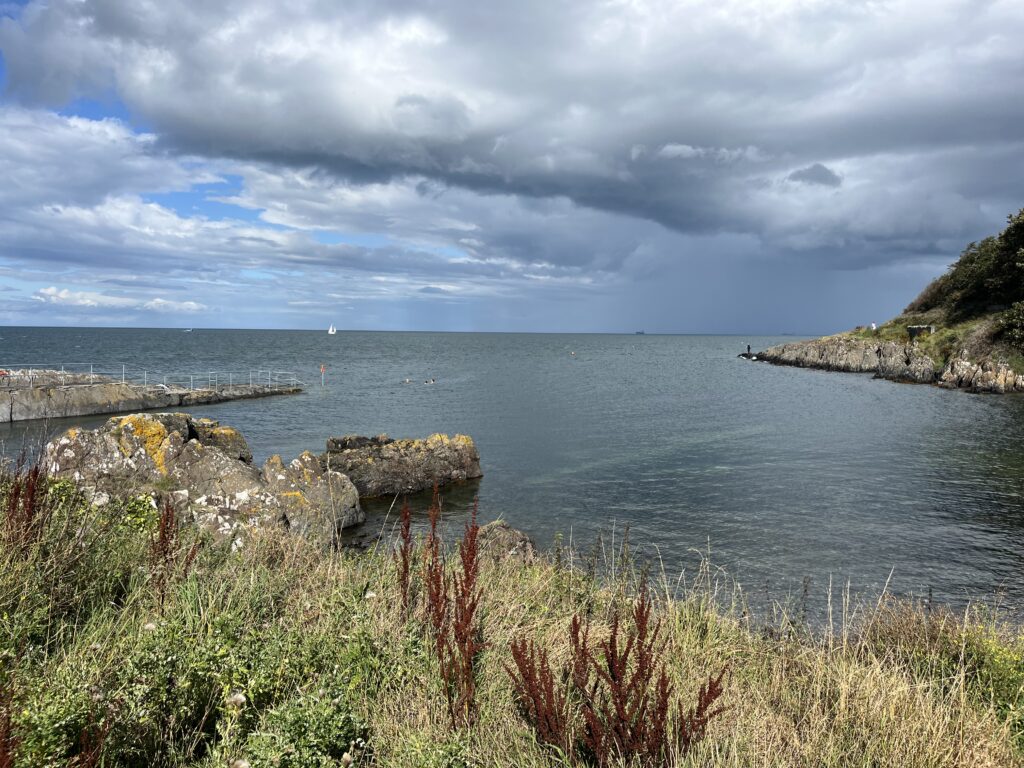
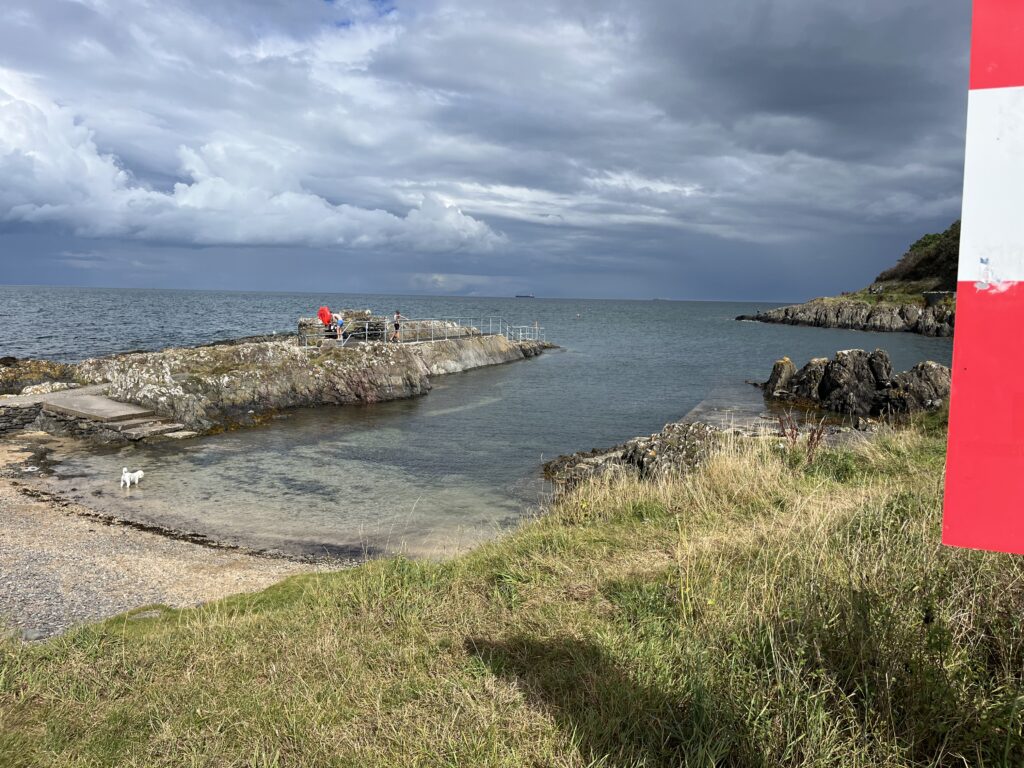
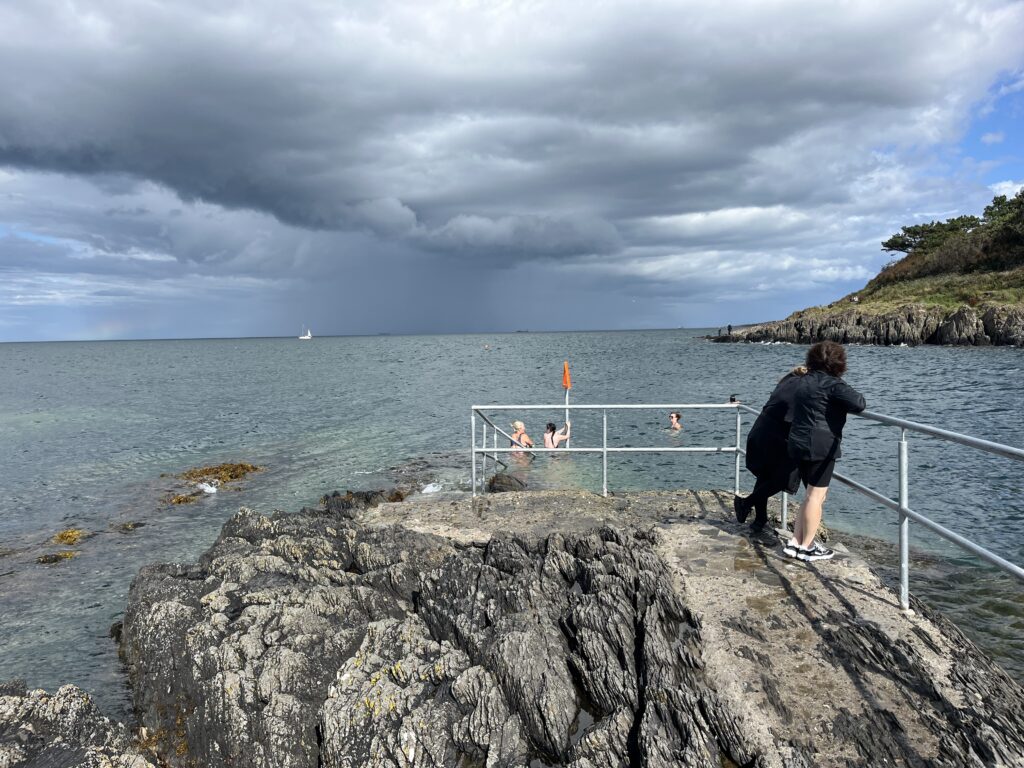
Then there are its constantly changing winds.
And below the surface, there are its strong tidal flows and menacing jellyfish lurking below.
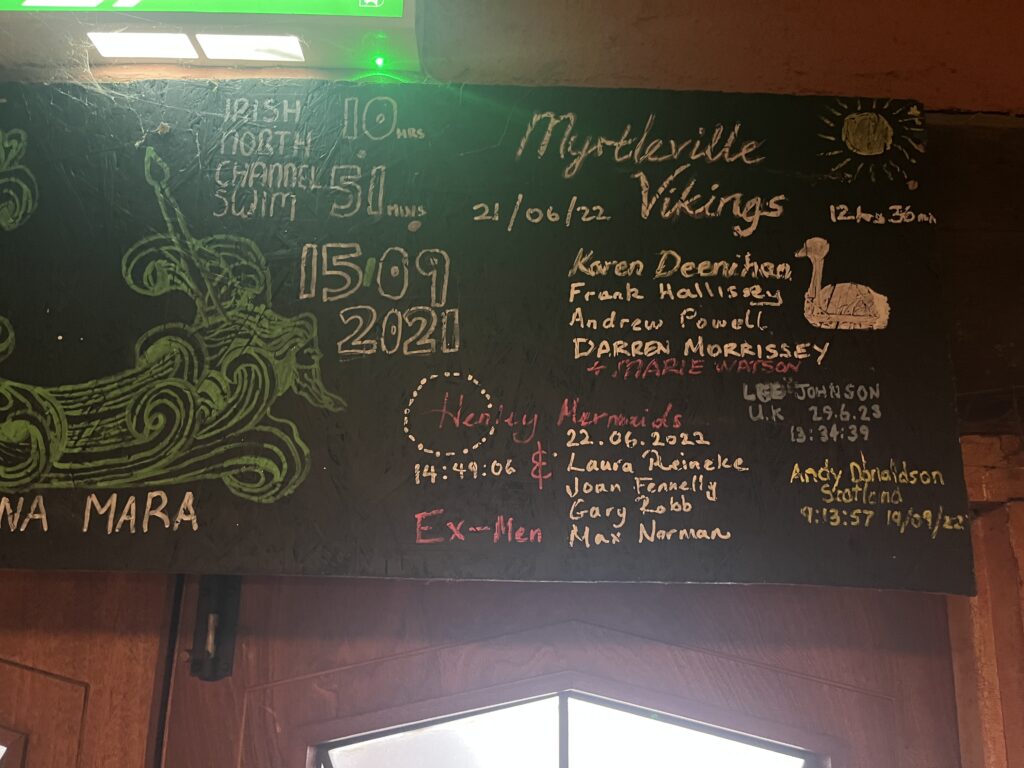
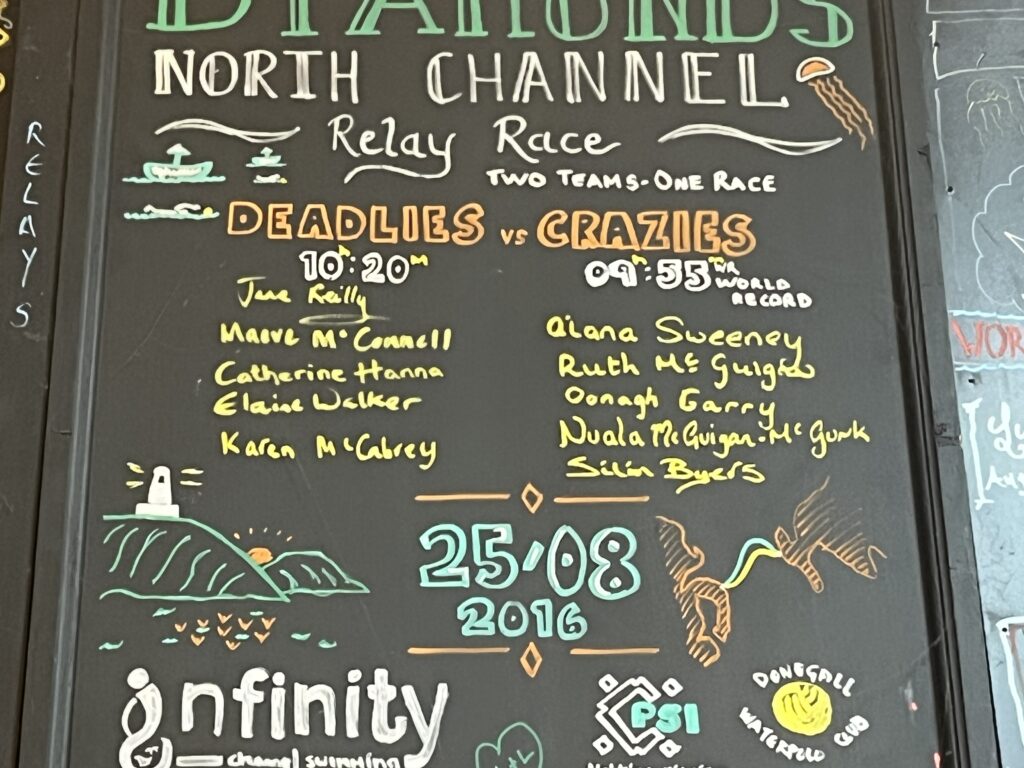
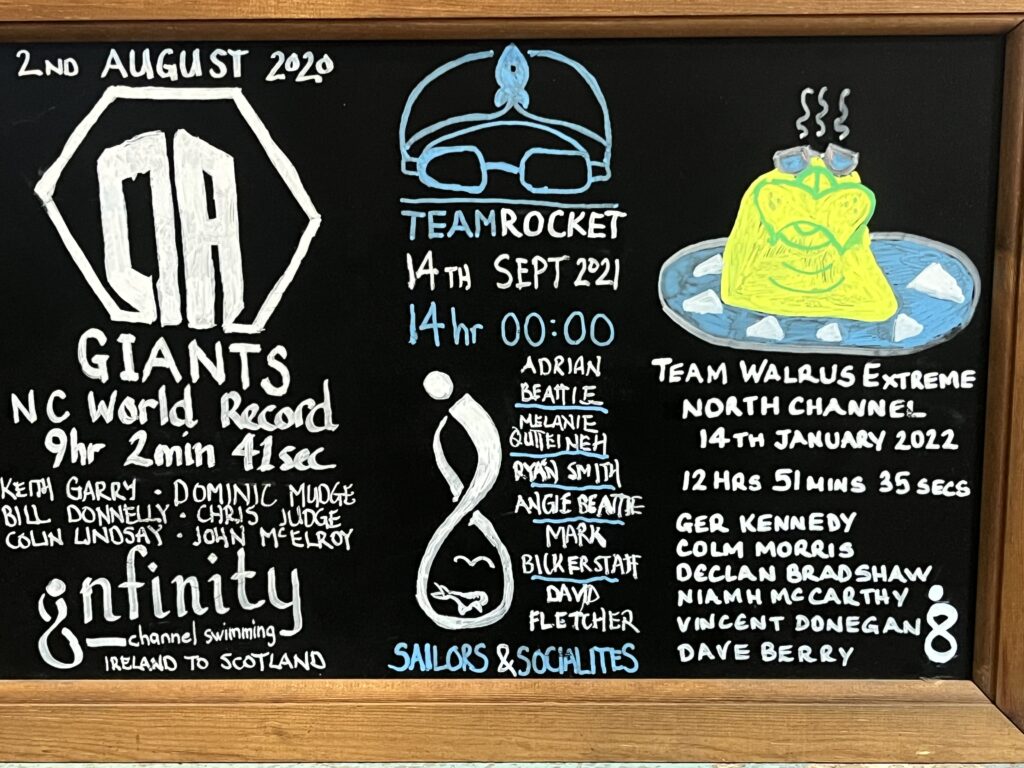
Yet 183 men and women have successfully crossed the channel since Tom Blower (MSF bio here) first did it in 1947 in 15 hours 26 minutes with the escort of pilot Andrew White (commemorated by the paintings below in Pier 36 in Donaghadee). But it took another 23 years before the second successful swimmer Kevin Murphy (MSF bio here) in September 1970 traversed the tough channel in 11 hours 21 minutes under the guidance of pilot Captain William Long.


Irish swimmer Nuala Moore (IISA bio here, @numooreswim) describes the North Channel as, “…a body of water that requires the utmost of respect. Above both Scotland and Ireland, there are thousands of miles of sea, all raging and wanting to run south and north. When this water tries to squeeze between the two countries, the limited space forces the water to act very erratically. As the water runs through islands and in and out of headlands and bays, it goes every direction.
Therefore, to a swimmer, there is no definite system of movement.
The air temperature in the summer in the north is often 12-18°C – so this would be a negative on the skin as well. The tides running through Rathlin Island work on nine hours and not the usual six. The erratic nature of these flows is why this stretch of water is the most respected. Add to this the fact that the water temperature is usually only 12-13°C and jellyfish are a huge variable. Stings are definite.”
But this week the water temperature is in the 15°C range.
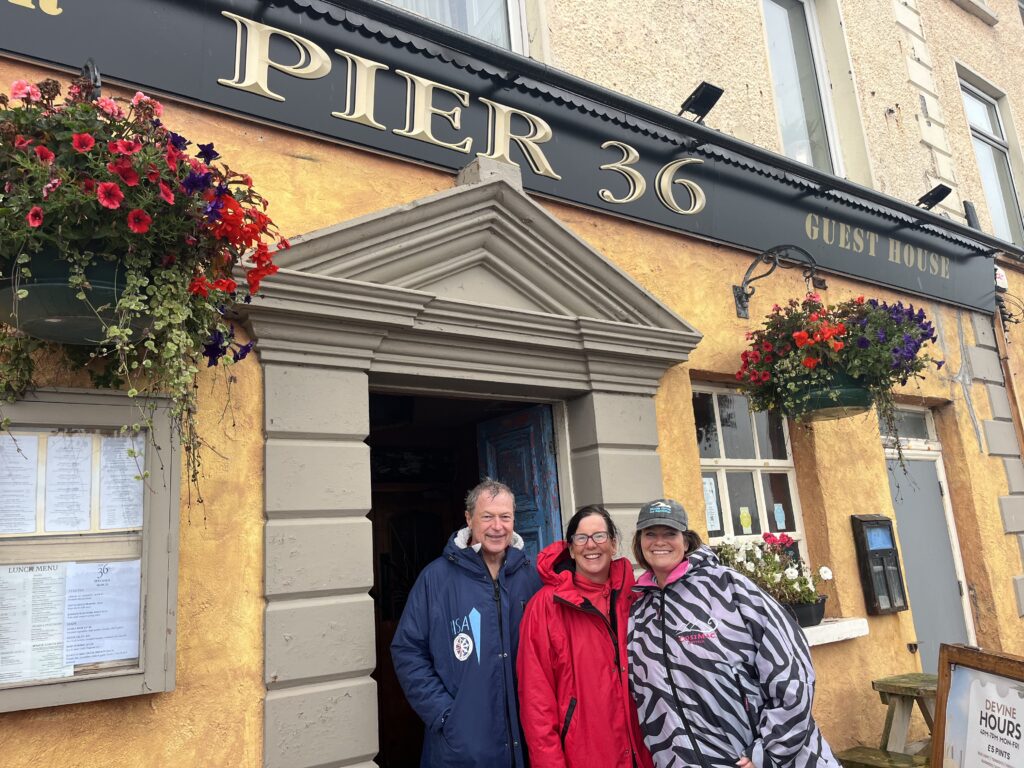
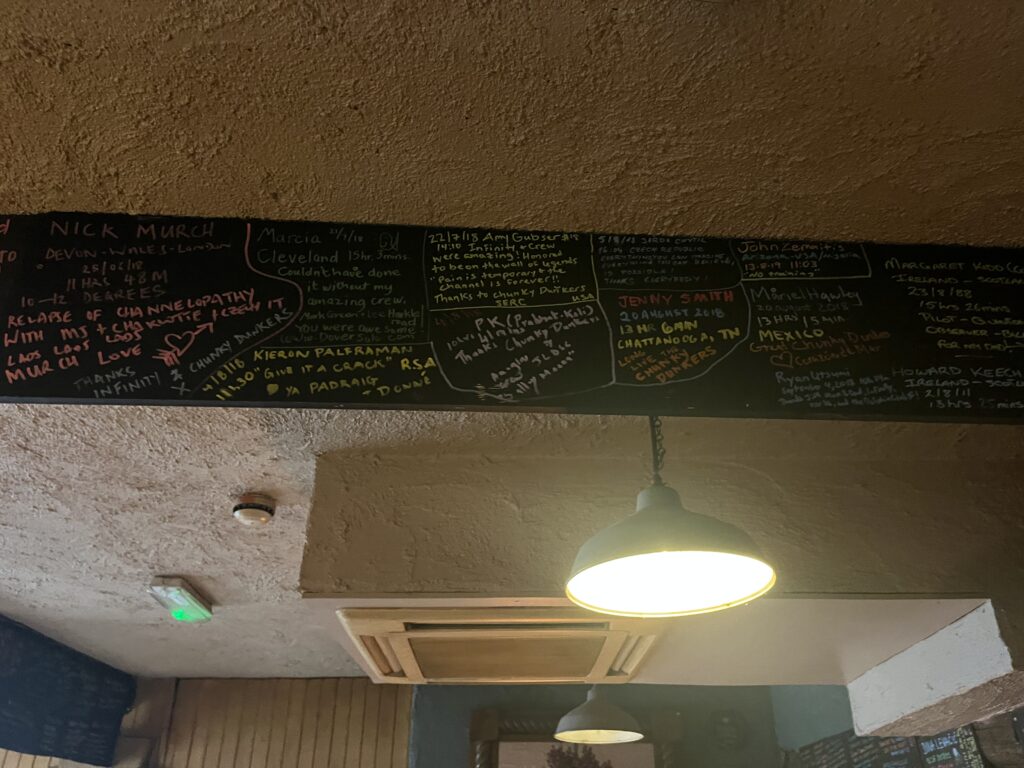
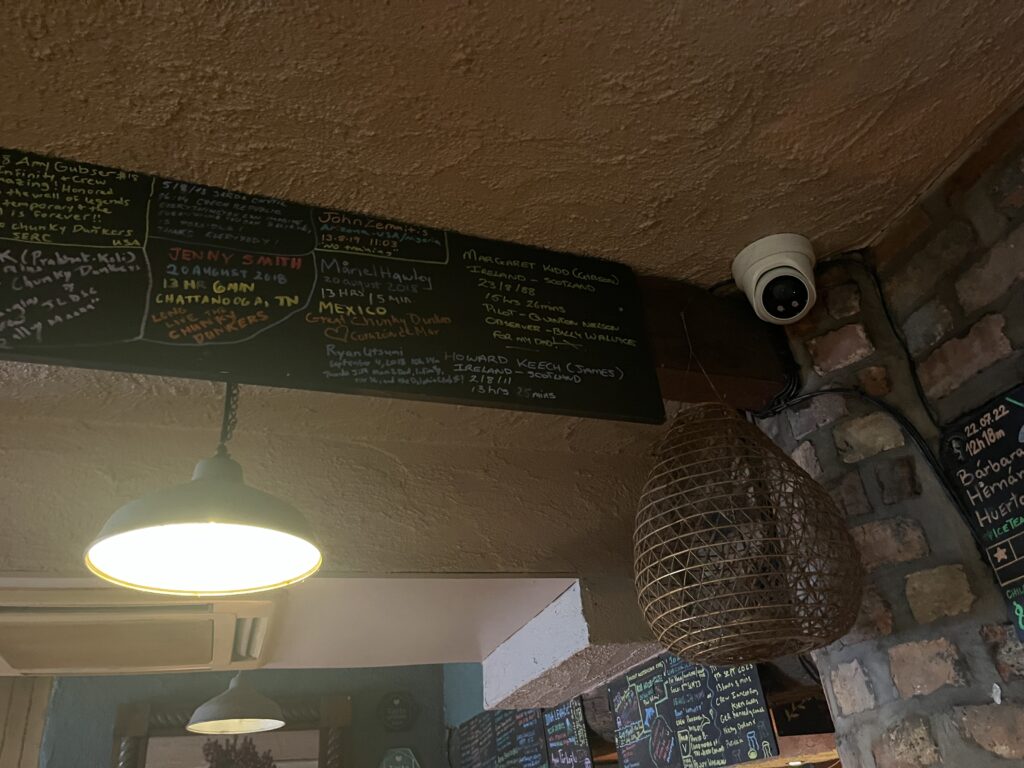
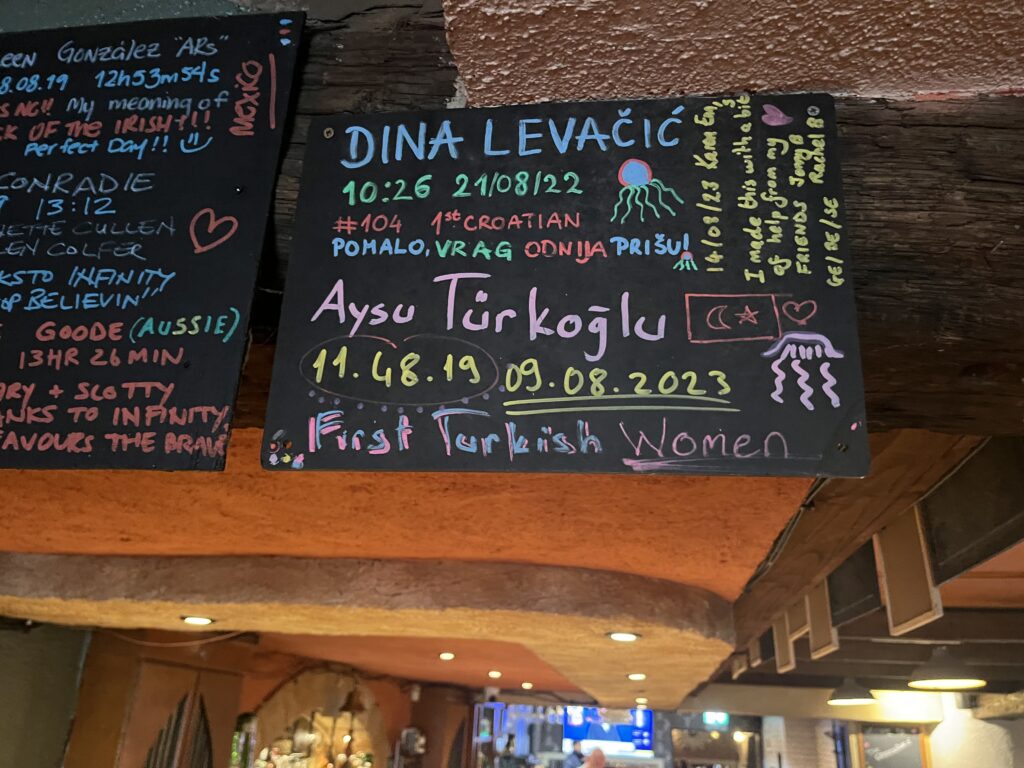
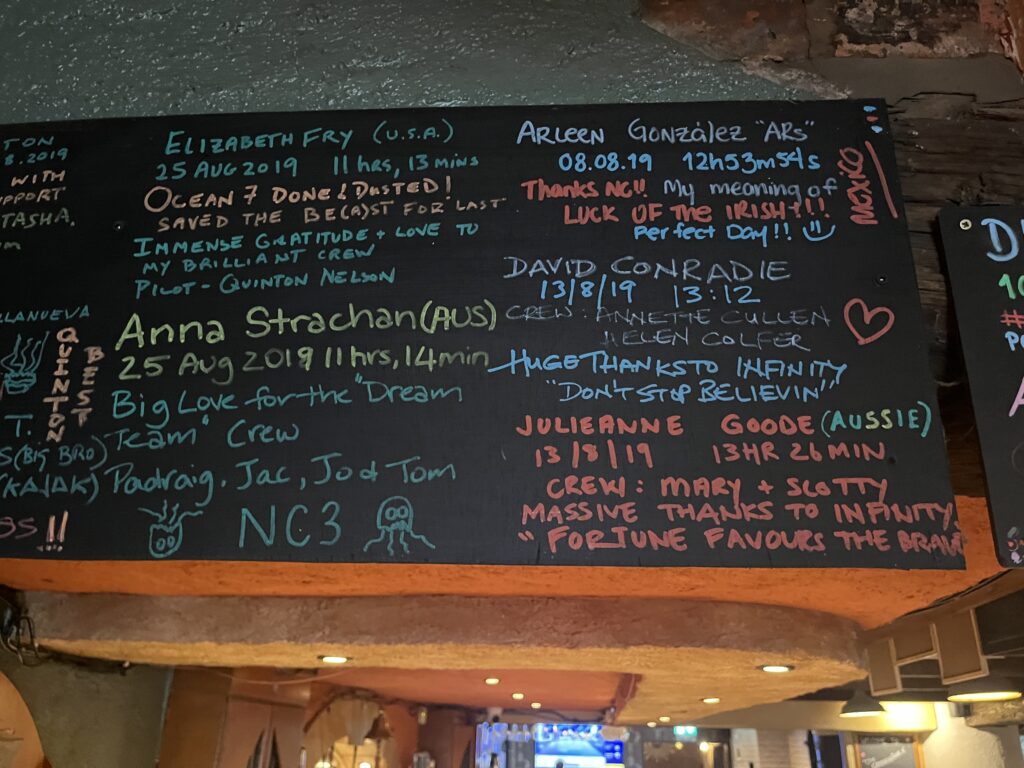
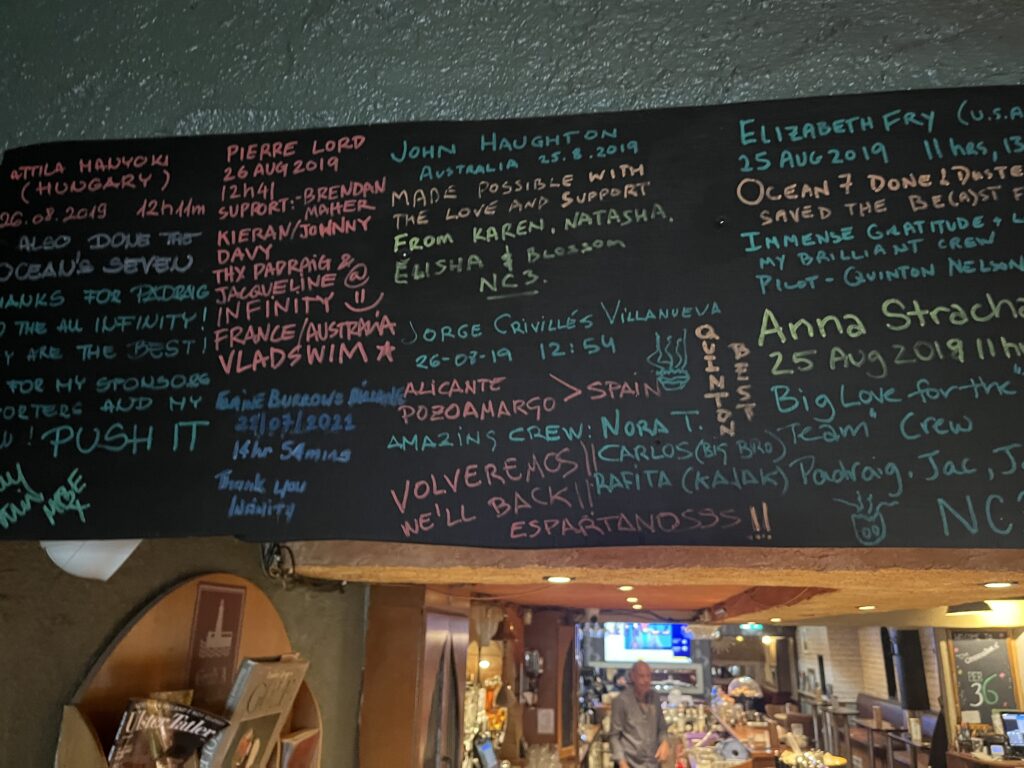
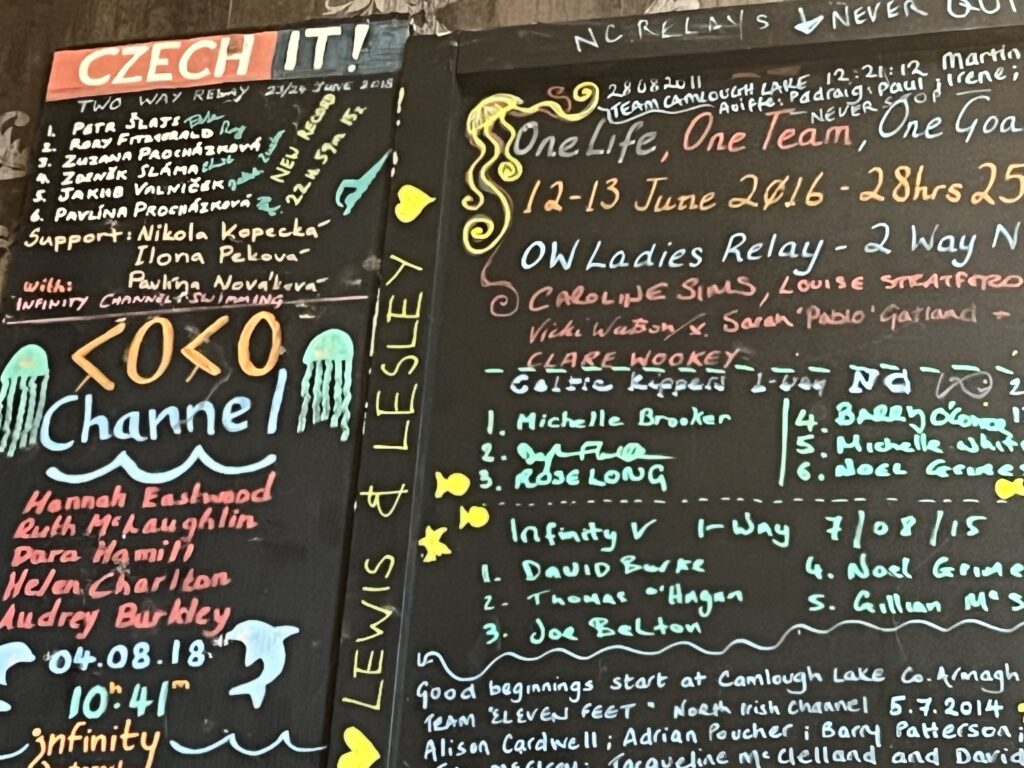
So there may be more signatures on the walls of Pier 36. Examples of signatories of successful solo and relay crossings hung on the walls of Pier 36 as well as Rory Fitzgerald (IISA bio here, @fitzgerald.rory), Kate Steels (IISA bio here, @waterbabykate), and Nicola Doran (IISA bio here, @nicoladoran1) are shown in front of Pier 36 above, owned and managed by the personable and charismatic Margaret Waterworth and family.
Margaret also operates an bed & breakfast above Pier 36 where she has been hosting open water swimmers for over 25 years with a genuine heartfelt kindness and humorous personality.
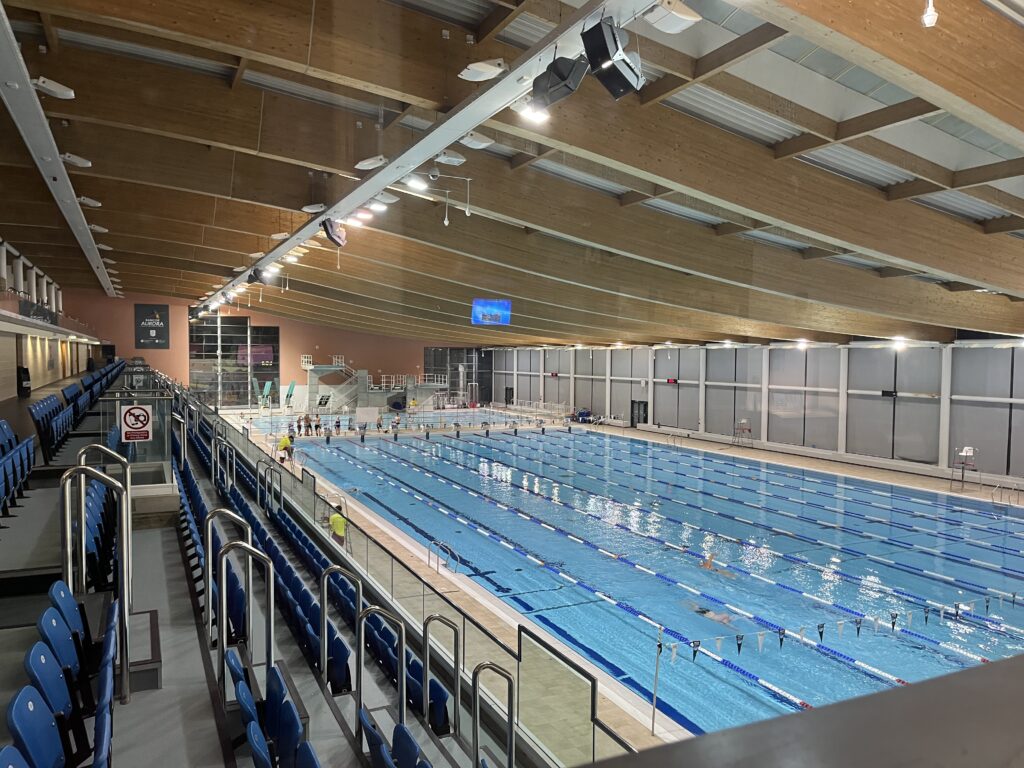
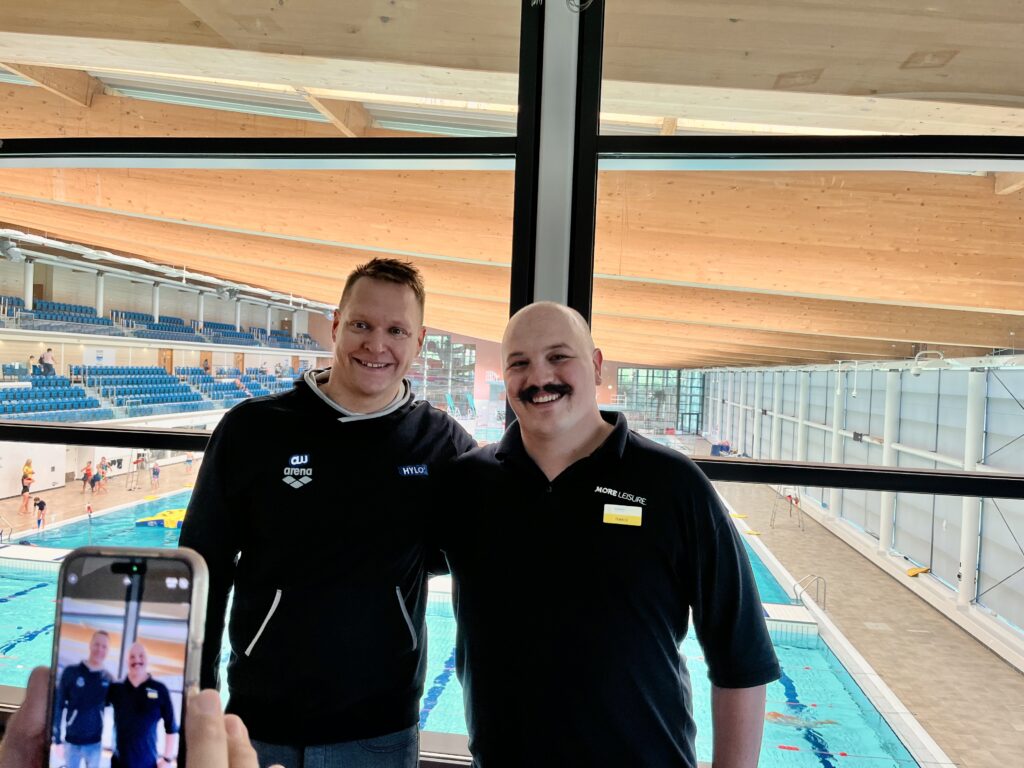
While waiting for swimmable conditions, there are plenty of places to train for and acclimatize to the North Channel. In Bangor, a 50m pool within the Bangor Aurora Aquatic and Leisure Complex, managed by Pearce Jamison [shown below to the right of Andreas Waschburger), affords pool training with a digital pace clock. The pool is located at 3 Valentine Road, Bangor, Co-Down, Northern Ireland BT20 4TH.
There are also all kinds of coastal swimming spots, each with their own personalities, that await the more adventurous open water swimmers.
Crawfordsburn Beach and Brompton Bay are only two of the many swimming spots that stretch from Bangor to Donaghadee where the globally-known Donaghadee Chunky Dunkers pod swim. All along the coastline, locals and visitors can enjoy clear – and briskly cool – water with views of the sea floor await, year round.
For more information on attempting and planning a North Channel crossing, vist the Irish Long Distance Swimming Assocation here.
Also, due to my upbringing and residence in arid desert of Southern California, I love walking around the various well-kept gardens that reflect the ingenuity and eccentricity of local horticultural tastes.
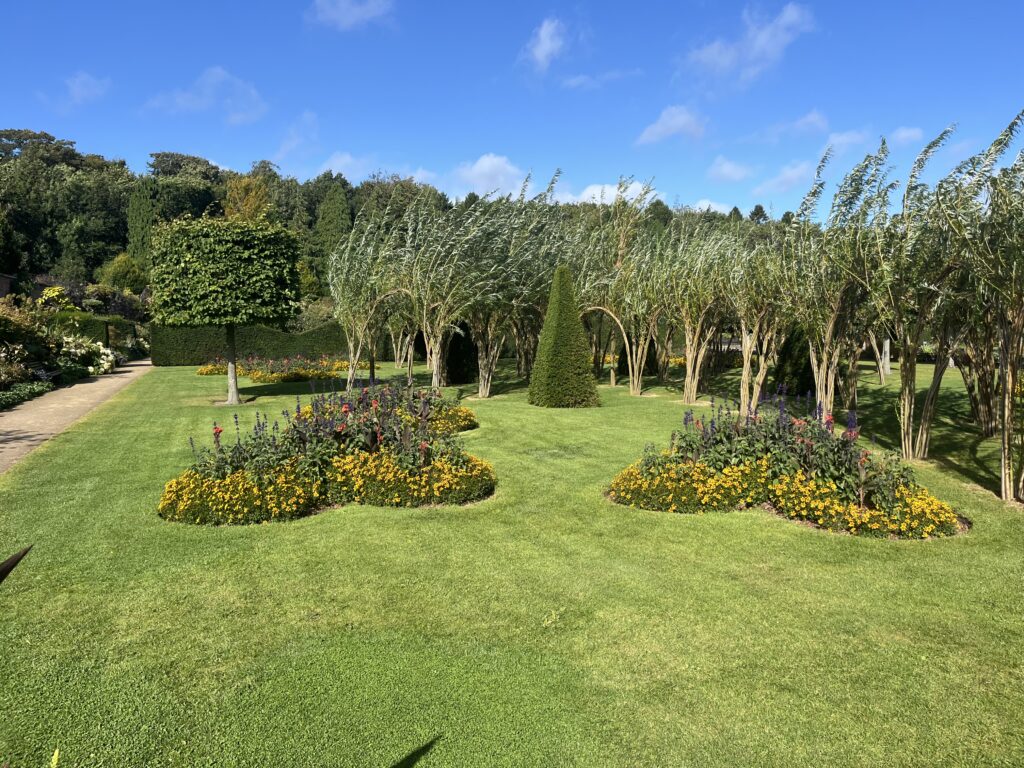
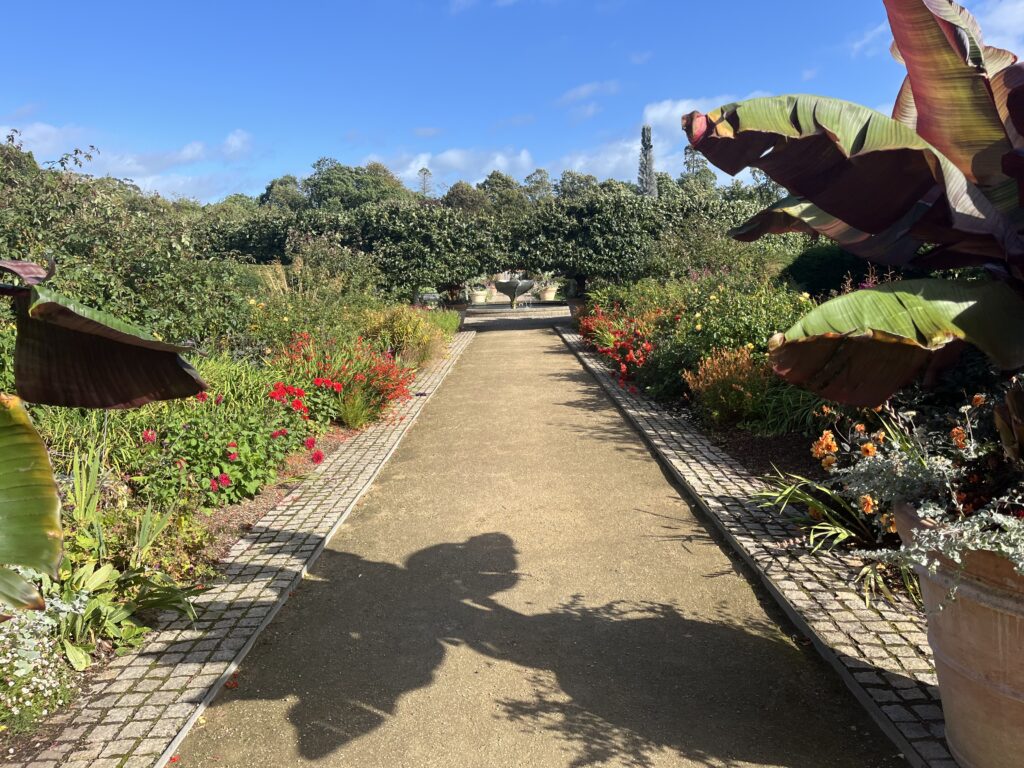
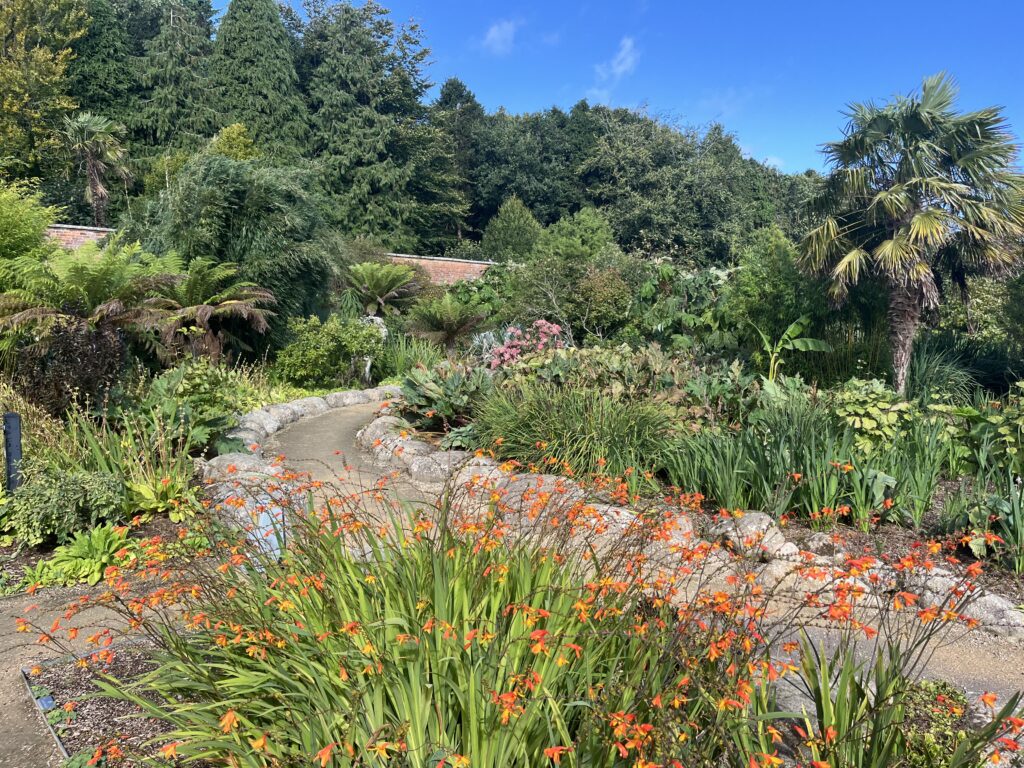
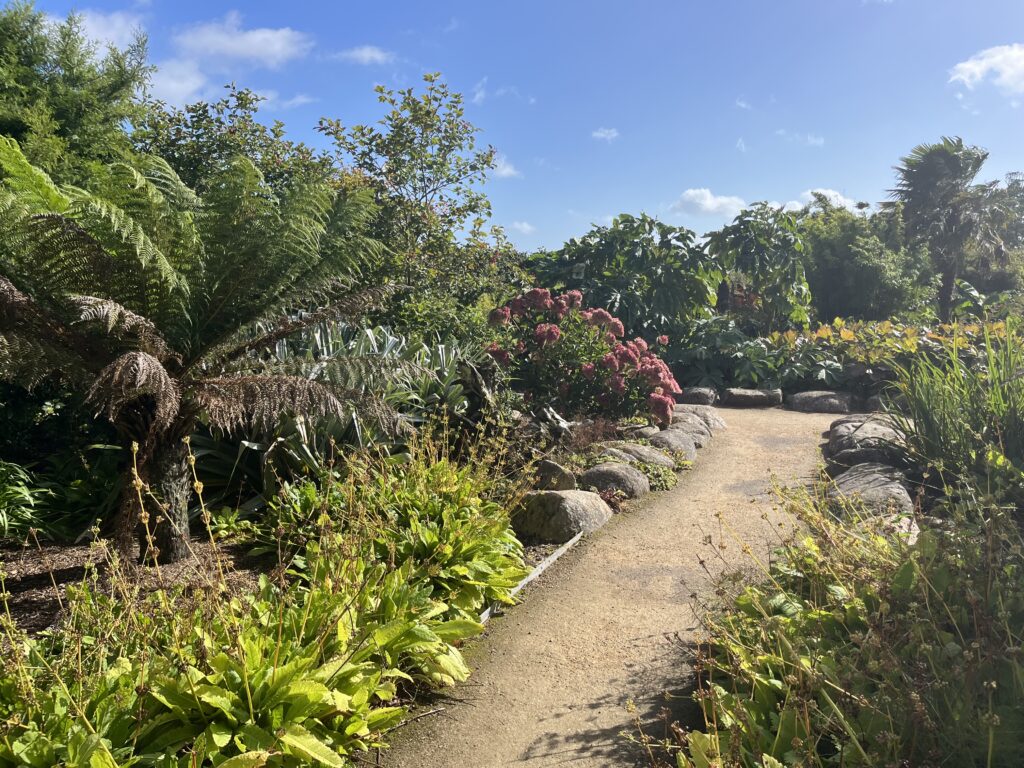
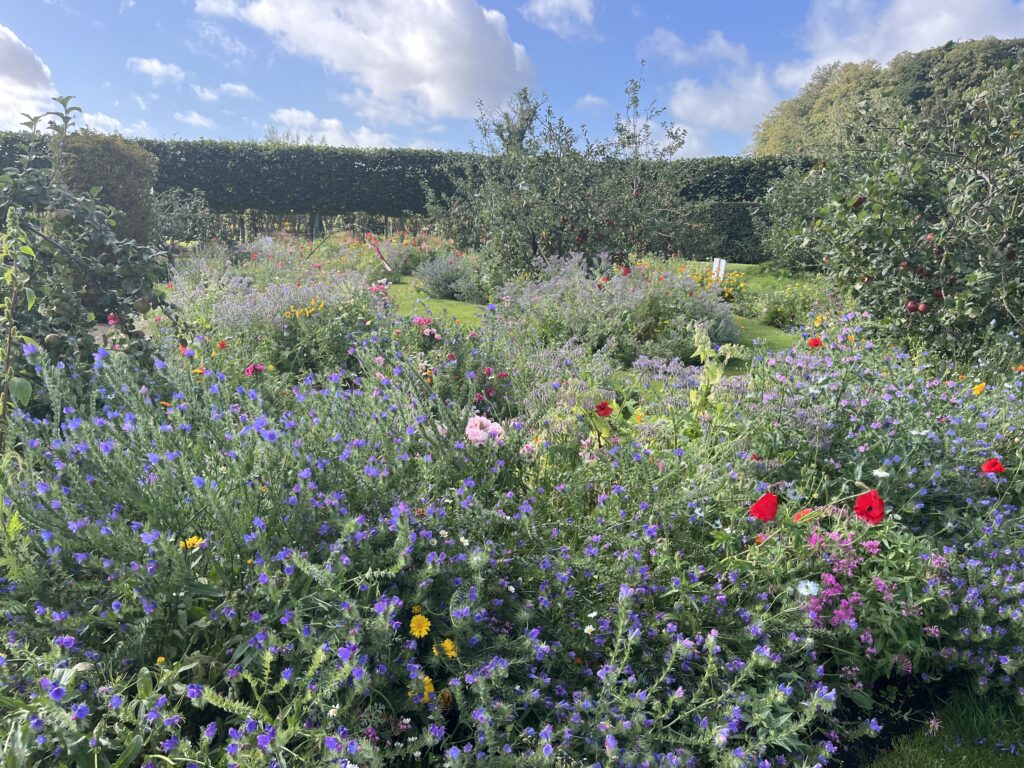
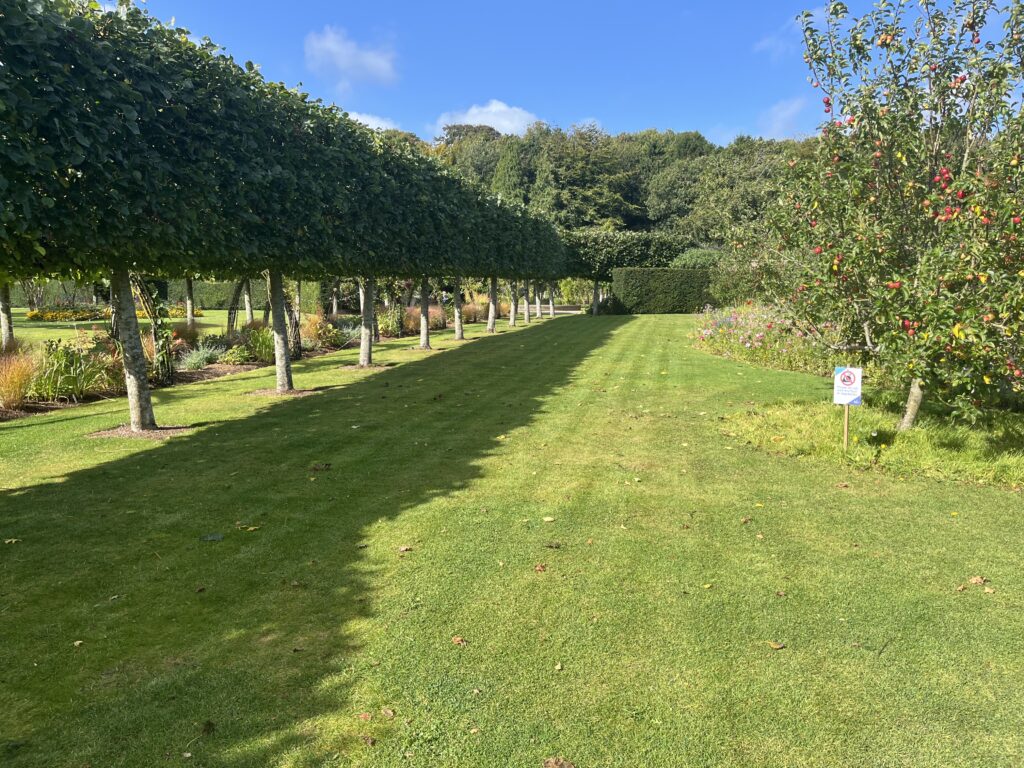
Gastronomically speaking, if I ever had the courage and motivation to train hard for a tough 35 km North Channel crossing, an Irish breakfast would taste good after those hard workouts of many kilometers of swimming.
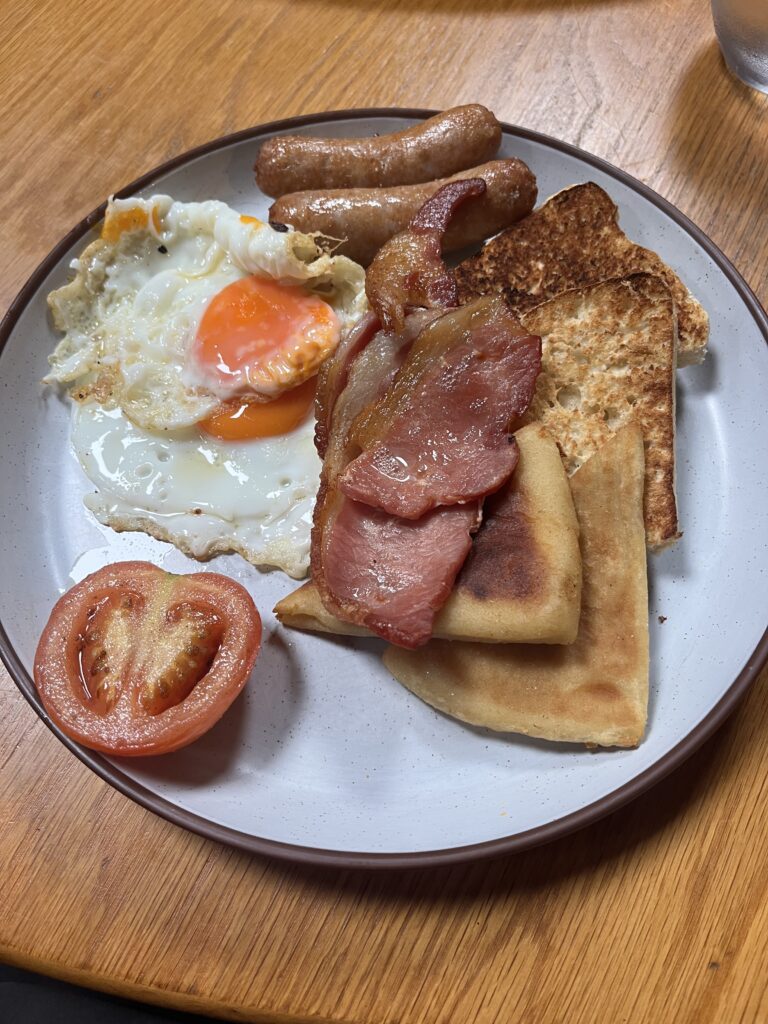
Finally, due to my ignorance of nautical history, I had no idea that Belfast was the shipbuilding site of the Titanic that embarked on its initial – and final – journey from Belfast to London before heading across the Atlantic Ocean to America in 1912.
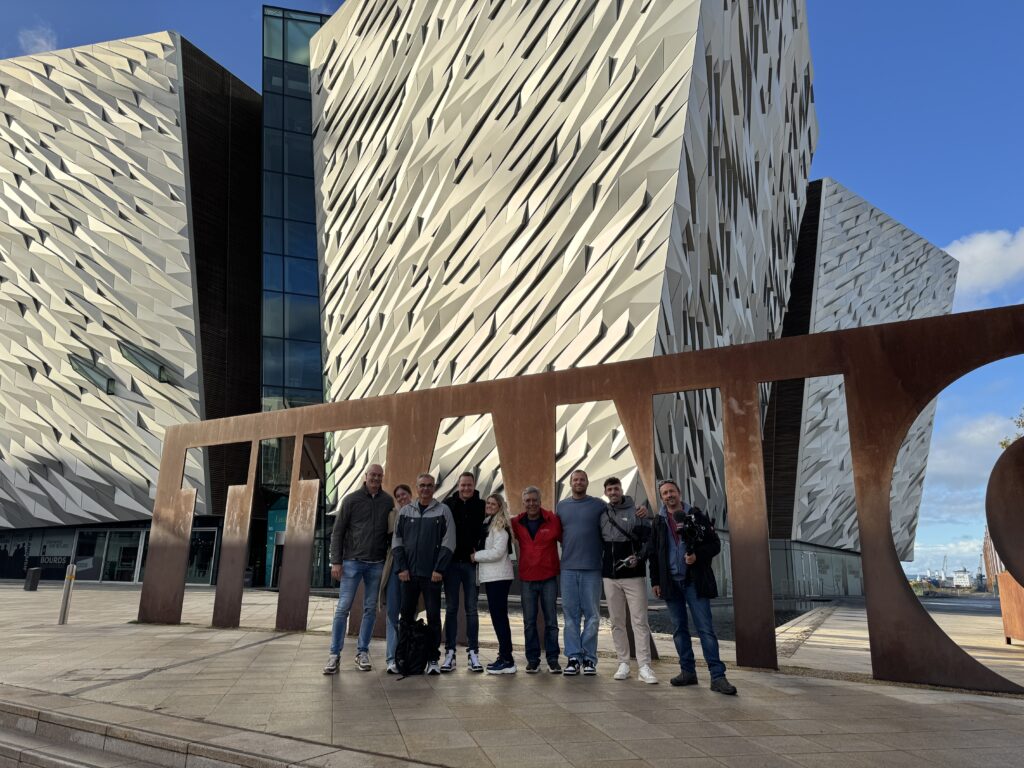
© 2025 Daily News of Open Water Swimming
“to educate, enthuse, and entertain all those who venture beyond the shoreline“
A World Open Water Swimming Federation project.