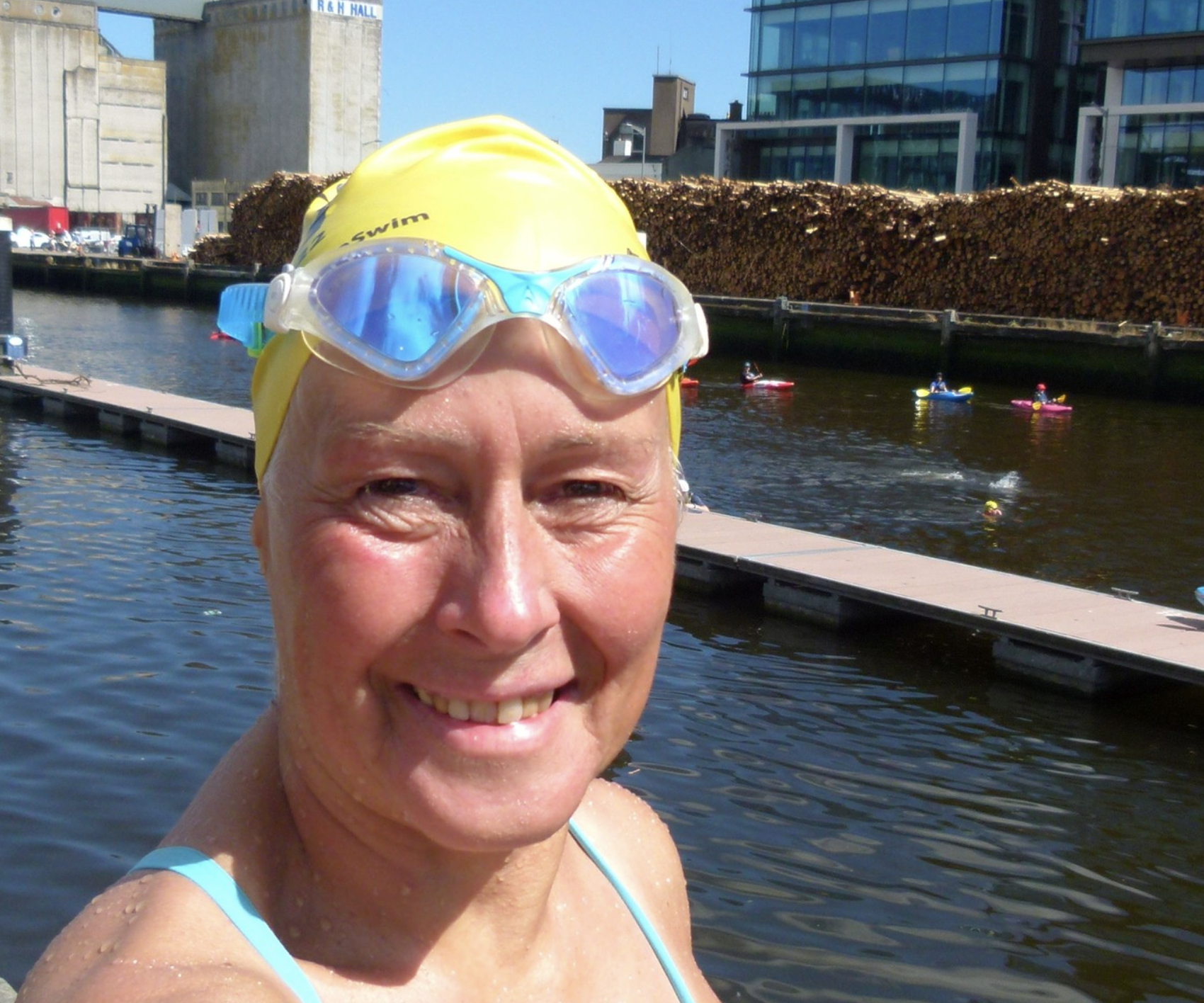
Back in 1985, Vasanti Niemz (69, Germany, MSF bio here, @vasanti.hd) completed her first crossing of the English Channel from England to France in 17 hours 1 minute.
In 2025, she completed the 20 Bridges Swim around Manhattan Island in New York City in 9 hours 34 minutes. She says, “As a slow swimmer I had a chance now with smaller group starts since 2014. After completing 20 Bridges, Catalina then seemed to be the next logical consequence – no Dover coaster, potentially also easier and warmer.”
The multi-sport endurance athlete from Heidelberg, Germany and member of the International Sri Chinmoy Marathon Team completed the longest swim of her career with an 18 hour 24 minute crossing of the Catalina Channel from Catalina Island to the Palos Verdes Peninsula at the age of 69. With the support of Steve Sutton and Ryland Sutton as her escort kayakers [see below], she become – for a few days at least – the oldest woman to achieve the crossing – and only slightly behind the oldest man, Pat Marzulli (USA, MSF bio here), to cross the Catalina Channel who was 69 years and 312 days when he crossed it in 2018.
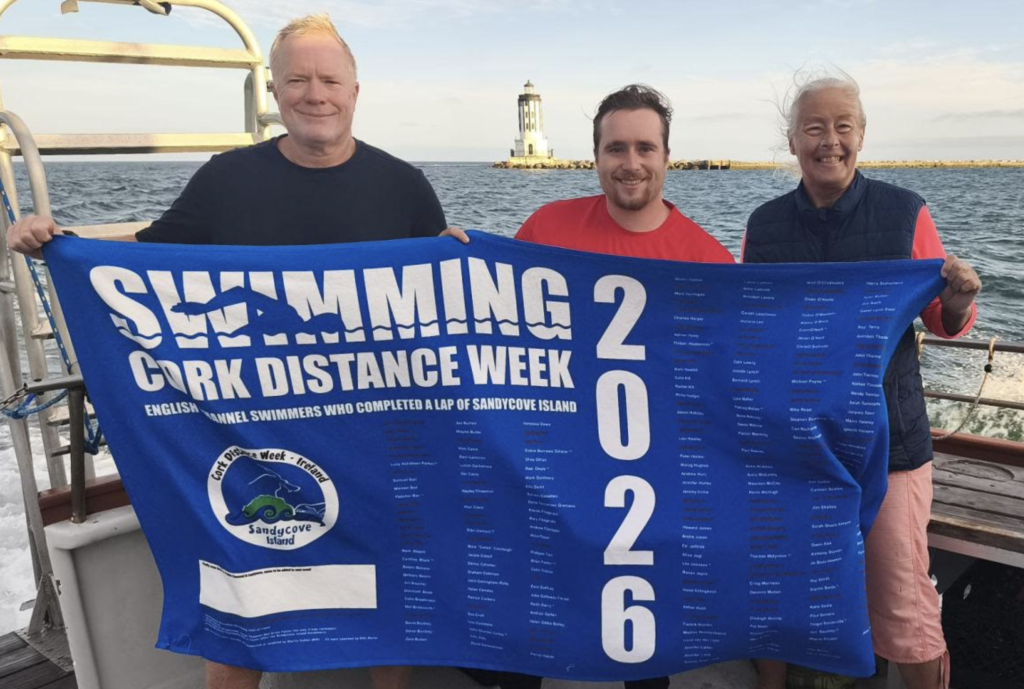
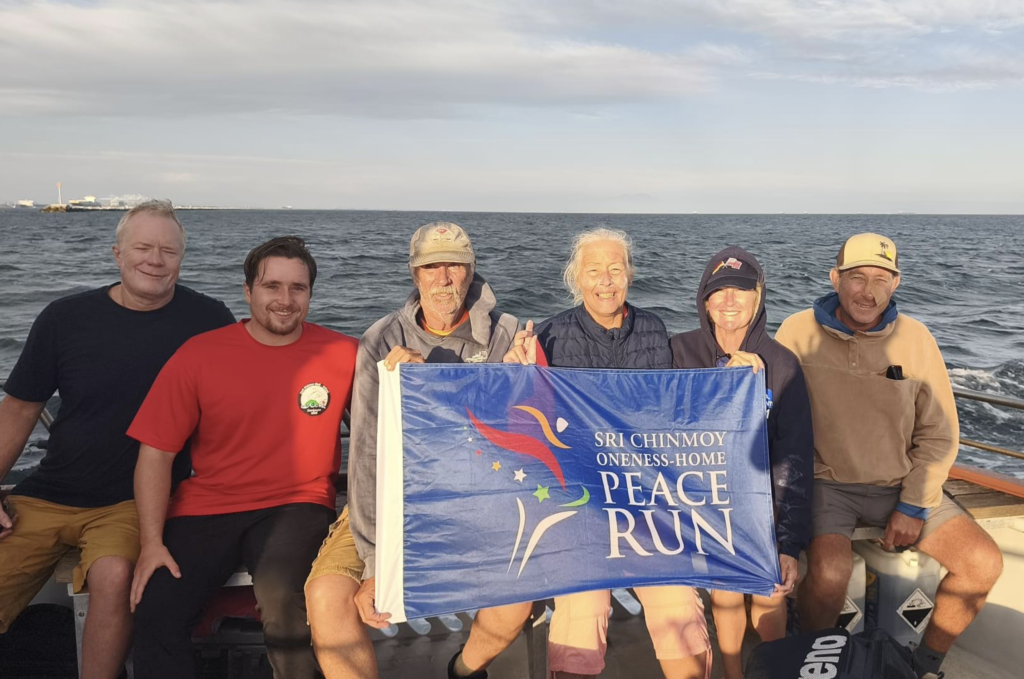
It took 41 years for Niemz to achieve the Triple Crown of Open Water Swimming, but the German swimmer has never slowed down during that long interval, both on dryland and in the water.
Niemz just barely broke the longest duration between the first and third swim, previously held by Gráinne Moss (56, Ireland, MSF bio here) – by 3 days.
Marty McMahon (63, USA, MSF bio here) was another swimmer who had taken his time to become a Triple Crowner, 36 years between August 1985 and August 2021. Niemz recalled, “I met Marty at Cork Distance Week a few years ago. He was excited to meet me because he was honored in 1985 at the United Nations by Sri Chinmoy in person. He told me, ‘Now you go and get it!‘”
Age Is A Number
While 69-year-old Niemz set the oldest Catalina Channel women’s record on August 12th, her record lasted only five days before Maura Twomey (70, Ireland, MSF bio here) re-set the record on August 17th. Then a mere nine days later, Eric Durban (71, USA, MSF bio here) re-set the oldest record when he completed his second career Catalina Channel crossing in 15 hours 38 minutes at the age of 71.
Durban also set the oldest record for his earlier crossing of the Cook Strait in March 2026 in 9 hours 53 minutes when he was 70.
The Future of Channel Swimming by Septuagenarians and Octogenarians
After recently watching several women in their 70s finish the Ironman World Championship in Kona, Hawaii, I am convinced we will see more and more older women and men – in their 70s and beyond – complete the swims of the Triple Crown of Open Water Swimming and other marathon swims around the world. 87-year-old Hiromu Inada of Japan has been the oldest man to complete the Ironman course in Kona. 78-year-old American Cherie Gruenfeld (USA) is the oldest female to complete the Ironman World Championship in 16 hours 20 minutes.
Numerous septuagenarians and octogenarians will continue to prove themselves to be resilient enough, tough enough, and capable enough to complete crossings of the English Channel, Catalina Channel, and 20 Bridges Swim over the following several decades.
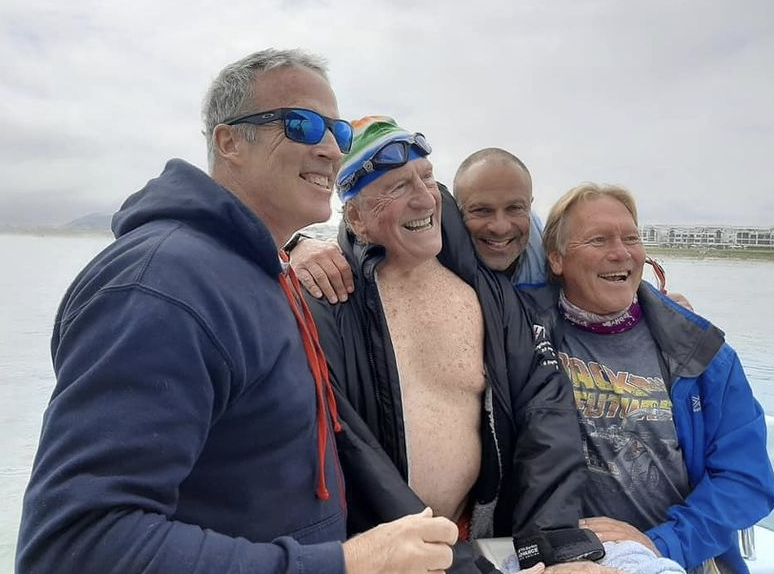
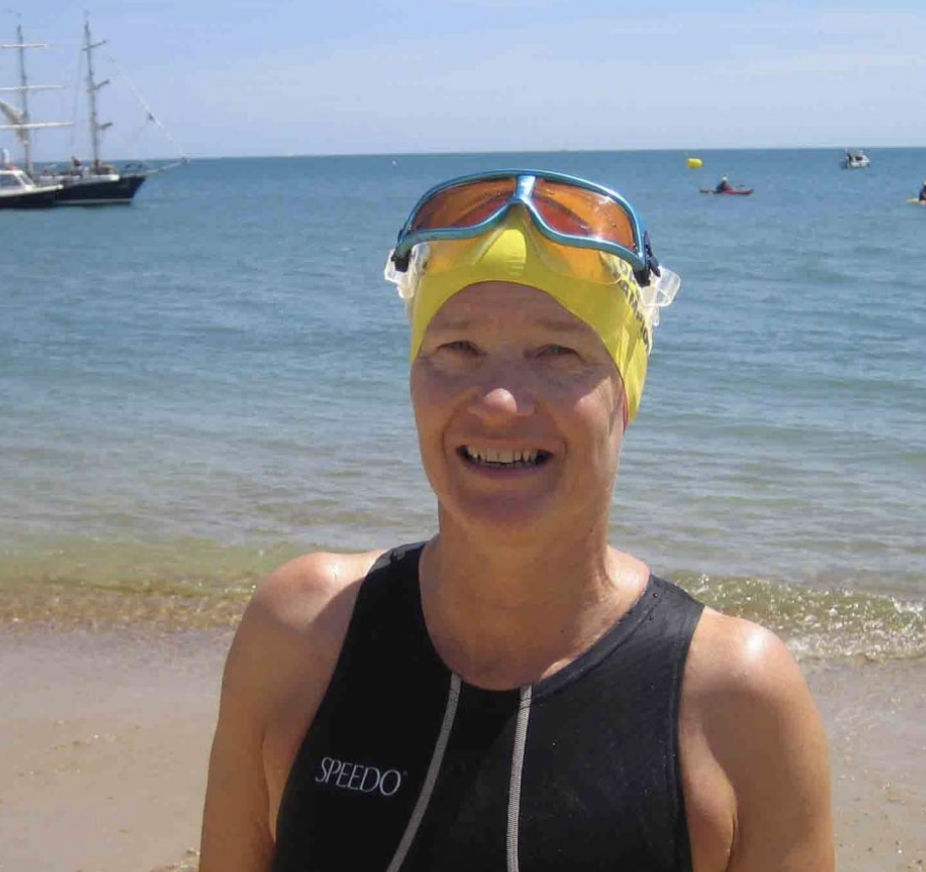
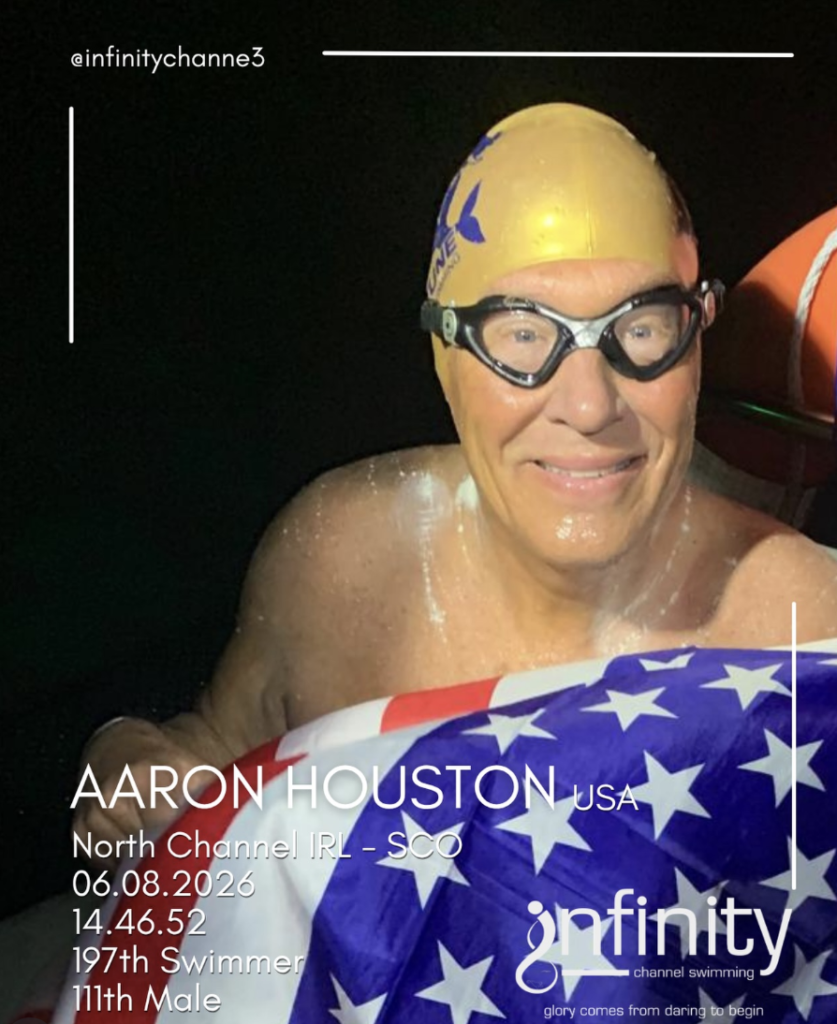
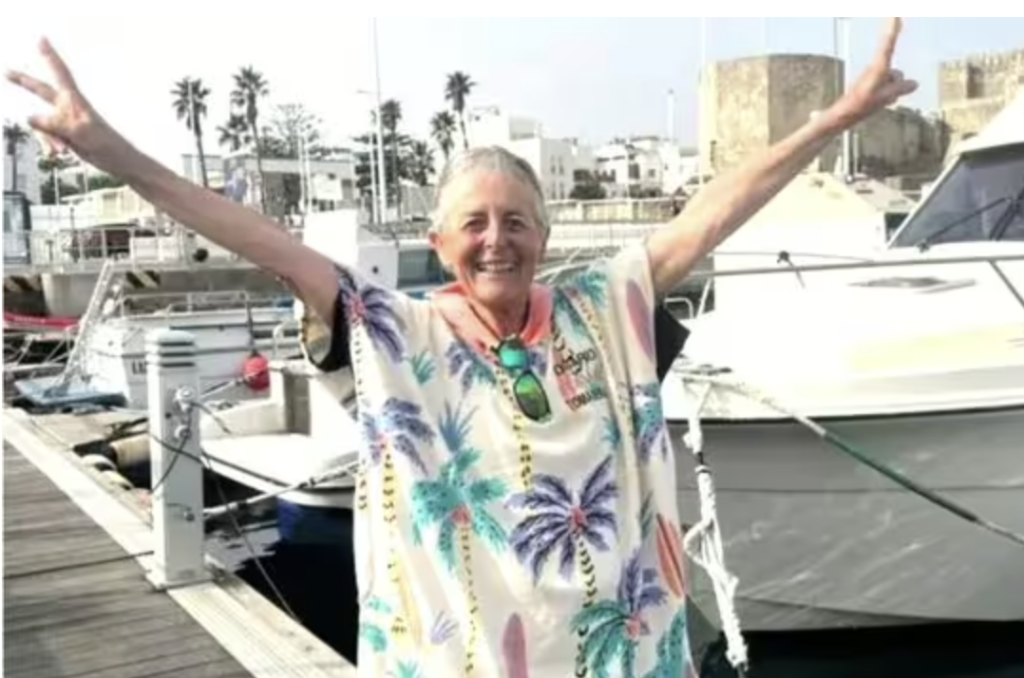
In the English Channel, Otto Thaning (85, South Africa, MSF bio here, shown above on left with the colors of South Africa) was 73 years old when he crossed in 12 hours 52 minutes in 2014. Linda Ashmore (79, Great Britain, MSF bio here, shown above on right) was 71 years and 305 days old when she crossed the English Channel in 16 hours 22 minutes in 2018. In the Tsugaru Channel, Toshio Tominaga (83, Japan) was 73 when he crossed in 9 hours 58 minutes in 2016. Both Pat Gallant-Charette (75, USA, MSF bio here) and Aaron Houston (65, USA, MSF bio here, shown below on left) were 65 years and 204 days (each) when they respectively crossed the North Channel in 14 hours 22 minutes in 2016 and in 14 hours 46 minutes in 2026. Dr. Euler Konrad Paul Herbet (Germany) was 74 when he crossed the Strait of Gibralter in 4 hours 9 minutes in 2009. María del Rosario Tomasena Alzuni (Spain, shown below on right) was 77 when she crossed the Strait of Gibraltar in 6 hours 23 minutes in 2017.
Over the next several decades, I can easily envision established marathon swimmers like Liz Fry (67, USA, MSF bio here), Sally Minty-Gravett, MBE (69, Jersey, MSF bio here), Paula Yankauskas (72, USA, MSF bio here), Nora Toledano (56, Mexico, MSF bio here), and Ned Denison (68, Ireland, MSF bio here) swimming well into their 70s and 80s. Behind them are swimmers like Sarah Thomas (43, USA, MSF bio here) and Jessica Kieras (46, USA, MSF bio here) who could be doing marathon swims into the 2060’s.
Why?
There are several reason why swimming long distances for many will be increasing possible and probable:
- The English Channel and Catalina Channel average water temperatures are rapidly rising, making hypothermia significantly less of an obstacle. This is an important factor as swimmers age.
- Older swimmers are getting increasingly bolder and taking on more marathon swimming challenges, with the financial means to pay for their expeditions and adventures.
- Older swimmers are becoming more fit and stronger with increased muscle mass, and with rapidly advancing medical and technological breakthroughs (ranging from cancer treatments to shoulder surgeries) their athletic careers are being extended well past was previously thought possible.
- A large percentage of older swimmers have a mindset that they can achieve many things – both fueled by their own goals and social media that enables them to understand what their septuagenarian and octogenarian peers are doing and are capable of.
- It is not only becoming social acceptable for older swimmers to do bold swims, but they are also becoming increasingly celebrated and known for their exploits.
- They all have an abundance of Big Swim Memory with the requisite patience and time for training and finishing their swims.
© 2026 Daily News of Open Water Swimming
“to educate, enthuse, and entertain all those who venture beyond the shoreline“
World Open Water Swimming Federation, an exclusively human-powered project