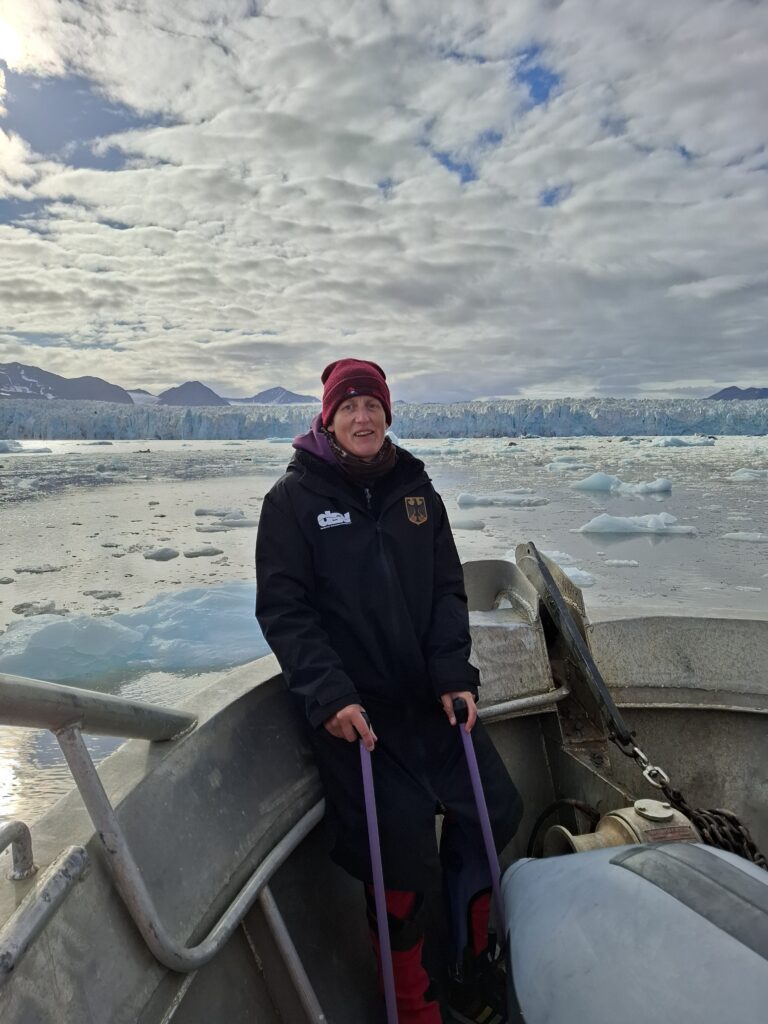
Story courtesy of Tina Deeken (49, Germany, IISA bio here). Photos courtesy of Jack Griesbeck.
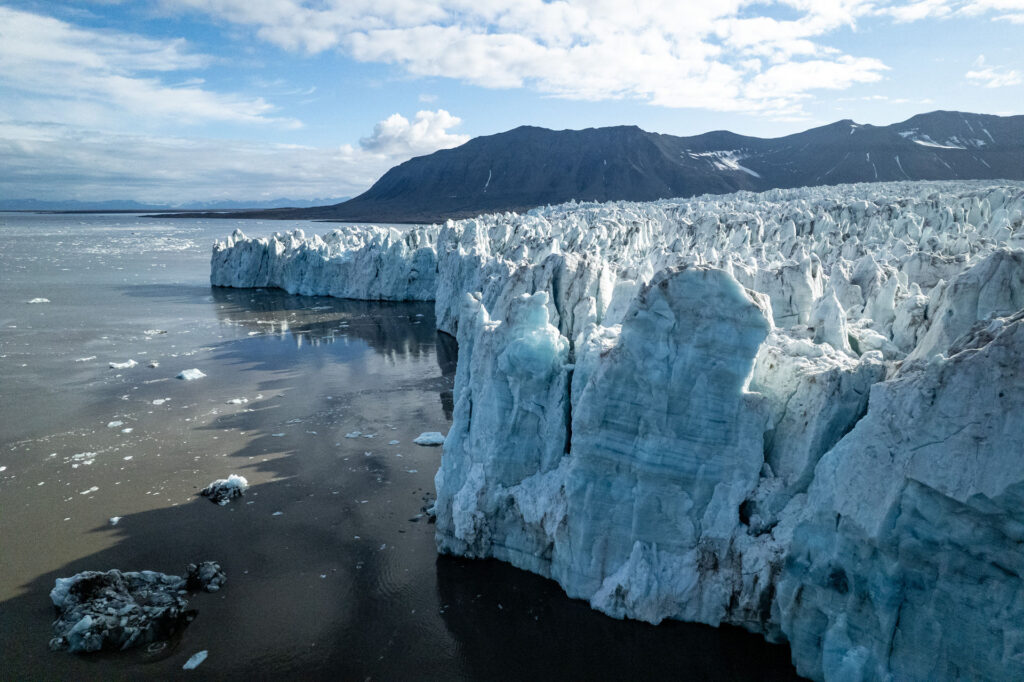
Tina Deeken from Hanover, Germany has set a new para swimming world record on July 17th in Borebukta Bay near the Borebreen Glacier in Isfjorden on Spitsbergen* in Svalbard, a Norwegian archipelago between mainland Norway and the North Pole. She swam 500 meters in 11 minutes 44.97 seconds in 4.9°C water, the longest para-ice swimming distance documented in the Arctic.
One day before on July 16th, Deeken swam 325 meters in 6 minutes 55.60 seconds in the same location, becoming the first para-ice swimmer to complete an officially documented a swim in the Arctic.
The expedition began on July 14the with an acclimatization session in the harbor basin of Longyearbyen where the water temperature was 8°C. Ice swimming veteran Gerald Daringer of Austria led the team. With his Ice Triple Crown background (Southern Ice Mile + Northern Ice Mile + IISA World Championship Ice Kilometer), Daringer sits on the International Ice Swimming Association Para Committee together with Deeken. The team also included photographer Jack Griesbeck and doctor Christina Neubauer, who provided medical care and monitored the warm-up process after each swim.
The MS Farm served as the support boat, skippered by Are and his father, Stig. Since Deeken cannot use a standard boat ladder due to her limited mobility, they worked with Daringer to develop a special lifting device attached to the ship’s crane, which allowed her to be safely hoisted back on board after each swim. According to the International Ice Swimming Association, Tina Deeken is only the second German women to have completed an official ice swimming attempt in the Arctic.
The expedition team also included ice swimmers Deniz Kayadelen (39, Turkey, IISA bio here), Michaela Schwaiger (56, Austria, IISA bio here), Silvia Rohrböck (57, Austria, IISA bio here), and Markus Fleck (40, Austria, IISA bio here) who completed 1,200 meters in same Arctic waters and supported Deeken during the expedition. Rohrböck became the first Austrian woman to swim more than 1,000 meters in the polar region while Kayadelen became the first Turkish woman to do so.
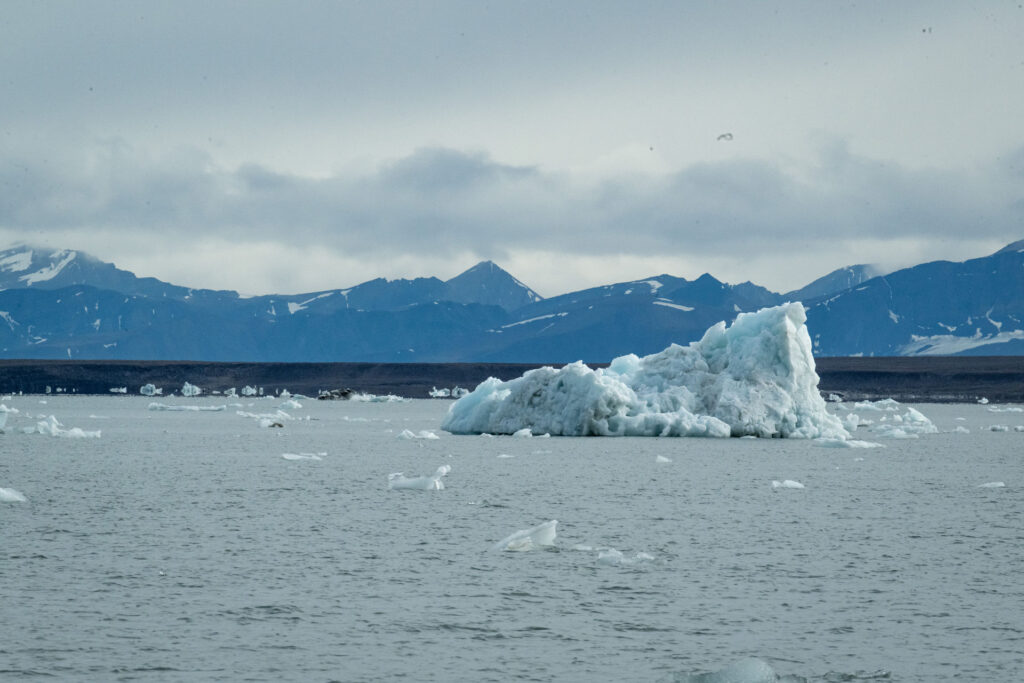
For the record attempt, a swimming course was marked out via GPS in the sea at 78° north latitude. The swim began in the immediate vicinity of the Borebreen Glacier to ensure the required water temperature of below 5°C. The swimming course led back to the MS Farm, winding its way between drifting ice floes and smaller icebergs. Accompanied by a Zodiac that guided her along the safest route through the ice, Deeken found her rhythm, but she had to dodge a larger ice floe in the large part of the swim, slowing her down. After reaching the finish, Daringer hoisted her onboard to cheers and congratulations. The subsequent rewarming phase went smoothly under medical supervision, despite her severe shivering from the cold.
“I’m incredibly happy and grateful that everything went so well. Without this amazing team, this achievement wouldn’t have been possible,” said Deeken.
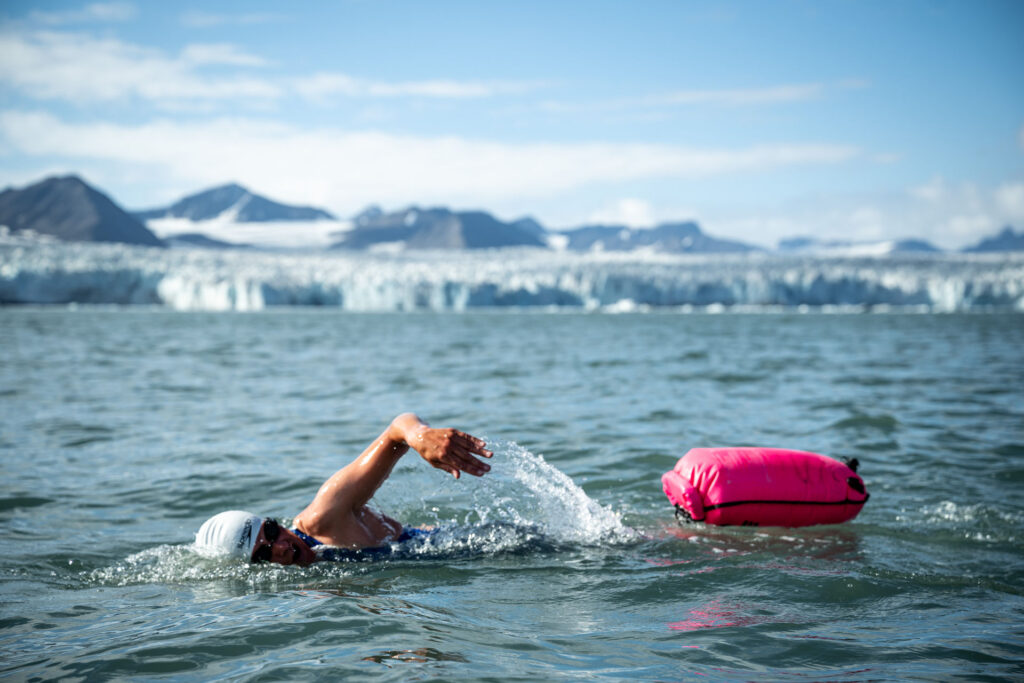
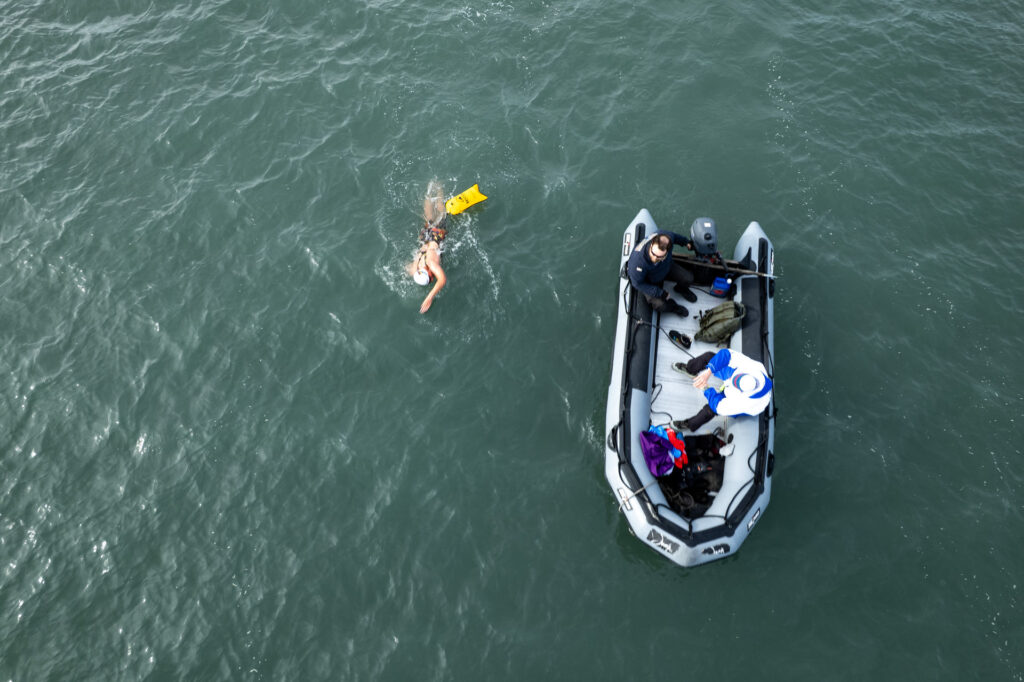
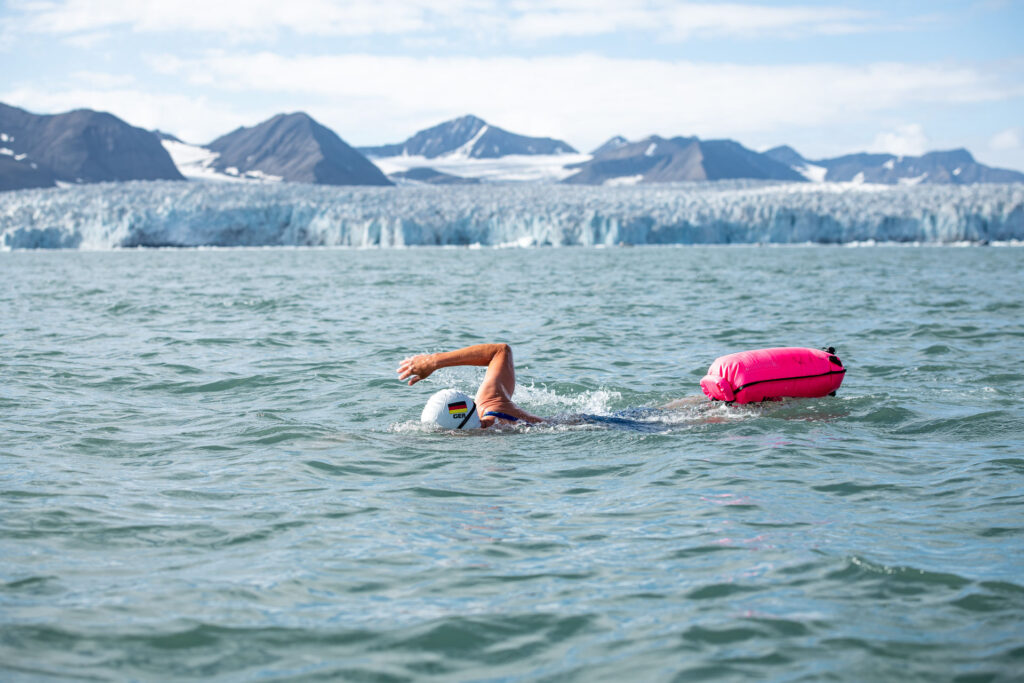
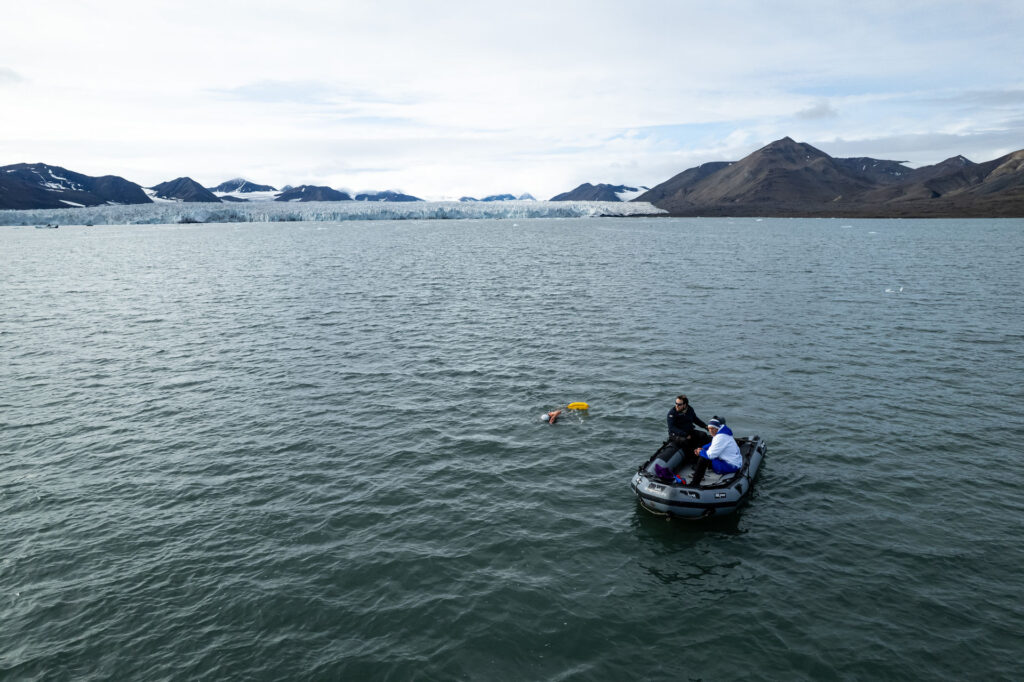
The para-swimmer (competition class S9/SB8) was recently reappointed to the German Swimming Federation’s ice swimming squad. With 19 IISA World Championship titles and 9 European Championship titles under her cap, Deeken has been at the forefront of the para-ice swimming community for years.
The expedition team was astounded by the natural beauty of Spitsbergen where they encountered walruses, seals, and puffins. Fortunately, they did not spot any polar bears in the areas where they visited. Outside the settlement of Longyearbyen, carrying a firearm is mandatory on Spitsbergen for safety reasons.
* The island of Spitsbergen is the largest and only permanently populated island of the Svalbard archipelago in northern Norway. Constituting the westernmost bulk of the archipelago, it borders the Arctic Ocean, the Norwegian Sea, and the Greenland Sea.
© 2026 Daily News of Open Water Swimming
“to educate, enthuse, and entertain all those who venture beyond the shoreline“
A World Open Water Swimming Federation project.