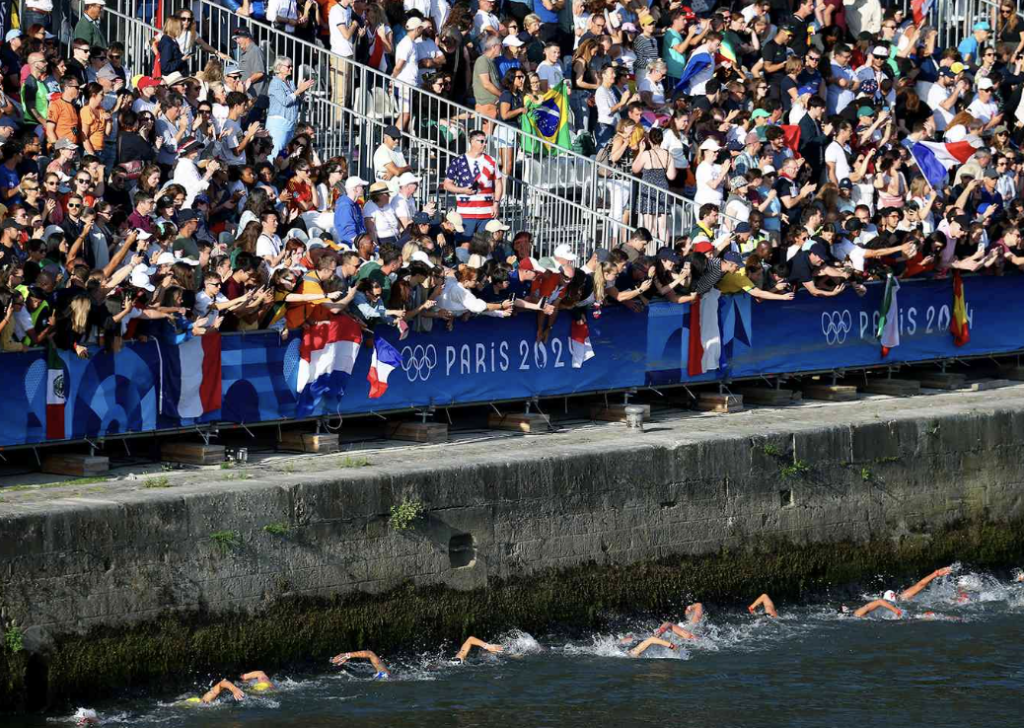
Sophie Kaufman of SwimSwam predicted that LA28 Olympics may be the last time open water swimming will be held in the Summer Olympics.
In her article “Could Open Water Swimming Be On The Chopping Blocks For the Brisbane Olympics?” (see here), Kaufman asked, “…what sports–or disciplines–could be on the chopping block ahead of the Brisbane 2032 Games?” She answered her question with, “…open water swimming, might be on the target list. As the Brisbane 2032 Organizing Committee works with the IOC on a revised budget, open water swimming could be near the top of the target list.”
Kaufman explains her reasoning, “Open water swimming often has its own venue; it was paired with triathlon for Paris 2024 but will be separate for LA2028, where the Brisbane 2032 Organizing Committee will be in attendance. It also has a low number of participants (44 in Paris), and is not a powerhouse event in terms of TV viewers. It is also a challenging event to generate ticket sales for because so much of the action happens outside the spectators view. Given the potential for a combination of low TV views and ticket sales, the IOC may view open water as too costly to stage.”
The catalyst for her prediction and assumptions were unnamed sources at the recent Executive Board meeting for the International Olympic Committee in Lausanne, Switzerland about the future of the Olympic Games. The sources leaked, “...the Brisbane 2032 Olympic Games are set to undergo a significant reduction in the number of sports due to financial concerns, and even some of the sports retained could have some of their disciplines or events cut.”
While SwimSwam is the world’s leading news organization dedicated to competitive swimming, diving, water polo, and artistic swimming, its strength is not in open water swimming coverage or perspective – so I beg to differ from Kaufman’s perspective and SwimSwam’s stance.
My reasons are as follows:
The Value of Gold Around The World
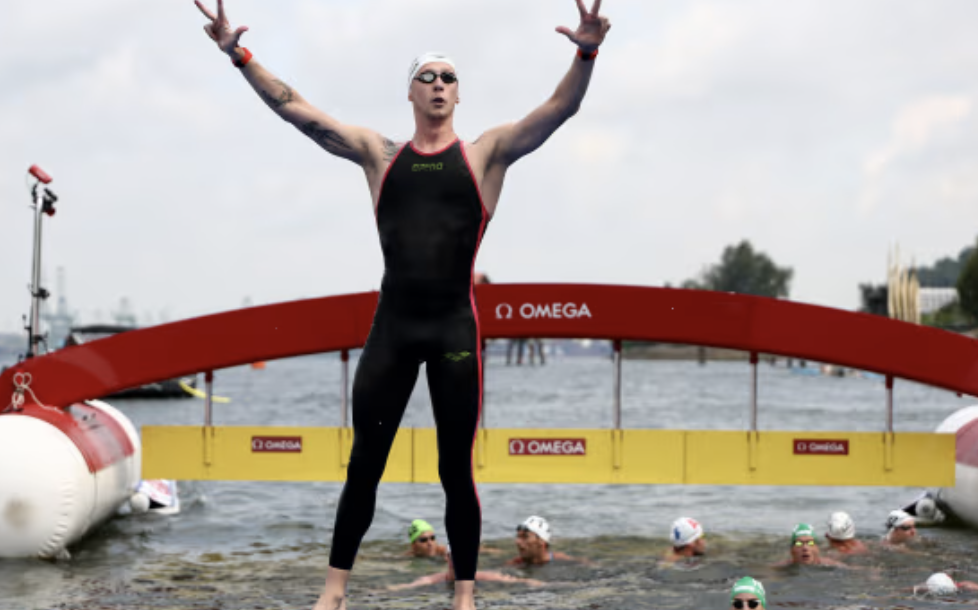
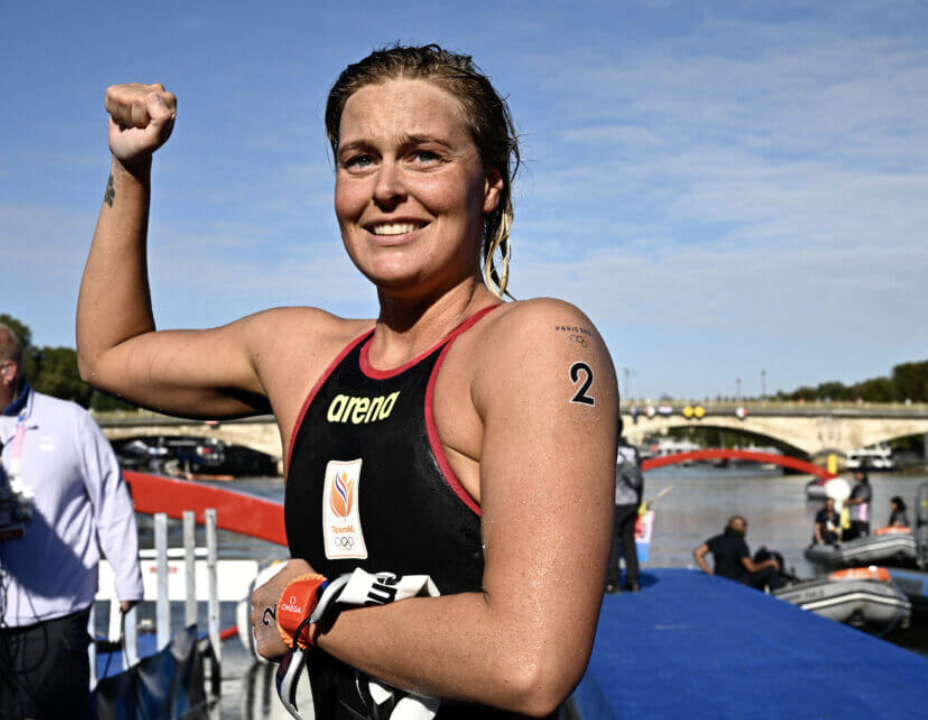
Moesha Johnson (28, Australia, World Aquatics bio here) remains the heavy favorite to win the gold medal at the women’s LA28 Olympics open water swim, and the top Australian men figure to be in the top 10.
Frankly speaking, while the American swim team does not assign as high a value to an open water swimming gold medal as it does to a pool swimming medal, the rest of the world is different, including and especially Australia in swimming. To modify Gertrude Stein’s famous line, “a gold is a gold is a gold” for the rest of the world.
If Johnson wins a gold medal as expected, I do not believe the Brisbane 2032 Organizing Committee is going to willingly cancel the Olympic open water swim already scheduled to be held in Gold Coast City in Queensland, Australia.
No Mo…no way.
The Cost of Temporary Seats
The 2032 Brisbane Olympic open water is scheduled to be held in the Southport Broadwater Parklands, a natural large community park that had a major redevelopment in 2009. The popular venue needs turn buoys, a floating pontoon for a feeding station, a floating start pontoon, a floating finish pontoon with high-speed cameras, and temporary stands located on its shoreline. Relatively speaking, that is among the lowest expenditures of any Olympic sport, discipline, or event.
So while Kaufman states, “Open water swimming often has its own venue…the IOC may view open water as too costly to stage.”
The total cost of the infrastructure of an Olympic open water swim is literally a tiny fraction of other sports. So I do not believe the IOC would make a financial decision based on such a minor budget item.
The Love of the Ocean
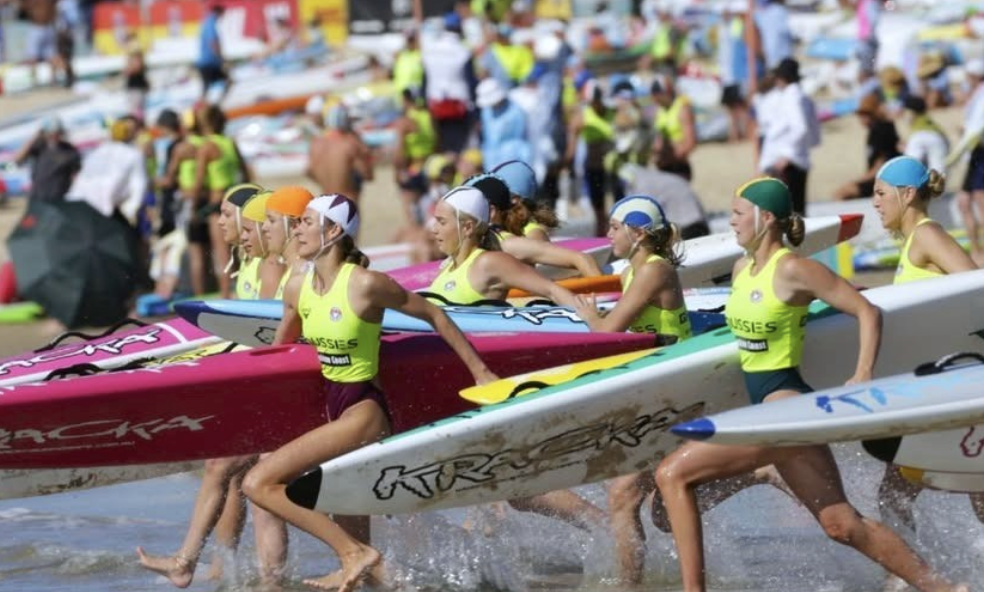
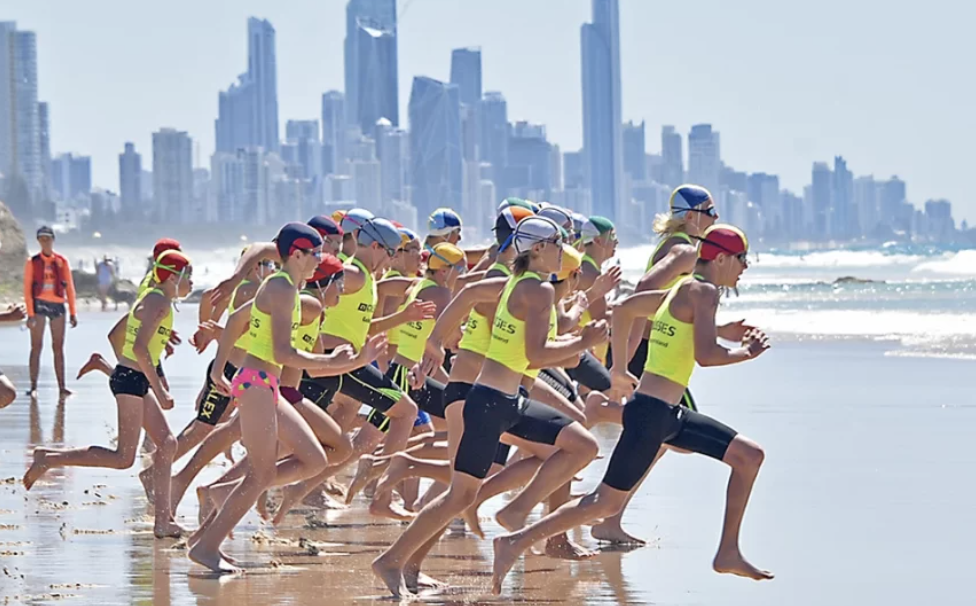
Americans understand the allure of NCAA basketball’s March Madness or the NFL football playoffs or other cultural events from the Kentucky Derby to NASCAR races. What American viewers do not understand is the allure of Australian surf life saving events or surf festivals in Australia.
With 87% of Australia’s total population living within 50 kilometers of the coast, the country has arguably the greatest appreciation and love of the open water than any society of Earth. That passion will equate to an incredible in-person and televised presentation of the Olympic open water swim. The Australians will help American media and audiences appreciate the tactics, strategies, and competitiveness of open water swimming.
It will not remain a minor event on Australian shores. No way.
Number of Competitors
Kaufman states that one reason for the cancellation of the Olympic open water swim is a low number of participants (44 in Paris). This makes no sense to me.
In Paris, the total number of swimmers (men + women) in the 400m individual medley was 32. In the 1500m freestyle, there were only 41 total competitors (men + women). In the 800m freestyle, there was only 31 total competitors (men + women). A total of 16 nations entered a men’s and women’s team in the 800m freestyle relay in Paris – the same number were in the 400m medley relay.
So a low number of competitors is not a determining factor in the inclusion of a sport in the Olympics – this is especially true when a large number of Olympic open water swimmers also compete in pool events.
Spectator View
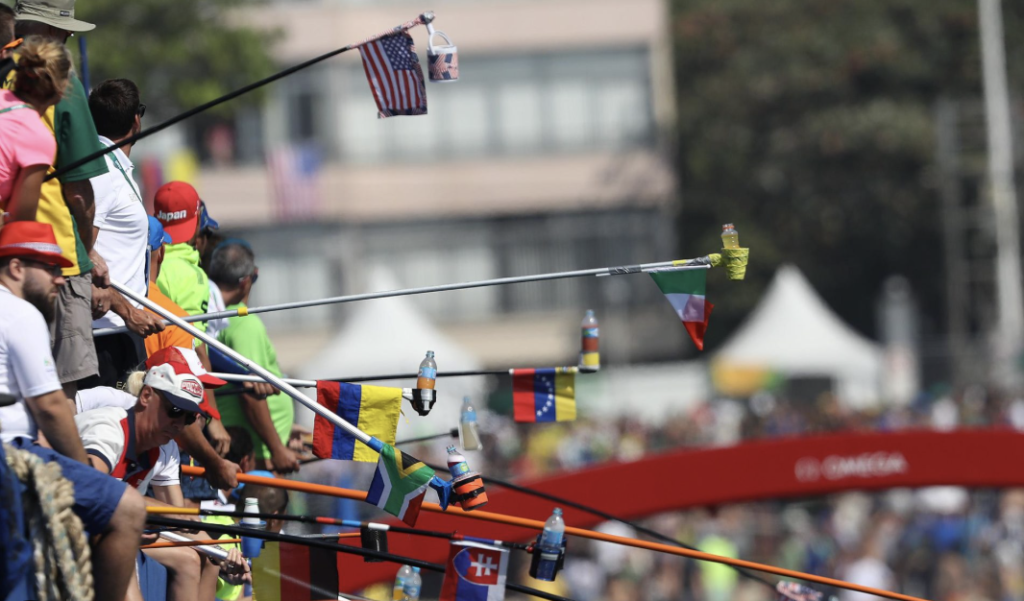
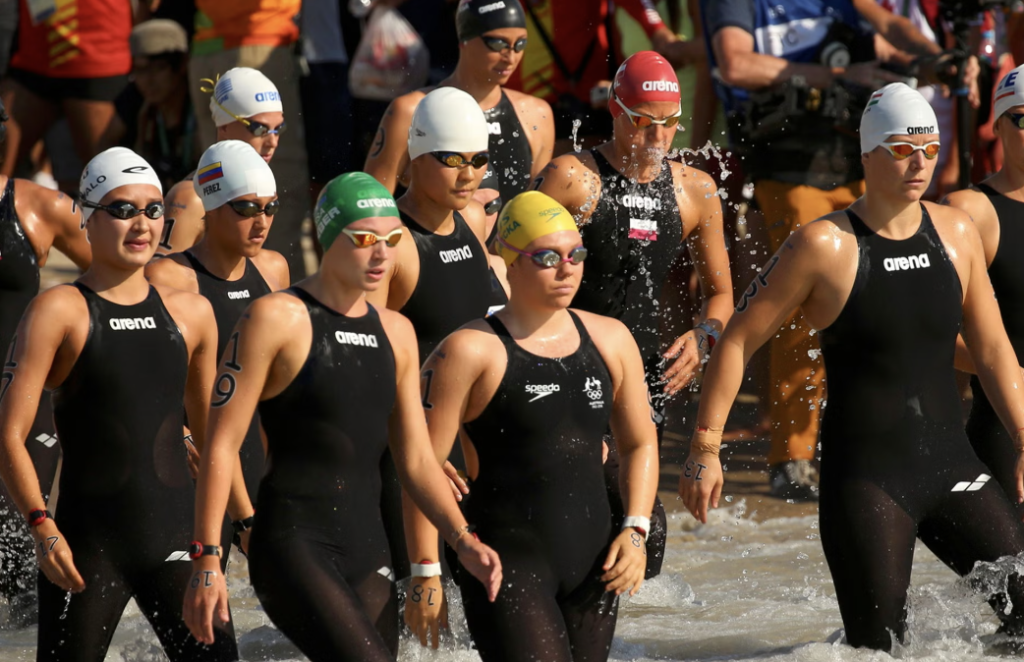
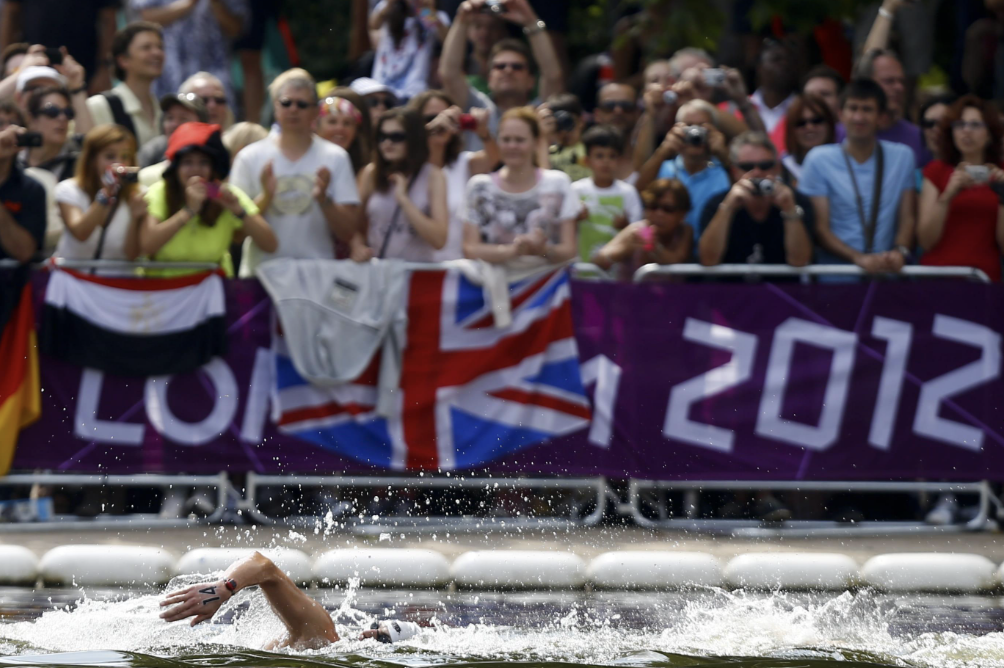
Kaufman states that another reason that Olympic open water swimming will not be included in 2032 is because so much of the action happens outside the spectators view. Not only were the spectator stands packed for the 2012, 2016, and 2024 Olympic open water races (2020 in Tokyo was Covid-restricted), but thousands of spectators without tickets lined the venue – even if their view was limited at best.
In Paris, spectators started to line up six hours before the start of the men’s and women’s Olympic open water swims. The fever to even catch a short glimpse of the Olympic athletes is a matter of fact.
American Perspective versus Global Perspective
While the America focuses on pool swimming with its long dominance in the Olympic arena, Americans and American media are largely ignorant of the scope and appreciation of open water swimming beyond its borders.
Ask most people on Planet Earth where the nearest 50m pool is to their home…and a vast majority of humans will not know where the closest pool is to their home. But ask most people on Planet Earth where the nearest open body of water is to their home…and nearly everyone will know where the nearest river, lake, bay, sea, or ocean is.
Open bodies of water are ubiquitous around the world; simply put, 50m competitive swimming pools are not. The pools are costly to build and costly to maintain. In contrast, rivers, lakes, ponds, bays, seas, fjords, and oceans are Mother Nature’s gift to humankind.
In a way, this reality is reflective of the opportunities for ambitious and talented male and female aquatic athletes at the Olympic Games. That is, if we compare the number of countries that qualify finalists in the Olympic open water swim to the number of countries that qualify finalists in the 400m individual medley or the 200m freestyle (as two examples) in the pool, and the number of countries that qualify teams in the Olympic water polo events, and the number of countries that qualify finalists in the 10m platform diving event, open water swimming for both men and women clearly offers greater opportunities across the globe.
Olympic 10K Marathon Swim Finalists
Olympic 10K marathon swim medals (gold, silver, and bronze) between the 2008 Beijing Olympics and the 2024 Paris Olympics have been won by athletes from the Netherlands, Germany, Great Britain, Italy, Brazil, Hungary, Russia, Tunisia, Greece, USA, France, Canada, and Australia (13 countries total).
But when we review the data from a wider perspective, the global distribution of marathon swimmers is vast.
The Olympic marathon swim finalists at these five Olympic Games have come from Netherlands, Germany, Great Britain, Italy, Brazil, Hungary, Russia, Tunisia, Greece, USA, France, Canada, Australia, Egypt, Spain, Portugal, Japan, Monaco, Mexico, Peru, Canada, China, Israel, Ecuador, Ireland, Czech Republic, Austria, Poland, Turkey, Norway, Namibia, Sweden, South Korea, Kazakhstan, Hong Kong, Argentina, Venezuela, South Africa, Ukraine, Singapore, Slovenia, Slovakia, New Zealand, Algeria, Belgium, Bulgaria, Syria, Switzerland, Croatia, Malaysia, and Guam.
That is, a total of 51 countries have qualified their representatives for the Olympic marathon swim.
400m Individual Medley Finalists
Compare this global distribution of Olympic marathon swimmers (51 countries) to the number of countries with Olympic male and female pool swimmers who qualified in the men’s and women’s 400m individual medley finals between the 2008 and 2024 Olympic Games: France, Japan, USA, Great Britain, Italy, New Zealand, Germany, Canada, Australia, Ireland, Hungary, Spain, Brazil, South Africa, China, Zimbabwe, and Russia.
That is, the Olympic finalists in the 400m individual medley at these 5 Olympic Games have come from 17 different countries.
51 versus 17.
200m Freestyle Finalists
Compare this global distribution of Olympic marathon swimmers (51) to the number of countries with Olympic male and female pool swimmers who qualified in the men’s and women’s 200m freestyle between the 2008 and 2024 Olympic Games: Italy, Slovenia, China, USA, Romania, Great Britain, Australia, France, South Korea, South Africa, Germany, Switzerland, Japan, Russia, Italy, Sweden, Brazil, Romania, Lithuania, Hong Kong, Canada, Czech Republic, and New Zealand.
That is, the Olympic finalists in the 200m freestyle at these 5 Olympic Games have come from 23 different countries.
51 versus 23.
Olympic Water Polo Teams
Compare this global distribution of Olympic marathon swimmers (51) to the number of countries that qualified for the opening rounds of men’s and women’s Olympic water polo between the 2008 and 2024 Olympic Games: Hungary, USA, Serbia, Montenegro, Spain, Croatia, Greece, Australia, Italy, Germany, Canada, China, Netherlands, Russia, Romania, Kazakhstan, Great Britain, Brazil, France, Japan, and South Africa.
That is, the Olympic qualifying water polo teams at these 5 Olympic Games have come from 21 different countries.
51 versus 21.
10m Platform Diving
Compare this global distribution of Olympic marathon swimmers (51) to the number of countries with male and female 10m platform divers that qualified between the 2008 and 2024 Olympics: China, Japan, Great Britain, Australia, Mexico, Germany, Canada, Ukraine, North Korea, Italy, Netherlands, Russia, Brazil, Malaysia, France, Puerto Rico, South Korea, Cuba, Columbia, and Sweden.
That is, the Olympic qualifying platform diving finalists at these 5 Olympic Games have come from 20 countries.
51 versus 20.
It is open water swimming with a clear advantage in its global distribution of Olympic athletes, compared to pool swimming, water polo, and diving.
Comparison
51 countries have Olympic marathon swim finalists versus 17 countries in the 400m individual medley versus 23 countries in the 200m freestyle versus 21 countries in water polo versus 20 countries in 10m platform diving, male and female at the 2008, 2012, 2016, 2020, and 2024 Summer Olympic Games.
Human Interest Stories
In a rare twist of fate, Olympic open water swimming is the only aquatic discipline with finalists (and a medalist) who either survived leukemia or is an amputee with the likes of Olympic gold medalist Maarten van der Weijden of the Netherlands and Natalie du Toit of South Africa.
Kirsty Coventry is the IOC president. While she was an accomplished Olympic pool swimmer with 7 Olympic medals, will she willingly cut an aquatic race that has such global appeal? I think not. I hope not.
Share your comments and reasons among your teammates and friends and spread the love of the open water.
Footnote: If open water swimming is dropped from the Summer Olympics, then I wonder if this makes ice swimming more enticing – or less enticing – for inclusion in the Winter Olympics? Hmmmm…
© 2026 Daily News of Open Water Swimming
“to educate, enthuse, and entertain all those who venture beyond the shoreline“
World Open Water Swimming Federation, a human-powered project.
New Open Water Swimming Educational and Motivational Course – register here
Your deep dive into the likelihood of Open Water Swimming in the Brisbane Olympics makes so much sense. It seems like a slam dunk to me that OF COURSE Aussie will host their national sport – ocean swimming. As you stated, the Surf Lifesaving Clubs are a social and athletic hub for thousands of people every year. Aussie will naturally host open water swimming – it’s what they do!
Steven,
This is very well thought out, and of course, I am with you … so often it seems we are preaching to the choir. The facts of the Seine River Olympic Marathon Swim will show that when the IOC measures all Paris Olympic medal events, our swim will surprise many people, and be near the top of all aquatic medals. Thank you very much for your persistence in detailing the incredible legacy of open water swimming.
Keep on Keeping On.
This discipline is growing at least in the US. Check out the increasing participation Open Water Zones championships! I believe USA Swimming will vigorously defend and support Open Water!