
If I want to learn about swimming across lac St-Jean in Quebec, Canada, I talk with 11-time winner of the prestigious professional 32 km Traversée internationale du lac Saint-Jean race, Petar Stoychev of Bulgaria (MSF bio here, World Aquatics bio here, IISA bio here).
If I want to learn about what happens physiologically after swimming longer than 24 hours, it is best to consult with Sarah Thomas (43, USA, MSF bio here, IISA bio here) who is a 5-time member of the 24-Hour Club (with swims of 30 hours 1 minute in Lake Memphrémagog, 56 hours 5 minutes in Lake Powell, 67 hours 16 minutes in Lake Champlain, 54 hours 10 minutes in the English Channel, and 24 hours 33 minutes in Lake Geneva).
If I want to learn about organizing a mass participation swim, there is no one better or more experienced than Wayne Riddin, the long-time organizer of the Midmar Mile in South Africa.
If I want to understand the different possibilities of English Channel crossings, I ask Chloë McCardel (43, Australia, MSF bio here) with 44 English Channel crossings to date – or the challenges of the Oceans Seven, a go-to coach is Tim Denyer of Red Top Swimming.
If I want to learn how to be a competent extreme swim expedition leader, I ask Ger Kennedy (56, Ireland, IISA bio here) what details to consider and how to properly and comprehensively organize a safe swim.
When it comes to cold water swimming, Antarctica maestro Ram Barkai (68, South Africa, IISA bio here, @rambarkai_iceswimmer) is the leading expert in organizing and doing ice swims while keeping people from all walks of life safe.
When I read about different strategies used by race organizers and others involved in cold water swimming, I always consult with Barkai, the founder of the International Ice Swimming Association and author of From Fire to Ice, to ask him for his feedback and guidance.
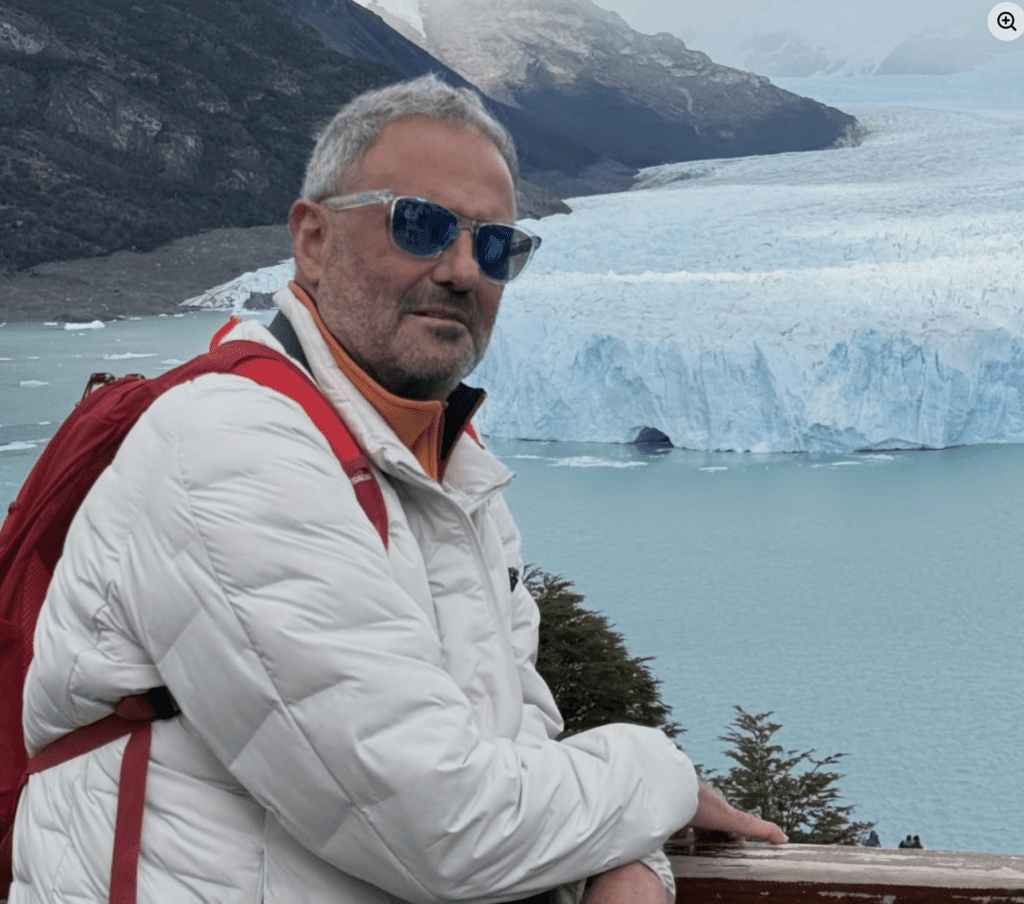
On cold water swims in extreme triathlons, Barkai observed, “The triathletes have wetsuits. Many of them swimming is not their top skill. They train in ice baths for [cold water] swims. You only train for swimming in cold water by training in cold water. Hype before a swim is dangerous. You need to be calm and controlled so the cold shock response doesn’t trigger hyperventilation and panic. Breathing is more important than anything. If your breathing is controlled you’ll get through the shock and into safe swimming.”
There is one extreme triathlon where the triathletes are sprayed with cold water before jumping into the start (in a fjord).
Barkai explains his perspective, “That method for extreme triathlon swim starts raises significant safety concerns. In my view, it appears to rely too heavily on research into involuntary cold-water immersion — essentially accident scenarios — rather than on the practical experience and accumulated knowledge of trained cold-water swimmers. The athletes are highly competent and experienced, which probably reduces the risk substantially, yet the swim leg has hurt experienced athletes before. A wrong start can also cost you pain and time in such races, not just death.
The water temperature at these extreme triathlons typically ranges from 12°C to 15 °C and can reportedly drop to around 10°C. These conditions are undoubtedly cold, but for experienced, well-prepared athletes, in a wetsuit, undertaking a demanding Ironman-distance event, they are not inherently extreme or unmanageable. The greater issue is not simply the temperature; it is the athletes’ lack of specific experience in cold-water swimming and the way they are introduced to the water.
The cold-shock response is further intensified by ambient conditions, anxiety, and the method of entry. In Antarctica, where we swim in 0 °C water without wetsuits or double caps, swimmers remain warmly dressed and comfortable until they are called to the water. They usually enter the water directly from a Zodiac and begin swimming slowly. That is the crucial point: slowly!
In my experience in ice swimming, a fast, uncontrolled start is usually what kills the race for ice swimmers. The little time you lose getting your breathing right will let you stay in the race and catch up when others who started too fast are dying. It is an individual parameter; you should be experienced enough to know your starting pace in cold water.
The primary immediate risk in cold water is breathing. Until breathing is regulated and controlled, the swimmer remains vulnerable. In a short race, breathing can be ignored, but in an endurance race, attempting to force through tight, uncontrolled breathing requires considerable experience and can easily backfire. It is not advisable in long-distance or endurance events.
Pushing hard while breathing is restricted and unregulated is dangerous. It can lead to panic, increased anxiety, inhalation of water, reduced muscular power, and reduced oxygen delivery to the brain and muscles. Any of these may result in drowning or, in susceptible individuals, a cardiac event.
It is correct that hypothermia does not usually occur within seconds or a few minutes. Core body temperature takes time to fall to dangerous levels, particularly in water around 12°C. However, this does not mean the start procedure is safe. The immediate dangers are not hypothermia; they are cold shock, breathing disruption, panic, and the physiological stress response.
The practice of spraying athletes with cold water before they jump from a ferry into cold water for a 3.8 km swim, followed by an 180 km bike ride and a full marathon, is difficult to justify on safety grounds. It may heighten anxiety, raise blood pressure and heart rate, and create unnecessary psychological hype immediately before entering the cold water. In my opinion, this is neither sensible nor safe preparation for the swim.Theory versus Practice
The training methods suggested may appear sound in theory, but our practical experience suggests otherwise. Ice-bath exposure does not adequately prepare athletes for cold-water racing. We have seen many ice-bath professionals struggle significantly when attempting cold-water or ice swimming, with no obvious advantage over swimmers who train regularly in open water.
It helps with cold-water immersion, sub-10°C or sub-5°C, allowing the brain to adjust to the pain in the fingers and toes. However, it can’t replicate the breathing required for swimming.
An ice bath does expose the body to cold shock, but the situation is entirely different. The person is usually seated, still, relaxed, and able to focus on breathing. That bears little resemblance to entering cold water in a race environment and immediately starting to swim under pressure. There is only one way to train for a cold swim: swim in cold water and get used to it. Experience it, let your brain register the experience, and it will know what to do in a race.
You don’t need to swim 3.8 km in cold water for a 3.8 km race in cold water. You can do shorter distances, spend 50% of the required time in the water, and leave the rest for race day.
In my experience, 12°C is challenging even for experienced open water swimmers undertaking major swims such as the Oceans Seven without a wetsuit. However, the challenge is usually more about prolonged exposure over hours than the initial entry. I would be interested to ask North Channel swimmers whether they would welcome being sprayed with cold water minutes before beginning their crossing. I suspect the answer would be clear.
Recommendations
If extreme cold-water triathlons or open water swims start from a ferry, I would recommend a different approach. Athletes should remain warm and dry until they are called to the start. Once called, they remove their robes, hand them to the organizers, and enter the water in a controlled manner. The start should be about 200 meters from the ferry to allow a controlled swim-out, similar in principle to a formation lap in Formula 1.
Once athletes are settled, breathing has stabilized, and the field is safely positioned, the race start can be announced. This can take only a few minutes. Your body and breathing need more than 40 seconds to regulate themselves.
By that point, much of the unnecessary panic and anxiety will have been removed. The athletes will still be cold, but cold itself is not the central issue. Their breathing will have adjusted to the environment, and their minds will be focused on racing rather than on the shock of being sprayed and jumping from a ferry.
The biggest obstacle in these events is not the cold. It is your breathing, an elevated heart rate or blood pressure, panic, or hyperventilation (or a very tight wetsuit). Focus on these issues, and the cold will be fine.
For more information on ice swimming, visit internationaliceswimming.com.
© 2026 Daily News of Open Water Swimming
“to educate, enthuse, and entertain all those who venture beyond the shoreline“
World Open Water Swimming Federation, a human-powered project
New Open Water Swimming Educational and Motivational Course – register here