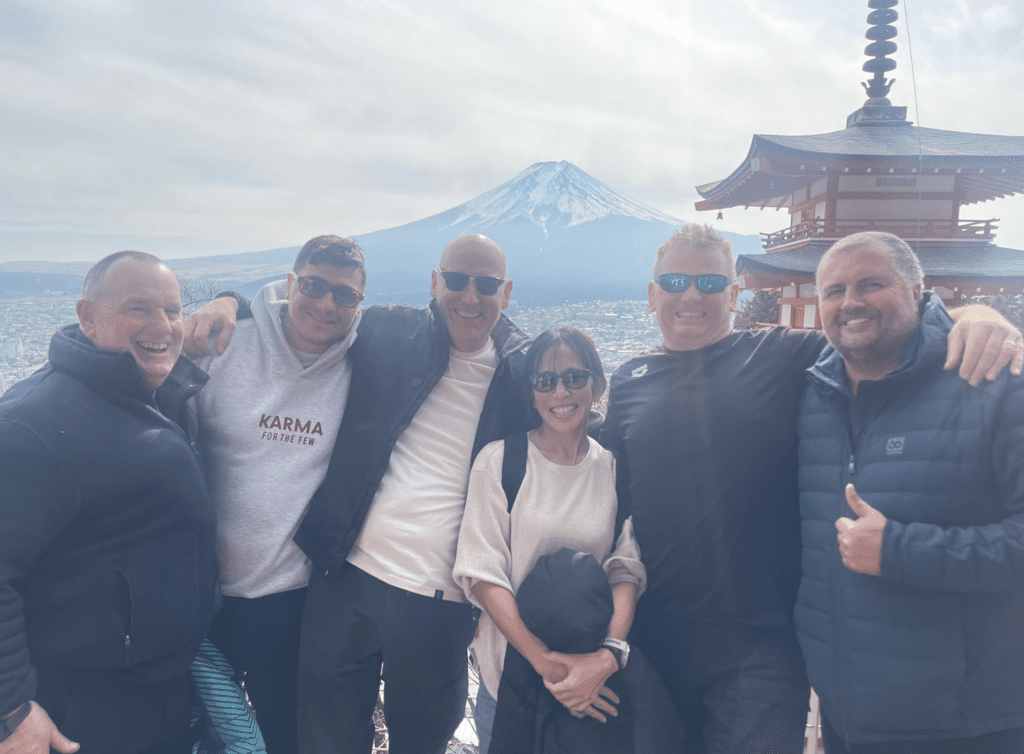
It is not often any swimmer can one-up Lynne Cox, the famed dual International Swimming Hall of Fame and International Marathon Swimming Hall of Fame Honor Swimmer, but four men are reshaping the equation of what is possible in Japan this week.
While Cox put lake swimming on the map during her unprecedented ‘Around the World in 80 Days’ event when she swam across the Five Lakes of Mount Fuji in Japan en route to doing 12 open water swims around the world in 1985.
Those five famous lakes in Japan ring the majestic Mount Fuji, the largest mountain and active volcano in Japan at 3,776 meters.
Ger Kennedy (56, Ireland, IISA bio here), Stève Stievenart (48, France, IISA bio here), Teodor Tsvetkov (31, Bulgaria, IISA bio here), and Conor O Connor (63, Ireland, IISA bio here) are causing eruptions in the mindset of the Japanese society. The team is supported by Vincent Donegan (54, Ireland, IISA bio here) as medical support and Maya Yatsu (Japan, IISA bio here) as their interpreter and IISA level 1 observer.
No Japanese in history could have imagined any human swimming Ice Miles in the frozen lakes of Mount Fuji in winter – and many still find it hard to believe anyone could contemplate ever trying. While Ely Uemura (56, Japan, IISA bio here) is the first and only Japanese to accomplish an Ice Mile to date, she lives in New Zealand where she did her Ice Mile.
But back in Japanese domestic waters, the four icemen are making waves and cutting through shards of ice in Lake Yamanaka, Lake Kawaguchi, Lake Sai, Lake Shoji, and Lake Motosu, five tranquil lakes located 100 km south of Tokyo, between yesterday and the 18th.
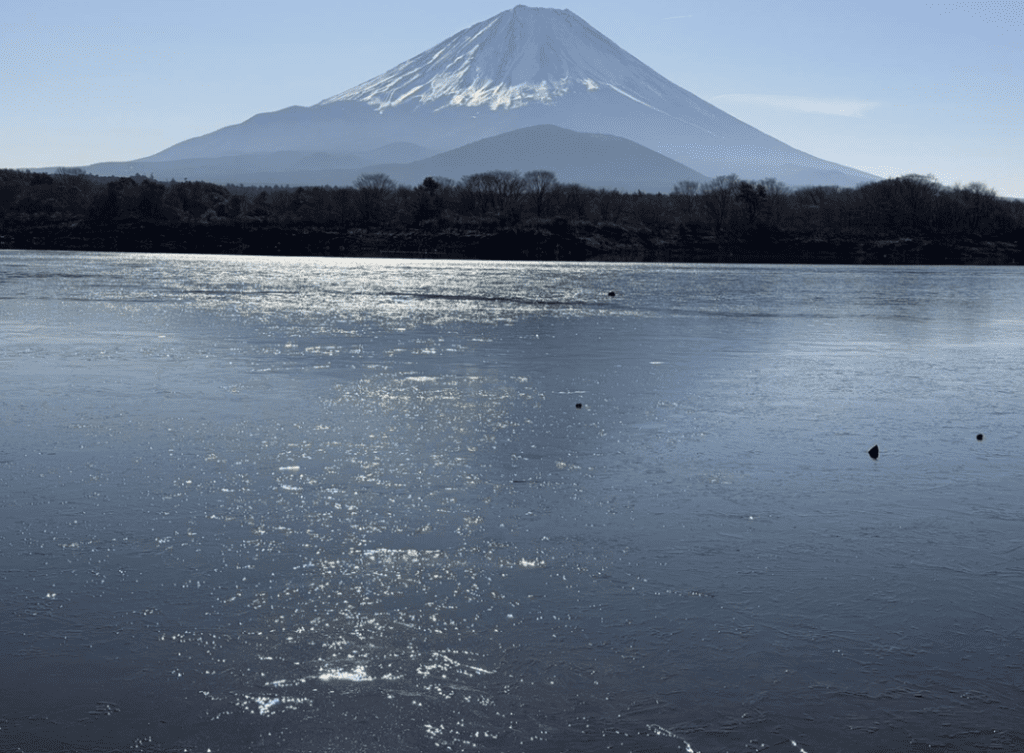
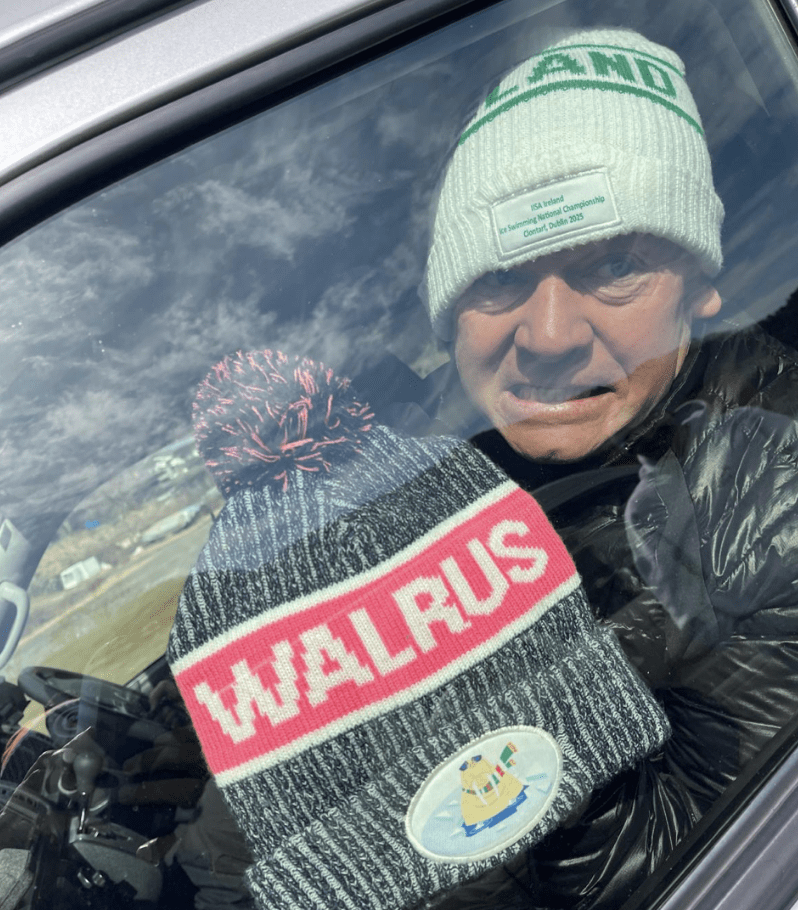
In Lake Kawaguchi, Tsvetkov completed an Ice Mile Plus with a 2 km swim with two others completing an Ice Mile. Over the next three days, the quartet will be swimming much, much more – continuing to absolutely blow the minds of the local communities while they enjoy the Japanese hospitality and foods.
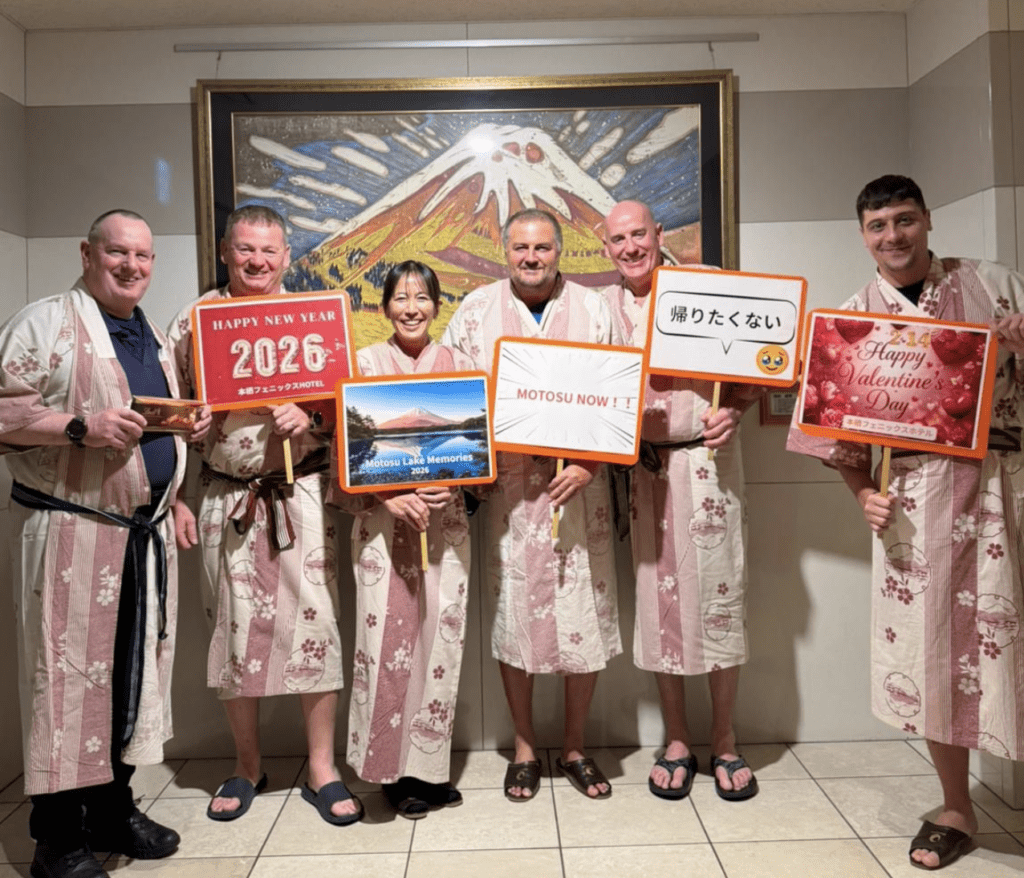
The Five Lakes (East to West)
- Lake Yamanaka is the largest of the five lakes and the closest to Mount Fuji. It is a popular summer resort known for its “Diamond Fuji” spectacle in February, where the sun appears to rest perfectly on the mountain’s peak.
- Lake Kawaguchi is he most developed and accessible lake, serving as the region’s main transportation hub. It features numerous museums, hot springs, and prime viewing spots for cherry blossoms in April and autumn foliage in November.
- Lake Sai is a quieter and less developed lake surrounded by the Aokigahara Forest. It is famous for its nearby lava caves—the Bat, Ice, and Wind caves—and traditional thatched-roof villages.
- Lake Shoji is the smallest and most tranquil lake. It is celebrated for the “Kodakura Fuji” or “Mother and Child Fuji” view, where a smaller mountain in the foreground makes Mount Fuji appear to be cradling it.
- Lake Motosu is the deepest lake (at 121 meters) with exceptionally clear water. Its northern shore offers the specific view of Mount Fuji famously depicted on the Japanese 1,000 yen bill.
© 2026 Daily News of Open Water Swimming
“to educate, enthuse, and entertain all those who venture beyond the shoreline“
World Open Water Swimming Federation, a human-powered project
New Open Water Swimming Educational and Motivational Course – register here