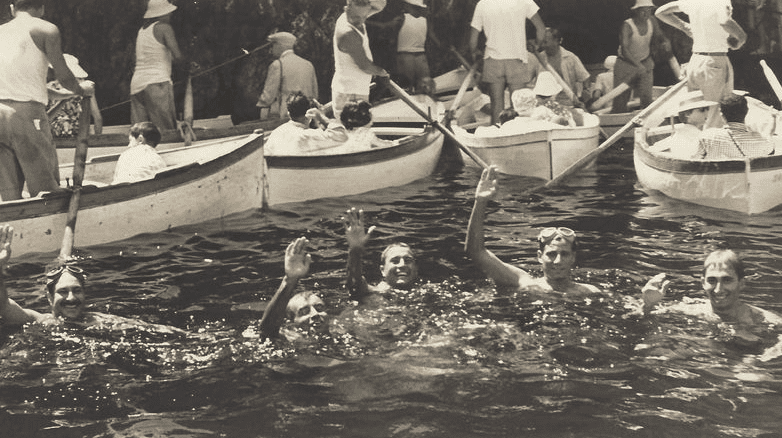
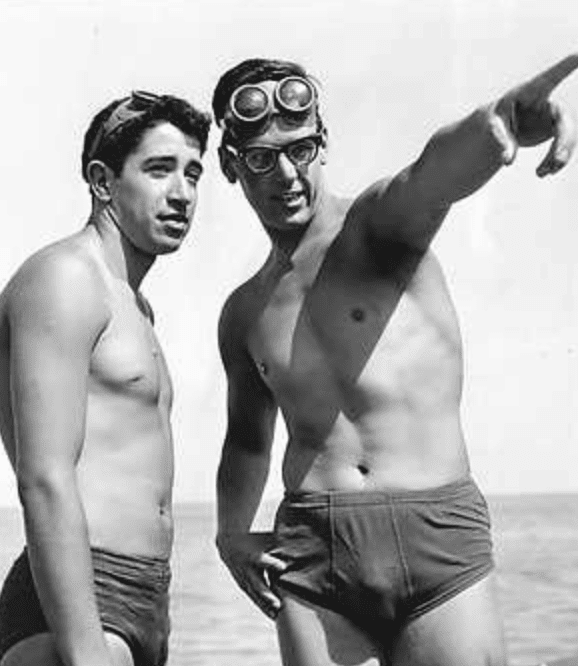
Where is all the open water swimming information from the pre-Internet, pre-smartphone, pre-social media, snail mail era?
Unfortunately, much information is lost to history. But the information that remains is largely in people’s homes, included in books, hidden away in archived newspapers, and sprinkled throughout people’s memories.
In today’s contemporary open water swimming world. race organizers announce results within minutes of completion and add these to their websites and social media feeds. For solo swims, stage swims, and ice swims, swimmers most often post their own information on their social media feeds – and congratulatory messages are posted within minutes.
Globally, only a percentage of the total number of solo swims and race results are captured, posted, and/or described by local media and other platforms including the Marathon Swimmers Federation, the Daily News Of Open Water Swimming, Channel Swimmers, and added to LongSwims Database and Openwaterpedia. Channel crossings and marathon swims are eventually ratified and archived by a growing number of local organizations. A few have long histories like the Channel Swimming Association and the British Long Distance Swimming Association, while others are newer like the Irish Long Distance Swimming Association, ACNEG, the Catalina Channel Swimming Federation, and the Channel Swimming & Piloting Federation.
Other organizations that are more recent include the Lake Geneva Swimming Association, Kaiwi Channel Association, Hawai’i Open Water, World Open Water Swimming Association, Tsugaru Strait Swimming Federation, Leme to Pontal Swimming Association, Asociación Cruce a Nado Río de la Plata, Australia Marathon Swimming Hall of Fame, and many others. Each organization has their own ratification, verification, and governing policies, procedures, and principles.
While swimmers, organizations, and volunteers try to collectively keep an accurate, comprehensive archive of open water swimming information, this luxury was not always the case. Before the internet and social media, the history of the sport was maintained on a variety of documents in swimmers’ memory boxes, attics, and basements in the form of newspaper articles, private letters, notebooks, and diaries.
Only very occasionally, information, race results, and swim descriptions were included in books like Wind , Waves, and Sunburn – A Brief Histry of Marathon Swimming by Conrad Wennerberg, History of Open-Water Marathon Swimming by Tim Johnson, DPS, PE, and A History of Marathon Swimming, originally compiled by Joe Grossman and later reformatted and published by Dale Petranech and Steve Walker.
The search for old information in the new world of the 21st century includes these few examples, among a global search for long-lost histories:
- The nomination for International Marathon Swimming Hall of Fame Honor Administrator Captain Roger W. Wheeler led to a search that found the World Professional Marathon Swimming Federation (WPMSF) race series annual newsletters between the years 1967 and 1971 and newspaper archives that the IMSHOF pays annually for research rights, that are currently stored in the IMSHOF pubic elibrary. For example, the first John E. Fogarty Memorial Distance Swim that took place in 1968.
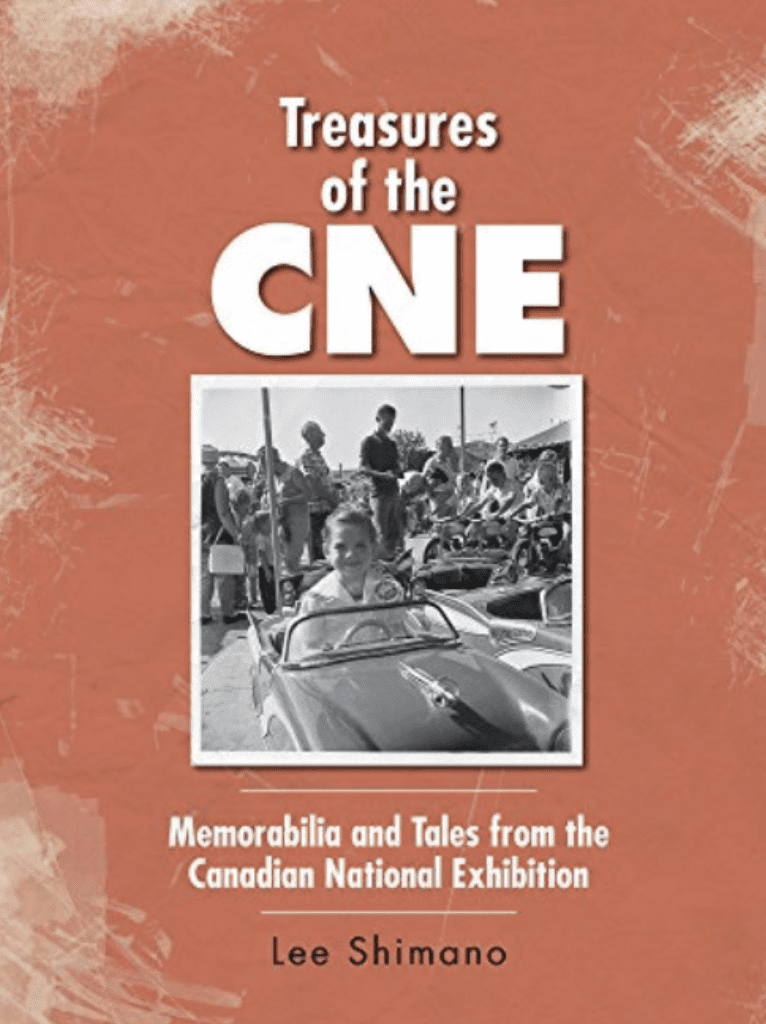
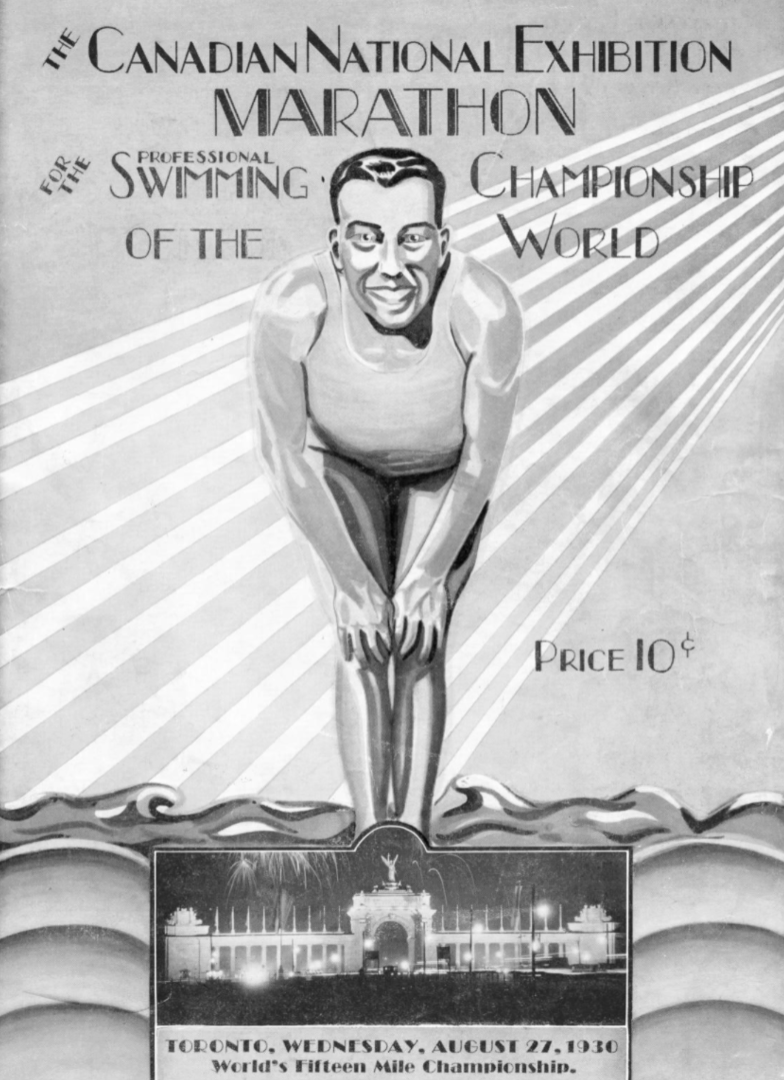
- A question was raised about exactly when and how the Canadian National Exhibition paused its solo marathon races starting in 1956. The IMSHOF pubic elibrary developed an entire folder dedicated to CNE, mostly populated by files donated by Lee Shimano. But the question remained. Newspaper archives were searched and found that there were several drownings in the lake unrelated to the races – but these were not reported as a reason to pause the 1957 race. IMSHOF authored a page to help explain the background to the pause.
- Dual honoree Penny Lee Dean, EdD did a comprehensive job in researching the history of Catalina Channel crossings. Subsequently, the IMSHOF identified and documented two possible omissions. The grandson of IMSHOF Honor Swimmer Baron Abílio Couto created a website to document his grandfather’s career. The content included a handwritten list of Couto’s completed swims which included a Catalina Channel crossing. However, no other reference has been found including witnesses, newspaper clippings, boat/hotel receipts, etc. The other was a training swim by IMSHOF Honor Swimmer Philip Rush. Rush never announced it nor considered it as an official crossings. In both cases the Catalina Channel Swimming Federation does not recognize these swims. But the IMSHOF notes these crossings on its website so that researchers 100-years in the future will have a headstart.
- There were professional races in the Nile River and Suez Canal in Egypt throughout the 1960s and 1970s. The race results were lost by the local federation years ago and were rarely reported elsewhere. Many swimmers, including IMSHOF Honor Swimmer Nasser Elshazly, have placement certificates in Arabic with the year, event, and their time and place. No researcher has yet found old results in any local newspapers which are not online.
- Several IMSHOF Honor Swimmers competed in races held in Syria during the 1950s and 1960s, including Jable to Latakia, but no comprehensive race results have been located.
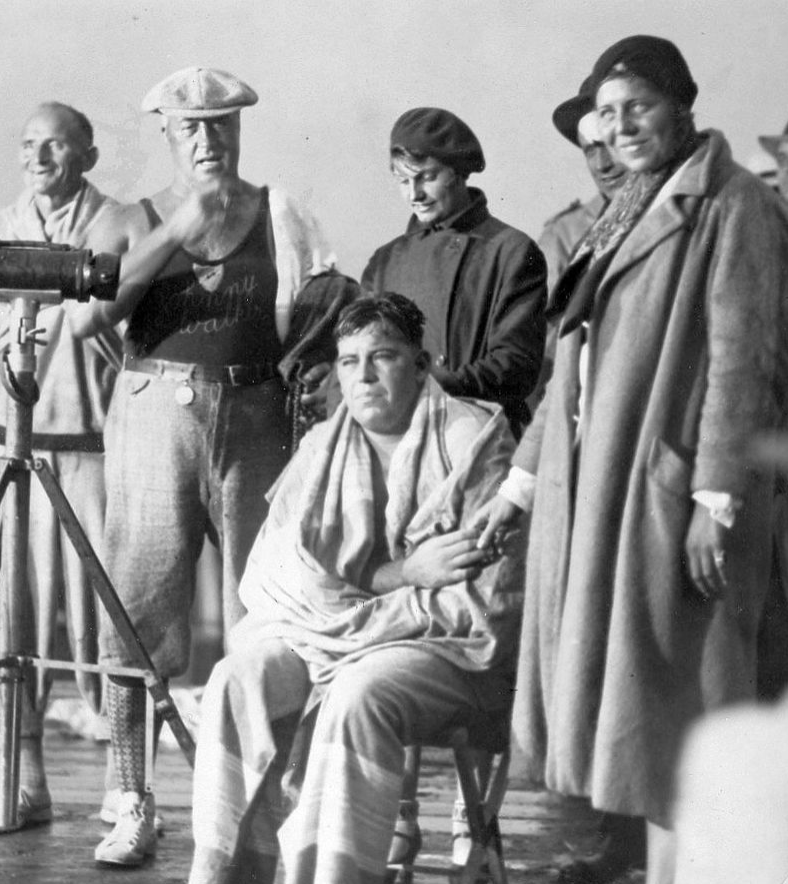
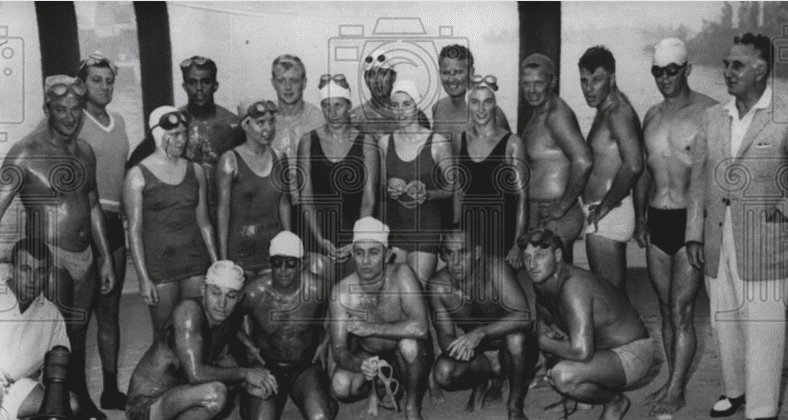
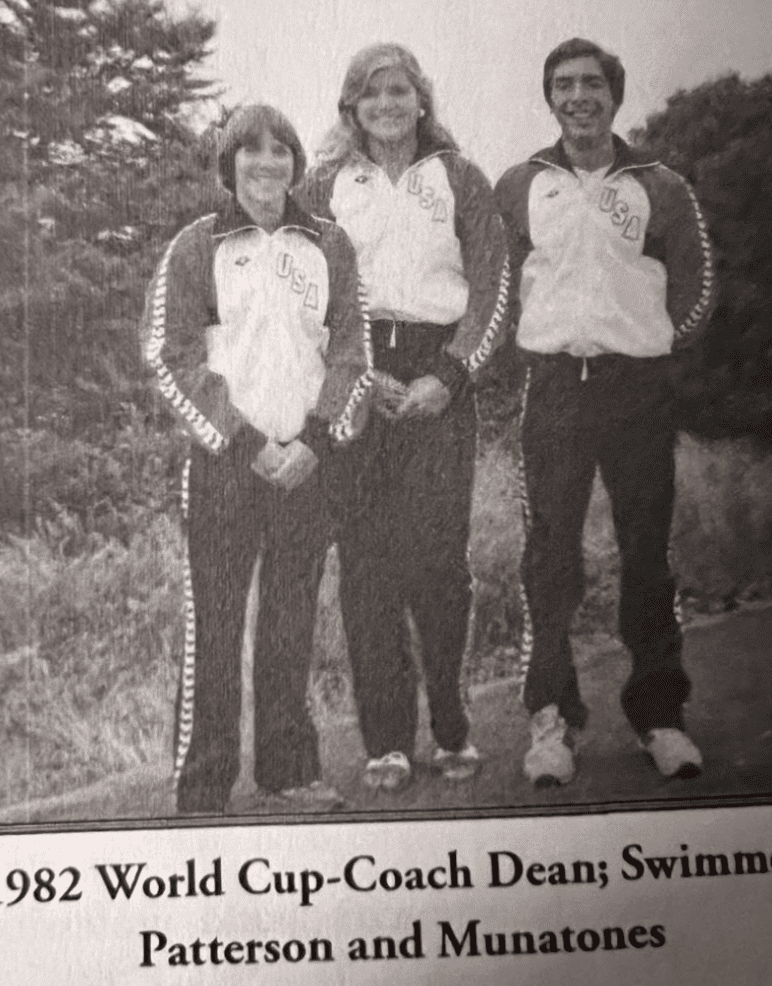
The information above, as a handful of examples, is brought to the attention of the IMSHOF by living Honor Swimmers who competed in these 20th century events. The communications are forward to the IMSHOF in English. One inevitable long-term outcome is that as Honor Swimmers will eventually pass away, and the old newspaper articles, scrapbooks, and boxes of records hidden in homes will end up being disposed of by heirs. For fear of losing part of the sport’s history, IMSHOF encourages all its living Honorees to scan and submit records for inclusion in the IMSHOF elibrary. One shining example is the old scrapbooks of Honor Swimmer Herman Willemse are currently being scanned and archived.
The sport has a rich history of marathon swims and races that can’t easily been seen or understood. Most often, these events and feats involve swimmers who are not IMSHOF Honorees. More than likely, these swims were not reported widely – or if reported at all, the information was only in the form of a small local newspaper mention – and always in the local native language.
In time, with scanning of old newspapers and interest by local researchers, these swims may be uncovered and become known in more depth. . As an example, the history and results of important swims and races in the Balkans are captured in the book: “Савски вук Милорад Рајшић и Породица Рајшић” by Иван Ковачевић “CABCKИ” BYK MИЛOPAД PAJШИЋ И ΝOPOДИЦA PAJШИЋ.
A small sampling of some accomplished swimmers and event organizers from the Balkan Peninsula in southeastern Europe include Janez Marojević of Croatia, Dr. Gabor Szentpaly of Hungary, Coach Gabor Perlaky of Hungary, Gizela Slaviček Perlaky of Hungary, Rita Lazar, Hungary, Nace Majcen, Slovenia, Igor Majcen, Slovenia, Jure Bučar of Slovenia, Jože Tanko of Slovenia, Dr Zacharias Alexandrakis of Greece, Georgios Mathas of Greece, Dr Boško Iliev of North Macedonia, Ilija Stojanovski of North Macedonia, Kočo Paskali of North Macedonia, Tsvetan Yordanov of Bulgaria, Ištvan Priboj of Serbia, Bence Balzam of Serbia, Jelena Ječanski of Serbia, Milorad Rajšić of Serbia, Toni Pavičić Donkić of Croatia, Slaven Šitić of Croatia, and Karla Šitić of Croatia.
© 2025 Daily News of Open Water Swimming
“to educate, enthuse, and entertain all those who venture beyond the shoreline“
World Open Water Swimming Federation, a human-powered project