Don’t Be Prey – California Film Festival Tour
Don’t Be Prey was filmed over a 10-year period across 5 continents and 7 ocean channels. Australian Mark Sowerby confronts his fears, uncertainties, and trauma in a fight to reclaim his business and personal life. Along his journey to achieve the Oceans Seven, he meets Jen Schumacher, Bengisu Avci, Joanne Norman, Paul Leonard, Tim Denyer, Steven Munatones, Jamie Mackay, and the Chunky Dunkers.
Sowerby takes on the Oceans Seven, a global challenge that requires 7 non-wetsuit solo crossings of the English Channel, Catalina Channel, Molokai Channel, Cook Strait, Strait of Gibraltar, North Channel, and Tsugaru Channel after a life-changing event leaves him struggling with depression and uncertainty. Coach Tim Denyer pushes Sowerby to turn anguish into purpose.
What unfolded over a decade of facing cold, rough waters with sharks and jellyfish is not only a constant quest for survival, but more importantly, a profound journey of resilience and healing.
“Don’t Be Prey is like Rocky for ocean swimmers,” says Steven Munatones, founder of the Oceans Seven. “Jen Schumacher eloquently explains the mental aspect of channel swimming. Joanne Norman and Paul Leonard show an unfathomable depth of resilience to get back in the water after shark attacks. Bengisu Avci’s tears of joy and tears of pain span the spectrum of emotions that marathon swimmers face. Jamie Mackay shows unbridled passion that makes you immediately smile and appreciate the sport. The entire film showcases the sport in an unfiltered and authentic manner. If you want to venture offshore, this is the film to watch and get inspired.”
Don’t Be Prey Trailer
Course Description
The course is currently held in English, but it can also be provided in Spanish and French.
This course presents a comprehensive overview of the global community of open water swimming. The course offers lessons to learn about Olympic and professional marathon swimming, stage swimming, ice swimming, channel swimming, and the creation of your own unprecedented aquatic adventures.
This course is built upon the first-hand experiences, observations, coaching, and organizing open water events that span the Americas, Europe, Asia, Africa, and Oceania by Steven Munatones (English + Japanese), Antonio Argüelles (Spanish + English + German), and Chris Morgan (English + French + German) from the 1980s to the present.
Take the entire course or only specific chapters that may be more appropriate to you and your goals.
We developed this program to educate and inspire people of all ages, abilities, and backgrounds to venture beyond the shores. We want to entertain and encourage you to share the wonderful opportunities and places to swim around the world. We cover all aspects of the sport of open water swimming — from Olympic swimming to channel crossings, from marathon swims to short cold-water swims.
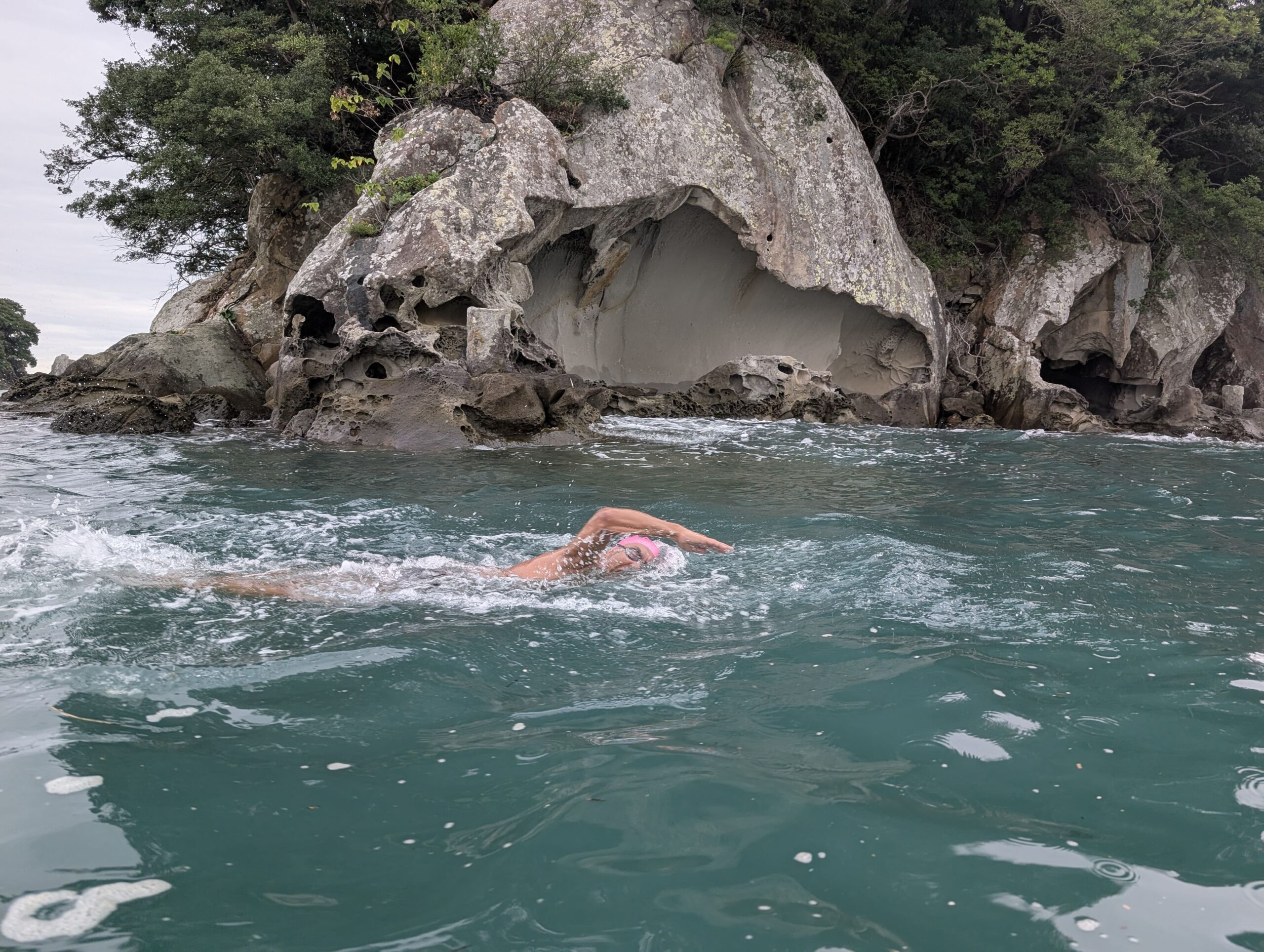
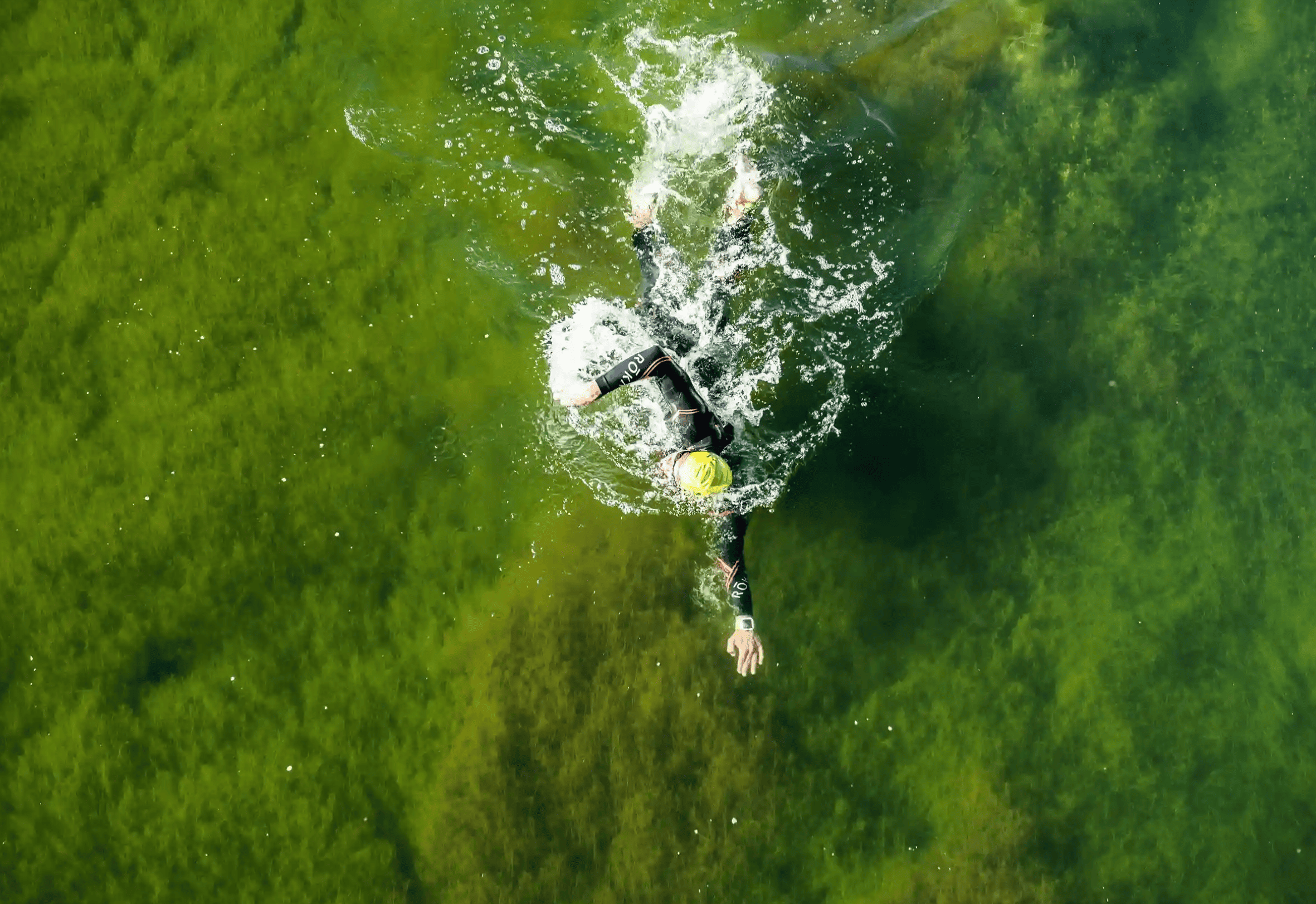
A personalized training program is also included in the price. Participants, if they wish, will receive a personalized strategic plan, including months of customized training sessions and follow-up discussions, that will help you achieve your goals. Tell us about your goals and background and we will help develop a strategic plan to help you achieve your goals:
1. Age
2. Goal swim
3. Date and description of your goal / dream swim
4. Description of your pool training venue
5. Description of your open water training venue
6. Your training background and goals
7. Amount of time you are willing to train in pool, open water, and dryland over the course of each week and month
8. Description of your strengths
9. Description of your weaknesses or what you want to work on
10. Description of what you like to do in training and what you do not like to do in training
Training Plan Example
Name: Steven Munatones, 63 years
Goal: Complete an unprecedented 7-day 75.8 km stage swim around the island of Shodoshima in Japan
Difficulties: Unknown, untested course with strong tidal flows, whirlpools, strong winds, unpredictable eddies, and plenty of jellyfish and sharks of various types, and complicated dryland logistics.
Date: 23-29 June 2026
Pool Training Facility: 25-yard short-course pool
Open Water Venue: Huntington Beach, California (Pacific Ocean)
Training Goals:
1. Strengthen mental fortitude,
2. Strengthen physicality to enable 3-4 hours of swimming per day in rough sea conditions,
3. Remain uninjured and healthy throughout training period,
4. Improve core strength
Training Availability: As much as necessary with a minimum of 4 hours daily.
Training Distance and Monthly Plan:
- January 2026 – Swim 10,000 – 12,000 yards Monday – Friday mornings in pool + 1-2 km ocean swimming sessions 2-3 days per week during windy afternoon rough water conditions within the surf zone + 30 minutes of dryland KAATSU training
- February 2026 – Swim 10,000 – 12,000 yards Monday – Friday mornings in pool + 1-2 km ocean swimming sessions 2-3 days per week during windy afternoon rough water conditions within the surf zone + 30 minutes of dryland KAATSU training
- March 2026 – Swim 10,000 – 12,000 yards Monday – Friday mornings in pool + 2-3 km ocean swimming sessions 2-3 days per week during windy afternoon rough water conditions within the surf zone + 30 minutes of KAATSU training
- April 2026 – Swim 10,000 – 12,000 yards Monday – Friday mornings in pool + 2-3 km ocean swimming sessions 2-3 days per week during windy afternoon rough water conditions within surf zone + 30 minutes of KAATSU training
- May 2026 – Swim 10,000 – 12,000 yards Monday – Friday mornings in pool + 3 km ocean swimming sessions 2-3 days per week during windy afternoon rough water conditions within surf zone + 30 minutes of KAATSU training
- June 2026 – Swim 8,000 – 10,000 yards Monday – Friday in pool + 3 km ocean swimming sessions 2-3 days per week during windy afternoon rough water conditions within surf zone + 30 minutes of KAATSU training
Pool workouts: 8,000 – 10,000 yards of straight swimming at low heart rate pace, breathing every 4th stroke + 1,000 yards pulling with FINIS Agility Hand Paddles and no pull buoy at faster pace + 2 rounds of 1×100@1:15 + 1×100@1:20 + 1×100@1:25 + 1×100@1:30 + 1×100, descend times by 100s.
Training Goals:
- Repetition of straight swimming in pool in early mornings before sunrise is important to strengthening mental fortitude.
- Increasing the pace in the pool as fast as possible over the last 1000 yards is important to build speed necessary to fight through whirlpools and eddies around the coast during the stage swim.
- Swimming in the ocean in windy and wavy rough water conditions during the afternoon is important to build sufficient strength to enable hours of swimming through whirlpools and eddies surrounding the island during the stage swim.
- Decrease intensity or distance if any undue shoulder stress is felt.
Ocean Workout Strategy: Swim in-shore within the surf zone, parallel to the shoreline, during wavy rough water conditions due to afternoon winds in Huntington Beach, known as Surf City, USA.
Dryland workouts: Utilize KAATSU arm bands for 30 minutes at work or utilize KAATSU leg bands for 30 minutes of walking on sand in Huntington Beach.